

Mindful Breathing: What Happens in Your Body
Have you ever noticed how you breathe when you’re scared, under pressure, or deeply relaxed? Without realizing it, your breathing probably changes completely depending on your emotional and physical state. This is no coincidence: there is a constant conversation between the act of breathing and practically all body systems, from the heart to the brain, from muscles to the immune system.
Mindful breathing — also known as diaphragmatic breathing, intentional breathing, or mindful breathing — is the practice of directing attention to your breathing rhythm, modulating it with intention. By 2026, it became one of the most researched topics in integrative health, and for good reason. Researchers from various institutions around the world continue to investigate how this accessible, free, and generally contraindication-free practice can contribute to everyday well-being.
This article does not intend to replace any medical guidance — each person is unique, and any health concerns deserve individualized professional attention. Our aim here is to offer an educational and evidence-based view of what science already knows about what happens inside your body when you simply decide to breathe with attention.
The Physiology Behind Each Breath
Before discussing mindful breathing itself, it’s worth understanding the basic process. With each inhalation, the diaphragm — a dome-shaped muscle located below the lungs — contracts and descends, creating space for the lungs to expand. Air enters, reaches the pulmonary alveoli, and oxygen passes into the bloodstream. During exhalation, the process reverses: the diaphragm relaxes, and air exits carrying carbon dioxide.
The interesting thing is that breathing is both automatic and voluntary. It is controlled by centers in the brainstem that operate without you having to think about it — otherwise, you wouldn’t sleep. But unlike heart rate or digestion, you can consciously control your breathing at any time. This anatomical detail has profound implications: by voluntarily modulating your breathing, you access a “bridge” between the voluntary nervous system and the autonomic nervous system, which regulates functions such as blood pressure, digestion, and stress response.
The Nervous System and Stress Response
The autonomic nervous system is divided into two major branches: the sympathetic nervous system, associated with the “fight or flight” response, and the parasympathetic nervous system, associated with rest and recovery. In threatening situations — real or perceived — the sympathetic takes over: breathing becomes short and rapid, the heart races, muscles tense. It’s an ancestral survival response.
The problem is that in contemporary life, many people live with the sympathetic system chronically activated, even without any real physical threat. Work pressures, constant notifications, financial uncertainties: the brain doesn’t always distinguish a predator from a tough meeting.
This is where mindful breathing can make a difference. Studies published in neuroscience and psychophysiology journals suggest that slow, controlled breaths — especially with prolonged exhalation — can activate the vagus nerve, the main pathway of the parasympathetic system. When the vagus nerve is stimulated, the heart tends to slow down, blood pressure usually drops slightly, and the sense of alertness gives way to a state of greater calm. This phenomenon is often described as the “relaxation response,” a term popularized by physician Herbert Benson in the 1970s and still studied today.
Heart Rate Variability: An Indicator Worth Attention
A concept that has gained prominence in breathing research is heart rate variability (HRV). It measures the variations in the time interval between heartbeats. Contrary to what it might seem, a healthy heart does not beat perfectly regularly: small variations are expected and desirable, as they indicate that the autonomic nervous system is responding flexibly to the demands of the moment.
Studies suggest that slow, rhythmic breathing practices are often associated with higher HRV values, which is considered a general indicator of good autonomic regulation. This doesn’t mean that good breathing “cures” heart diseases — absolutely not. But it indicates that there is a measurable relationship between respiratory rhythm and cardiovascular health that deserves serious attention. If you have any heart condition, consult your doctor before starting any new practice.
What Happens in the Brain During Mindful Breathing
Neuroscience has revealed fascinating findings about how breathing influences brain activity. Research using functional magnetic resonance imaging suggests that the respiratory rhythm can affect activity in regions related to attention, memory, and emotional regulation, such as the prefrontal cortex and the amygdala.
The amygdala, known for processing fear and threat responses, tends to show less activation in states of slow, controlled breathing. Meanwhile, the prefrontal cortex — responsible for rational thinking and decision-making — seems to benefit from states of lower autonomic arousal. Practically, this can translate into greater mental clarity and less emotional reactivity in moments of pressure.
These findings help explain why many people who practice mindful breathing report feeling calmer and more focused. That said, it’s important to remember that these effects vary from person to person, depend on the consistency of the practice, and do not replace treatments for conditions like generalized anxiety, depression, or other disorders. If you are experiencing intense emotional distress, seeking support from a psychologist or psychiatrist is essential. In case of crisis, CVV is available at 188 (free call, 24 hours) and emergencies should be directed to the nearest health service.
How to Start: A Practical Approach
The good news is that you don’t need any equipment, app, or advanced training to try mindful breathing. Below is a simple sequence for beginners:
- Choose a quiet moment — it can be upon waking up, before sleeping, or during any break in the day. Even five minutes can be a start.
- Sit or lie down comfortably, with your spine in a position that doesn’t create tension. Close your eyes if you prefer.
- Place one hand on your abdomen and the other on your chest. Observe, without judgment, how you are breathing now.
- Inhale slowly through your nose, feeling your abdomen expand first (not just your chest). Count mentally to four.
- Make a brief pause of one or two seconds.
- Exhale slowly through your mouth or nose, gently, counting to six or eight. Longer exhalation than inhalation is one of the elements that studies associate with parasympathetic activation.
- Repeat the cycle for five to ten minutes. If your mind wanders — and it will — just gently return your attention to your breathing, without self-criticism.
This practice is generally well-tolerated by most people, but if you feel dizzy, short of breath, or uncomfortable, stop immediately and, if symptoms persist, seek medical evaluation. People with respiratory conditions such as asthma or COPD should talk to their doctor before modifying breathing patterns.
Mindful Breathing and Mental Health: An Ally, Not a Substitute
The relationship between breathing and mental health has been explored in therapeutic contexts for decades. Breathing techniques are often incorporated into approaches such as cognitive-behavioral therapy, mindfulness-based stress reduction (MBSR), and contemplative practices from various cultural traditions.
Studies suggest that mindful breathing can contribute to reducing symptoms of anxiety and perceived stress in general populations. However, it’s essential to be honest: it does not replace psychotherapy, prescribed medication, or psychiatric follow-up when these resources are indicated. Think of it as a valuable complement — a self-regulation tool that can be used between sessions, in daily life, to cultivate a greater sense of presence and balance.
Just as daily stretching brings concrete benefits to the body, mindful breathing practiced regularly tends to offer more noticeable results than a single session in times of crisis. Consistency, even in small daily doses, seems to be more important than the duration of each practice.
When to Seek a Health Professional
Mindful breathing is an accessible wellness practice, but there are situations where the body and mind need more than self-regulation techniques. Consider seeking professional evaluation if:
- You frequently feel short of breath or at rest, chest pain, or palpitations
- You practice breathing techniques and notice persistent dizziness, numbness, or tingling
- Stress or anxiety is significantly interfering with work, relationships, or sleep
- You are going through a period of intense emotional distress and feel you cannot cope alone
- You have been diagnosed with any respiratory, cardiovascular, or neurological condition
Talking to a general practitioner, a pulmonologist, a cardiologist, or a mental health professional can make a huge difference. Taking care of yourself is not weakness — it’s intelligence.
Final Considerations
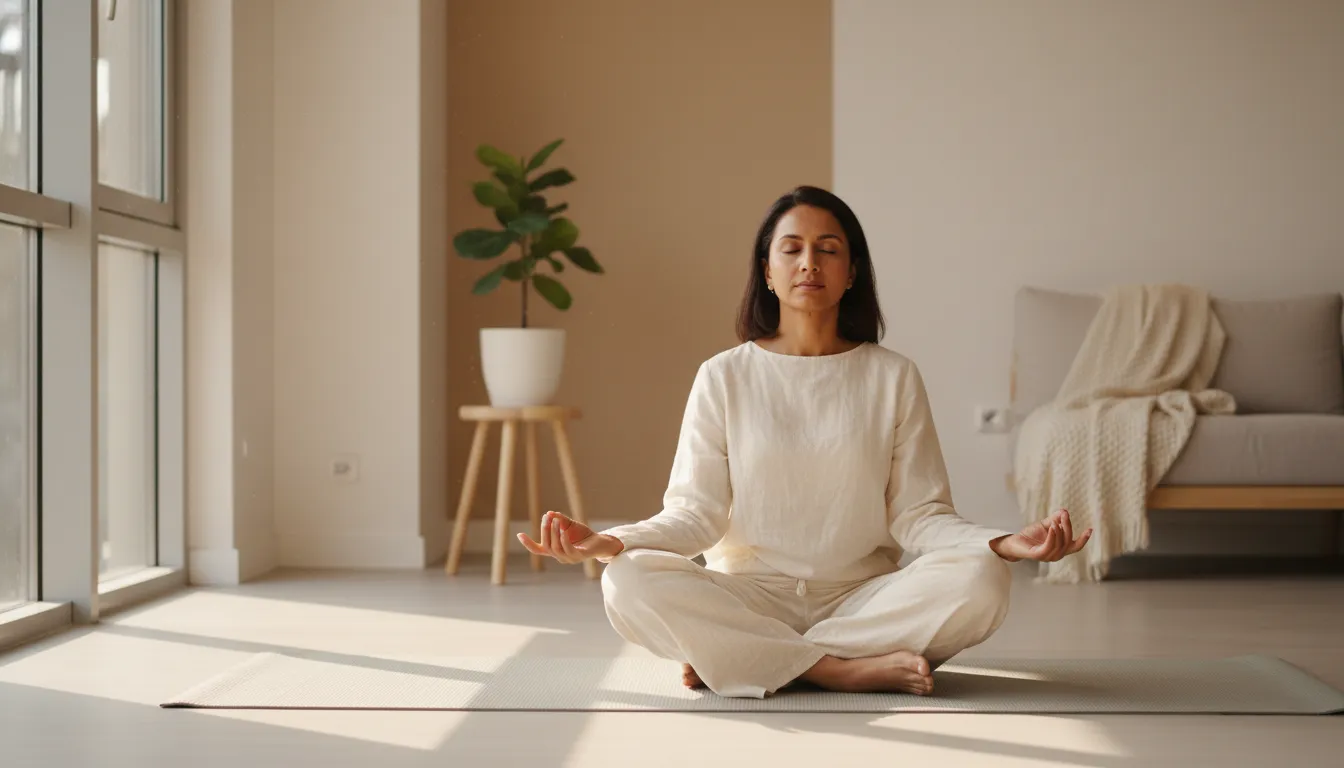
Breathing is the most fundamental act of life, and doing it with attention can be one of the simplest and most powerful practices available to anyone. The body responds to breathing in ways that science continues to unravel: from the nervous system to the heart, from the brain to emotions, there is a web of connections that deserves to be known and respected.
We don’t need miraculous results to value something that is already within our reach. Small breathing pauses throughout the day, cultivated with kindness and without rigid expectations, can be a real starting point for a more present daily life. And if you want to better understand other signals your body sends, it’s worth continuing to explore with curiosity and care.
This content is for informational and educational purposes only. It does not replace the evaluation, diagnosis, or treatment by a qualified health professional. Always consult a doctor, psychologist, or other qualified professional for guidance on your specific case.