

A Pause Amidst the Noise
Have you ever stopped to notice how many tabs are open in your mind at this moment? The to-do list, the half-finished conversation, the worry about tomorrow — all at once. This feeling of mental overload is not exclusive to anyone: it spans generations, professions, and lifestyles, and has intensified significantly in recent years.
In this context, meditation has gained even more attention — not as a passing trend, but as a practice with millennia-old roots that, in recent decades, has been studied by science with increasingly rigorous methodologies. The results are promising and, at the same time, honest: meditation can contribute to mental and physical health in various ways, but it is not a one-size-fits-all solution and does not work the same for everyone.
This article gathers what current research suggests about the benefits of meditation, how to start in an accessible way, and, most importantly, how to integrate the practice into your life without unrealistic expectations. Because taking care of the mind is also taking care of oneself — and that deserves to be done with care and responsibility.
What is Meditation, After All?
Meditation is a broad term that encompasses different mental training practices aimed at cultivating attention, awareness, and emotional balance. It does not belong to a single religion or culture: we find forms of meditation in Buddhist, Hindu, Christian contemplative, Islamic traditions, and in modern secular practices.
In the context of contemporary health, the most studied approaches are:
- Mindfulness: intentional focus on the present moment, observing thoughts, sensations, and emotions without judgment.
- Loving-Kindness Meditation: cultivating feelings of compassion for oneself and others.
- Focused Meditation: sustained concentration on an object, such as the breath or a sound.
- Body Scan: sequential attention to different parts of the body, promoting relaxation and physical awareness.
Each of these approaches can offer slightly different benefits, and the choice of the most suitable style is usually personal — what works best for you may not be the same as what works for your neighbor.
What Research Says About Meditation and Mental Health
The relationship between meditation and psychological well-being is one of the most active fields in neuroscience and clinical psychology. It is important to say: the quality of studies varies greatly, and serious researchers are cautious when interpreting the results. That said, some trends consistently appear in the scientific literature.
Anxiety and Stress
Various studies suggest that mindfulness-based practices can help reduce symptoms of anxiety and perceived stress levels. A review of studies published in journals like JAMA Internal Medicine pointed out that structured mindfulness programs — such as MBSR (Mindfulness-Based Stress Reduction), developed by physician Jon Kabat-Zinn — are often associated with improvements in reports of emotional well-being.
The proposed mechanism involves, among other factors, the regulation of the stress response: with practice, the nervous system can learn to react less intensely to tension triggers. It is like developing a greater “margin” between stimulus and reaction.
Depression
Mindfulness-based cognitive therapy (MBCT) is recognized by health organizations such as the UK’s National Institute for Health and Care Excellence (NICE) as an approach that can be useful for people with a history of recurrent depression. It combines elements of meditation with cognitive-behavioral therapy techniques and is conducted by trained professionals.
It is important to reinforce: this does not mean that meditating alone “replaces” depression treatment. For those living with mood disorders, the support of a psychologist or psychiatrist is essential.
Sleep Quality
The relationship between meditation and sleep also appears in the literature. Relaxing practices before bedtime can help “slow down” mental activity that often makes falling asleep difficult. If you are curious about how sleep impacts mental health, it is worth checking out this article on ideal sleep hours and what changes with age.
Physical Benefits Also Found in Studies
The mind and body are not separate compartments — what affects one often reverberates in the other. Some research suggests associations between regular meditative practices and:
- Reduced Blood Pressure: studies indicate that relaxation and meditation techniques can contribute to slight reductions in people with mild hypertension, although the effect varies and does not replace doctor-prescribed medication.
- Reduced Perception of Chronic Pain: meditation does not eliminate pain, but it can change the relationship a person has with it — reducing the associated emotional suffering.
- Improved Immune Response: some research explores associations between contemplative practices and immune markers, but this is still an area with many open questions.
- Emotional Regulation: the ability to observe emotions without being “overwhelmed” by them tends to develop with regular practice.
Always remembering: these effects are potential and individual. No complementary practice replaces conventional medical care.
How to Start: An Accessible Guide for Beginners
The good news is that you do not need special equipment, an hour free per day, or years of experience to start meditating. The practice can be simple and gradual.
- Choose a Time of Day. Many people prefer the morning, before the routine accelerates. Others benefit from a break in the middle of the day or a few minutes before bed. The “best time” is the one you can maintain.
- Start with a Few Minutes. Three to five minutes is already a valid start. Consistency matters more than duration.
- Find a Comfortable Position. Sitting in a chair with feet on the ground, on the floor with crossed legs, or even lying down — the most important thing is that you can stay alert and relaxed at the same time.
- Focus on Breathing. Observe the air entering and leaving. Feel the belly or chest move. When the mind wanders (and it will wander — this is normal), just notice it and bring your attention back, without criticism.
- Use Support Resources if Desired. There are apps, guided audios, and free videos that can help at the beginning. Guided meditations in Portuguese are widely available online.
- Be Kind to Yourself. A wandering mind does not mean you are “doing it wrong.” Redirecting attention several times is, in fact, the exercise itself.
- Gradually Increase. Over time, if it makes sense, expand to 10, 15, or 20 minutes — at a pace that is sustainable for you.
Meditation and Complementary Therapies: Important Context
Meditation, like other wellness practices, is best understood as a complement to health care — not as a substitute for medical or psychological treatments. Just as sounds and music can influence mood and well-being (you can explore more about this in this article on music and mood), meditation is one of many tools that can enrich quality of life.
Being honest about what science still does not know is part of responsible care. Research on meditation has advanced greatly, but there are also methodological limitations in some studies — such as small samples, lack of robust control groups, and difficulty in “blinding” participants. This does not invalidate the findings but invites a critical and measured reading.
When to Seek a Health Professional
Meditation can be a powerful ally, but there are situations where professional support is indispensable — and the sooner, the better.
Consider seeking a psychologist, psychiatrist, or trusted doctor if you:
- Feel anxiety or sadness that significantly interferes with your daily activities.
- Have frequent difficulty sleeping or feel that fatigue does not go away.
- Notice that difficult emotions are “getting out of control” regularly.
- Are going through a period of grief, transition, or intense crisis.
- Feel you need more than self-care techniques to stabilize.
If you are in intense distress or crisis, help exists. In Brazil, the CVV (Centro de Valorização da Vida) offers free support by calling 188, 24 hours a day, every day. In emergencies, seek the nearest emergency room or call SAMU (192).
You do not have to face difficult times alone.
Conclusion: Presence as a Practice of Care
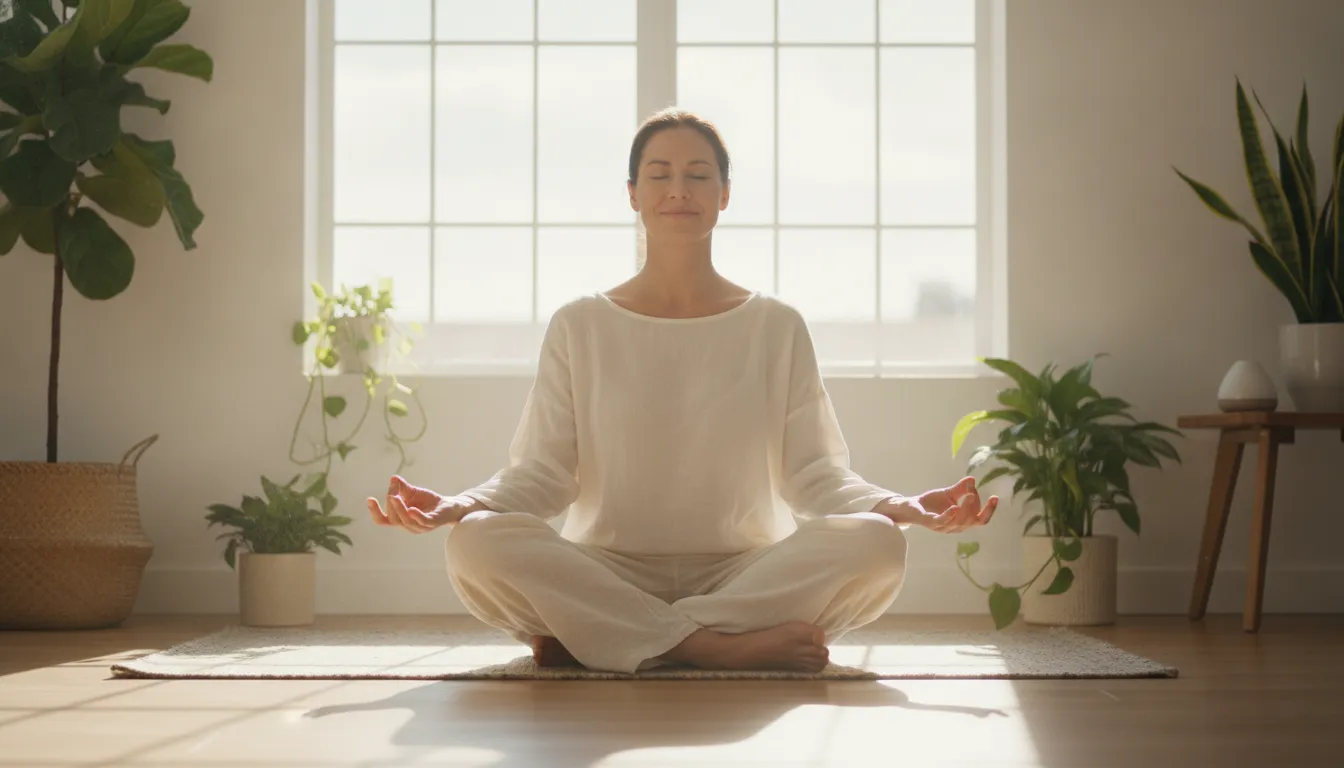
Meditating is not about emptying the mind — it is about learning to be with it in a different way. It is gradually training the ability to observe what happens inside you without being swept away by every thought or emotion. And that, in itself, can make a real difference in daily life.
Studies suggest that regular practice can contribute to emotional well-being, help manage stress, and even have positive effects on the body. But the greatest gains tend to come with consistency, patience, and, when necessary, the support of health professionals.
Starting with five minutes today is already an act of self-care. And this act, repeated over time, can transform into something much greater.
This article is for informational and educational purposes only and does not replace the evaluation, diagnosis, or treatment of a qualified health professional. Each person is unique, and only a professional can guide what is most appropriate for your specific situation.