

The Impact of Physical Activity on Body and Mind: A Comprehensive Guide
Have you ever noticed how the world seems a bit lighter after a walk or a dance class? It’s not just your imagination — and it’s not an exaggeration. Science has been gathering evidence for decades that body movement has effects far beyond muscles and joints. In 2026, with increasingly sedentary lifestyles and mental health receiving the attention it has always deserved, discussing physical activity is about discussing quality of life in a broad sense.
However, the topic often comes loaded with pressures and images of crowded gyms, perfectly shaped bodies, and impossible goals. This article is not about that. Here, the aim is to honestly and evidence-based understand what movement does for the body and mind — without miraculous promises, pressure, or judgment. The goal is to provide information so you can make more informed decisions with the professionals monitoring your health.
If you already practice some physical activity, great: you might find explanations here for what you already feel. If you’re thinking about starting or resuming, this text can be a welcoming starting point. And if you have a health condition that makes the subject more complex, remember that the final word is always from someone who knows you clinically.
What the World Health Organization Recommends
The World Health Organization (WHO) published its global guidelines on physical activity and sedentary behavior, advising adults aged 18 to 64 to engage in at least 150 to 300 minutes of moderate-intensity aerobic activity, or 75 to 150 minutes of vigorous-intensity activity per week — in addition to muscle-strengthening exercises on two or more days.
It’s important to note: these guidelines are a public health reference, not an individual prescription. They serve as a general benchmark, but each person has a unique health history, limitations, and possibilities. Therefore, any exercise plan should be discussed with a doctor or a registered physical education professional.
The good news is that the WHO also emphasizes that any amount of movement is better than none. Starting small and consistently often brings real benefits — and this applies to all ages.
What Happens in the Body When You Move
When you start exercising, a series of physiological processes is activated almost immediately. The heart speeds up to pump more blood; the lungs work harder; the muscles demand more oxygen and glucose. Over time and with regularity, these acute responses turn into lasting adaptations.
Cardiovascular Health
Studies suggest that regular aerobic activity can help reduce blood pressure, improve lipid profiles (cholesterol and triglycerides), and decrease the risk of cardiovascular diseases. The heart, like any muscle, tends to become more efficient when trained regularly.
Glycemic Control and Metabolism
Physical activity often improves insulin sensitivity, which can help control blood glucose. Medical societies like the Brazilian Diabetes Society highlight exercise as a fundamental part of managing type 2 diabetes, always in conjunction with medical and nutritional guidance.
Bone and Muscle Health
Impact exercise and resistance training (like weightlifting) can contribute to bone density and muscle mass maintenance, which is especially relevant as we age. Loss of muscle mass with age — called sarcopenia — is a risk factor for falls and functional dependency, and studies indicate that exercise can help delay it.
Immune System
The relationship between exercise and immunity is complex and still being studied, but there is evidence that moderate and regular physical activity can have positive effects on immune system functioning. Very intense exercises without adequate recovery, on the other hand, can have the opposite effect — another reason to seek professional guidance.
What Physical Activity Does for the Mind
Perhaps the most fascinating field of exercise research is mental health. Body movement seems to communicate directly with the brain in increasingly well-documented ways.
Mood and Well-being
During exercise, the body releases substances like endorphins, dopamine, and serotonin, which are associated with feelings of pleasure, motivation, and well-being. That’s why many people report that light feeling after physical activity — it’s not just imagination.
Anxiety and Stress
Research published in peer-reviewed scientific journals suggests that regular exercise can help reduce anxiety symptoms and improve the body’s response to stress. This doesn’t mean that physical activity replaces psychological or psychiatric treatment — but it can be an important ally within broader care.
Depression
The relationship between exercise and depression has been studied with increasing scientific rigor. Several systematic reviews suggest that physical activity can have a positive effect on depressive symptoms, especially in mild to moderate cases. Still, it’s crucial to emphasize: depression is a health condition that deserves the attention of a mental health professional — psychologist and/or psychiatrist. Exercise can complement treatment, never replace it.
If you’re going through a time of intense suffering, know that help exists. The CVV (Centro de Valorização da Vida) offers free support at 188, 24 hours a day. In emergencies, seek medical attention immediately.
Cognition and Memory
Studies suggest that regular physical activity can contribute to cognitive health, including memory, attention, and learning ability. There is evidence that aerobic exercise, in particular, can stimulate processes related to neuroplasticity — the brain’s ability to adapt and form new connections. To learn more about how to care for your mind throughout life, you can read our article Active Mind in Old Age: Practices That Make a Difference.
Sleep Quality
Many people report improved sleep quality with regular exercise. Science supports this perception: physical activity can help regulate the circadian rhythm and promote deeper, more restorative sleep. Pay attention to timing: very intense exercises close to bedtime can, for some people, make sleep difficult.
Every Movement Counts: Debunking Barriers
One of the biggest obstacles to physical activity is the idea that it’s only worthwhile if it’s intense, long, and perfect. This belief can be more harmful than sedentarism itself because it paralyzes before even starting.
Walking, climbing stairs, dancing in the living room, gardening, playing with children — all of this is movement. Physical activity doesn’t have to happen exclusively in a gym. What evidence suggests is that consistency over time matters more than occasional intensity.
If you want to know how to turn movement into a sustainable habit, we have content that can help: Healthy Habits: How to Create and Maintain in Your Routine.
Where to Start: A Possible Path
If you’re thinking about incorporating more movement into your routine, here’s a practical and gentle path:
- Talk to your doctor before starting, especially if you have a health condition, are returning after a long sedentary period, or are over 40 without regular practice.
- Choose something you enjoy (or dislike less). Long-term adherence depends greatly on the pleasure or purpose the activity offers.
- Start small and gradually increase. There’s no rush. Overexerting at the start is one of the most common causes of injury and quitting.
- Be consistent, not perfect. Three times a week, regularly, is often more effective than an intense week followed by a month off.
- Consider the guidance of a physical education professional. A registered professional can help you train safely and efficiently for your goals.
- Respect your body’s signals. Intense pain, dizziness, disproportionate shortness of breath, or irregular heartbeat are signs to stop and seek medical evaluation.
When to Seek a Health Professional
Physical activity is safe for most people, but there are situations where professional evaluation is essential before starting or continuing:
- Cardiovascular diseases (hypertension, history of heart attack, arrhythmias)
- Diabetes, especially if on medication
- Orthopedic issues (joint injuries, chronic back pain, osteoporosis)
- Pregnancy — physical activity can be very beneficial but requires specific monitoring
- Respiratory diseases (asthma, COPD)
- Mental health conditions under active treatment
- Any new symptoms that appear during exercise: chest pain, intense shortness of breath, fainting, or dizziness
In these situations, it’s ideal for a doctor and a physical education professional to work together to ensure your safety.
Conclusion
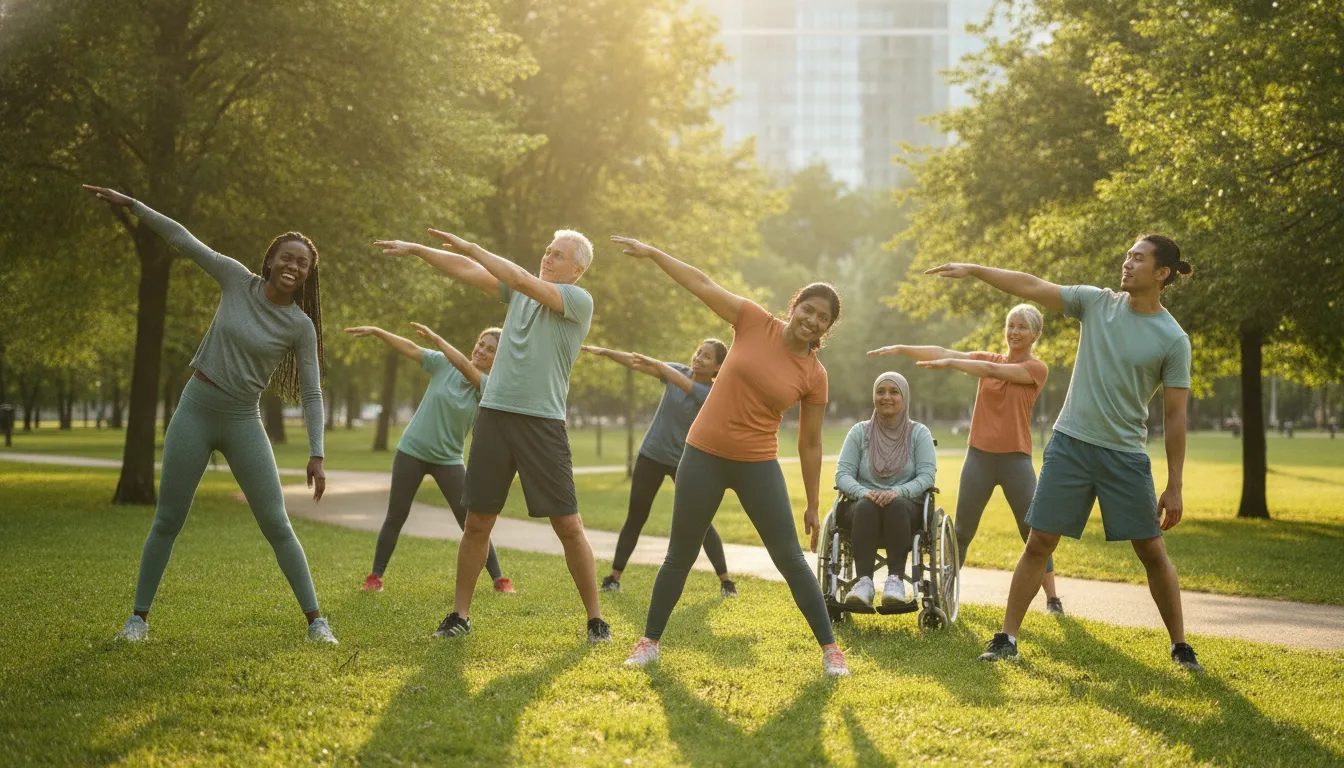
Moving your body is probably one of the kindest gestures you can do for yourself. Not because it’s mandatory or because it will transform you into someone else, but because movement seems to be something the human body was made for — and misses when it doesn’t happen.
The benefits are real, documented, and go far beyond aesthetics. They touch the heart, metabolism, mood, sleep, memory, and the ability to handle daily life. And the best part: these benefits are available to people of all ages, physical conditions, and life stories.
Start from where you are, at the pace you can. And remember, you don’t have to make this journey alone — health professionals exist precisely for this.
This content is informative and educational and does not replace the evaluation, diagnosis, or follow-up of a health professional. Before starting any exercise program, consult your doctor and, if possible, a registered physical education professional.