

Have you ever stopped to think that, amidst so many fad diets, superfood lists, and promises of quick transformations, healthy eating has gained an aura of being too complicated for real daily life? The feeling that “eating well” requires time we don’t have, money that’s lacking, or knowledge we never learned is more common than it seems — and, for the most part, it’s the result of distorted information circulating strongly around us.
The good news is that the science of nutrition, far from the sensationalism of social media, points to something much more accessible: simple, consistent changes that are suited to each person’s reality tend to bring real health benefits over time. It’s not about perfection. It’s about making slightly better choices more often, within each person’s possibilities.
In this article, we’ll explore practically and without judgment where to start building a healthier relationship with food. No radical rules, no promises. Just evidence-based information to help you take the first steps — or reorganize the ones you’ve already taken.
What Does “Healthy Eating” Really Mean?
Before talking about changes, it’s worth understanding the concept. According to the Food Guide for the Brazilian Population, published by the Ministry of Health, healthy eating is one that meets the individual’s nutritional needs, is culturally appropriate, accessible, and enjoyable. There is no universal list of “forbidden” and “allowed” foods.
The World Health Organization (WHO) reinforces this view by highlighting that healthy eating patterns are characterized by variety, balance, and moderation — concepts that, in practice, mean including different food groups throughout the day, without excluding entire categories without clinical necessity.
An important point: healthy eating is not synonymous with restrictive dieting. Dietary restrictions may be necessary in specific medical conditions but should be guided by a nutritionist or doctor. Generalizing this type of conduct to the entire population can do more harm than good.
Why Is It So Hard to Maintain a Balanced Diet?
Understanding the obstacles is as important as knowing the solutions. Some factors that make it difficult to eat well daily include:
- Fast-paced routine: little time to cook or plan meals
- Unequal access to fresh foods: in many regions of Brazil, fresh fruits and vegetables are more expensive or less available than ultra-processed foods
- Barrage of contradictory information: what is “healthy” seems to change every week
- Emotional relationship with food: eating due to anxiety, sadness, or boredom is very human — and deserves attention, not judgment
- Lack of cooking skills: those who haven’t learned to cook tend to rely more on ready-made products
Recognizing these factors without self-blame is the starting point. No one builds healthy habits overnight, and different contexts require different strategies.
Small Steps That Make a Difference
The Food Guide for the Brazilian Population suggests an approach based on simple rules, not rigid nutrient counting. Here’s where to start:
- Prefer fresh or minimally processed foods as the basis of your diet — rice, beans, vegetables, fruits, eggs, meats, greens, and roots are part of a nutritious and culturally Brazilian base.
- Use oils, fats, salt, and sugar in small amounts to season and cook foods, without completely eliminating these ingredients.
- Limit ultra-processed foods — products with long lists of artificial ingredients, such as filled cookies, soft drinks, processed meats, and instant noodles. Studies published in peer-reviewed scientific journals, such as The BMJ and JAMA Internal Medicine, suggest an association between high consumption of these products and worsening health indicators, although the exact causality is still under research.
- Eat regularly and without haste whenever possible. Conscious meals — without a screen in front, chewing slowly — tend to contribute to a greater sense of satiety.
- Drink water throughout the day. Proper hydration is a fundamental part of any healthy eating pattern, and water remains the best option in most situations.
- Cook more, when possible. Preparing your own food is one of the most effective ways to control what you eat. It doesn’t have to be elaborate — simple meals made at home already represent significant progress.
- Don’t skip meals habitually. Although eating rhythms vary greatly among people and cultures, frequently skipping meals can make it difficult to maintain energy and balance throughout the day.
Variety on the Plate: The Importance of Different Food Groups
One of the most consistent guidelines in scientific literature is variety. Each food group offers different nutrients, and the combination between them sustains the body’s functions.
Fruits and Vegetables
Rich in vitamins, minerals, fibers, and bioactive compounds, they are essential in any healthy eating pattern. WHO suggests that daily consumption of fruits and vegetables is associated with lower risks of various chronic diseases — although each individual case should be evaluated by a professional.
Cereals, Tubers, and Roots
Rice, cassava, sweet potatoes, yams, and other foods in the group provide energy and are part of the Brazilian food culture. Prefer whole versions when possible, as they tend to have more fibers.
Legumes
Beans, lentils, chickpeas, and peas are important sources of plant protein, iron, and fibers. The traditional combination of rice and beans, for example, is nutritionally balanced and recognized as a quality eating pattern.
Animal and Plant Proteins
Eggs, lean meats, fish, and dairy products, combined with plant sources, contribute to the intake of proteins, B-complex vitamins, and other nutrients. The choice between animal and plant protein may depend on preferences, health conditions, and individual values — and a nutritionist can help create a combination suitable for your profile.
Nutrition and Mental Health: A Connection Worth Attention
In recent years, research on the relationship between nutrition and mental health has grown considerably. Studies suggest that eating patterns rich in fresh foods, fibers, and essential nutrients may have a positive association with emotional well-being — although this is an area of research still developing and far from definitive conclusions.
What is known more clearly is that the gut-brain axis exists: there is active communication between the digestive system and the central nervous system, mediated in part by the gut microbiota. This doesn’t mean that “eating well cures depression” — such a statement would be irresponsible and false. But it indicates that taking care of nutrition can be part of a broad approach to well-being, always alongside emotional care, adequate sleep (on this topic, check our article How to Sleep Better at Night with Practical Tips) and professional support when needed.
If you notice that your relationship with food is closely tied to difficult emotions — binge eating, excessive restriction, constant guilt after eating — seeking support from a psychologist or specialized nutritionist can be a very important step.
Nutrition and Cardiovascular Health: A General Overview
Balanced eating patterns also often appear in cardiovascular health guidelines. Medical societies like the Brazilian Society of Cardiology generally advise preferring foods with less sodium, excessive saturated fats, and added sugars. This doesn’t mean eliminating salt or fat from life but using them in moderation.
Habits beyond nutrition — such as regular physical activity, quality sleep, and stress control — are also part of this picture. In the article Taking Care of the Heart Starts with Small Daily Habits, you’ll find more information on how these factors connect.
When to Seek a Health Professional
General dietary changes can be started autonomously, based on reliable information. But there are situations where guidance from a nutritionist or doctor is essential:
- You have health conditions like diabetes, hypertension, kidney, gastrointestinal diseases, or others affecting your diet
- You follow or plan to follow a very restrictive diet (vegan, gluten-free, lactose-free, among others) without professional guidance
- You notice signs of a difficult relationship with food, such as excessive restriction, binge eating, or frequent guilt
- You’re pregnant, breastfeeding, a child or teenager, or over 60 years old — phases with specific nutritional needs
- You use continuous medications that may interact with certain foods
- You’re losing or gaining weight unintentionally
Brazil’s public health system offers nutritional follow-up in various basic health units (UBS). If you have health insurance, check the coverage. Professional care is not a luxury — it’s part of the right to health.
Conclusion
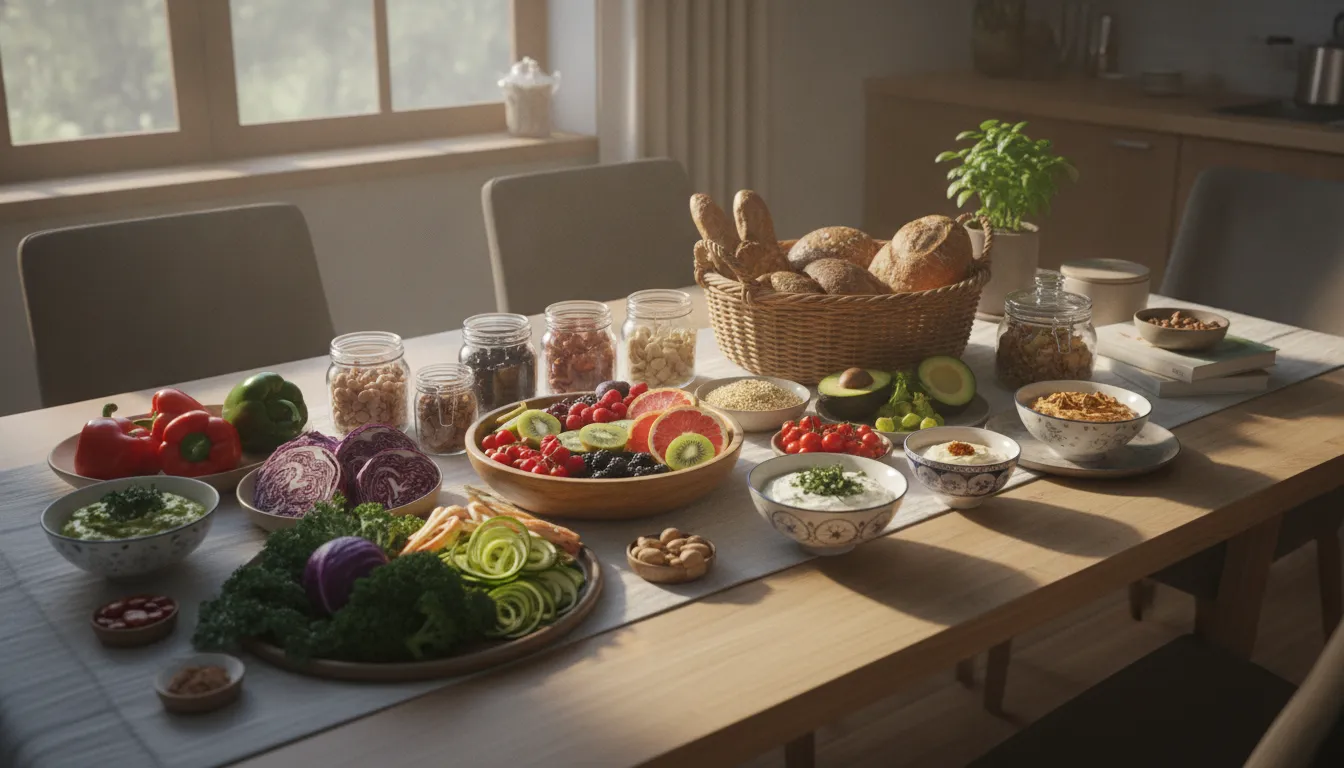
Eating better doesn’t need to be an immediate revolution or a list of rigid rules. It often starts with a small gesture: including a portion of greens at lunch, replacing soda with water in some meals, cooking something simple over the weekend. These small steps, repeated consistently and without guilt, build something real over time.
Be kind to yourself in this process. Eating involves culture, affection, memory, and life conditions — it’s not just a nutrient equation. And remember: the information here is a starting point, not a destination. For personalized and safe guidance, talk to a nutritionist or doctor.
This content is informative and educational and does not replace the evaluation, diagnosis, or treatment by a qualified health professional. Each person has individual needs that must be evaluated in a personalized way.
- Don’t skip meals habitually. Although eating rhythms vary greatly among people and cultures, frequently skipping meals can make it difficult to maintain energy and balance throughout the day.
- Cook more, when possible. Preparing your own food is one of the most effective ways to control what you eat. It doesn’t have to be elaborate — simple meals made at home already represent significant progress.
- Drink water throughout the day. Proper hydration is a fundamental part of any healthy eating pattern, and water remains the best option in most situations.
- Eat regularly and without haste whenever possible. Conscious meals — without a screen in front, chewing slowly — tend to contribute to a greater sense of satiety.
- Limit ultra-processed foods — products with long lists of artificial ingredients, such as filled cookies, soft drinks, processed meats, and instant noodles. Studies published in peer-reviewed scientific journals, such as The BMJ and JAMA Internal Medicine, suggest an association between high consumption of these products and worsening health indicators, although the exact causality is still under research.
- Use oils, fats, salt, and sugar in small amounts to season and cook foods, without completely eliminating these ingredients.
- Unequal access to fresh foods: in many regions of Brazil, fresh fruits and vegetables are more expensive or less available than ultra-processed foods