

Do Aromatherapy Benefits Hold Up to Scientific Scrutiny? What Research Reveals
Have you ever walked into a space filled with a pleasant aroma—lavender, mint, eucalyptus—and felt an almost instant sense of calm or relaxation? This isn’t just your imagination. Our sense of smell is directly linked to brain areas responsible for emotions and memory, explaining why scents can have such immediate effects on our mood. This is the foundation upon which aromatherapy is built.
Aromatherapy is a complementary therapeutic practice that uses essential oils—concentrated extracts from plants, flowers, roots, and bark—to promote physical and emotional well-being. It has been used for millennia across various cultures, but in recent decades, it has become the subject of more systematic scientific study. The findings are intriguing: some applications show promising evidence, while others still require more robust research.
This article will explore what science has discovered about aromatherapy, where it can genuinely contribute to your well-being, and, equally important, what its limitations are. The goal is neither to demonize nor to overestimate this practice but to offer an honest, evidence-based perspective so you can make informed decisions about your health.
How Does Aromatherapy Work? The Science Behind the Practice
To understand the potential effects of aromatherapy, it’s useful to know a bit about how aromas interact with our bodies.
When we inhale an essential oil, the odor molecules reach the olfactory mucosa, where they activate specific receptors. These receptors send signals directly to the limbic system—one of the brain’s oldest regions in evolutionary terms, closely linked to emotions, behavior, and memory. Unlike other senses, smell has a direct connection to these areas without prior “screening” in the thalamus.
This explains why a scent can evoke memories so intensely or cause an almost immediate mood shift. Besides inhalation, essential oils can also be used topically (diluted in carrier oils and applied to the skin), though this method requires even more caution and proper guidance.
It’s important to note that essential oils are highly concentrated substances with complex chemical compositions, and they are not equivalent to simply “smelling a flower”. This concentration is precisely what can make them effective in some contexts—but also what requires careful use.
What Research Says About the Benefits
The scientific evidence surrounding aromatherapy is mixed and still developing, but not nonexistent. Here’s what studies and reviews have found so far:
Anxiety and Stress
This is probably the area with the most available research. Literature reviews published in journals like the Journal of Alternative and Complementary Medicine and Evidence-Based Complementary and Alternative Medicine suggest that inhaling lavender may be associated with reduced anxiety indicators in specific contexts, such as before medical procedures or surgeries. Studies often measure parameters like heart rate, blood pressure, and self-reported anxiety scales.
Similar results—though with smaller sample sizes or varied methodologies—have been found with bergamot and chamomile. However, it’s crucial to highlight that none of these studies suggest that aromatherapy replaces conventional treatments for anxiety disorders, such as psychotherapy or medication when indicated.
Sleep Quality
Some studies explore the use of lavender and its possible effect on sleep, especially in populations like the elderly and people with mild sleep disorders. Results often point to subjective improvements in sleep quality—in other words, people report sleeping better. Objective evidence (measured by polysomnography, for example) is still more scarce and inconsistent.
If you have trouble sleeping, it’s worth learning more about the topic: What Lack of Sleep Does to Your Body and Mind offers a comprehensive view of how sleep impacts health.
Pain and Discomfort
Reviews on the use of aromatherapy in contexts like headaches, muscle pain, and menstrual cramps show promising but still preliminary results. Peppermint oil, for example, has been studied in relation to tension headaches, with some positive findings when applied diluted on the forehead. However, the methodological quality of the studies still varies significantly.
Nausea
Ginger and peppermint have been researched in the context of nausea—especially in cancer patients undergoing chemotherapy and pregnant women with morning sickness. Some results are encouraging, but researchers generally emphasize the need for larger, controlled studies.
What Is Still Unproven
It’s just as important to know what works as it is to know what still lacks solid scientific backing.
Claims that aromatherapy can “cure” chronic diseases, “eliminate” bacterial or viral infections, “detoxify” the body, or “balance energies” in a clinically measurable way do not have consistent scientific support at this time. This doesn’t mean the practice has no value—but that its role is complementary, not substitutive.
Moreover, many studies in the field still face significant methodological limitations: small samples, lack of adequate control groups, difficulty in “blinding” participants to the smell (making it hard to separate the oil’s effect from the ritual itself). Science is advancing, but with careful steps.
Safety: What You Need to Know Before Using
Because they are natural, essential oils are often seen as harmless. But natural is not synonymous with safe in any quantity or form of use. Some important considerations:
- Never ingest essential oils without guidance from a qualified professional. Many are toxic when taken orally.
- Always dilute before applying to the skin. Pure essential oils can cause irritation, chemical burns, or allergic reactions.
- Pregnant women, nursing mothers, children, and the elderly should exercise extra caution and ideally consult a professional before any use.
- Some people may have allergic reactions or sensitivity to certain oils.
- In enclosed spaces, particle concentration in the air can be high—ventilate the area regularly.
- Pets, especially cats, are very sensitive to various essential oils—consult a veterinarian before using diffusers at home.
How to Incorporate Aromatherapy Consciously
If you’re curious about trying aromatherapy as part of a self-care routine—without unrealistic expectations—here are some practical starting points:
- Start with direct inhalation: place one or two drops of essential oil on a tissue or in the palms of your hands (diluted in a carrier oil) and inhale gently for a few minutes.
- Use an aroma diffuser: disperses the oil in the environment safely. Prefer short periods (30 to 60 minutes) in ventilated spaces.
- Try it in the bath: adding a few drops of essential oil to a tablespoon of coarse salt or carrier oil before mixing with water can create a relaxing experience.
- Observe how you feel: pay attention to your reactions. If you experience headaches, dizziness, irritation, or any discomfort, stop using.
- Combine with other wellness practices: aromatherapy can complement meditation, mindful breathing, relaxing baths, or a good sleep routine—practices that, together, usually contribute to overall well-being.
- Seek quality products: choose essential oils from reliable sources, with clear information on composition and extraction process.
Aromatherapy and Mental Health: Special Considerations
It’s common for people facing anxiety, high stress, or emotional difficulties to seek accessible relief in aromatherapy—and this is completely understandable. Self-care rituals have real value in the context of emotional well-being.
However, it’s essential to be honest: aromatherapy does not treat mental health disorders like depression, generalized anxiety disorder, PTSD, or others. These conditions deserve evaluation and professional follow-up—with a psychologist, psychiatrist, or other mental health specialists.
If you’re experiencing intense emotional distress, feeling overwhelmed, or hopeless, please seek support. Talking to someone you trust is already an important first step. In Brazil, the CVV (Centro de Valorização da Vida) offers free support at 188, 24 hours a day, every day. In emergencies, seek medical attention.
To learn more about separating myths from truths in mental health care, check out: Mental Health: Separating Myths from Common Truths.
When to Consult a Healthcare Professional
Aromatherapy can be a pleasant addition to a self-care routine, but there are situations where professional guidance is indispensable—and should not be replaced by any complementary practice:
- Persistent or unexplained physical symptoms (chronic pain, severe insomnia, respiratory problems)
- Signs of anxiety or depression that interfere with daily life
- Medication use (some oils can interact with medications)
- Pregnancy, breastfeeding, or pre-existing health conditions
- Adverse reactions after using essential oils
- Any doubts about the suitability of aromatherapy for your specific case
A healthcare professional—doctor, nurse, pharmacist, or therapist trained in integrative practices—can guide you in an individualized and safe manner.
Conclusion
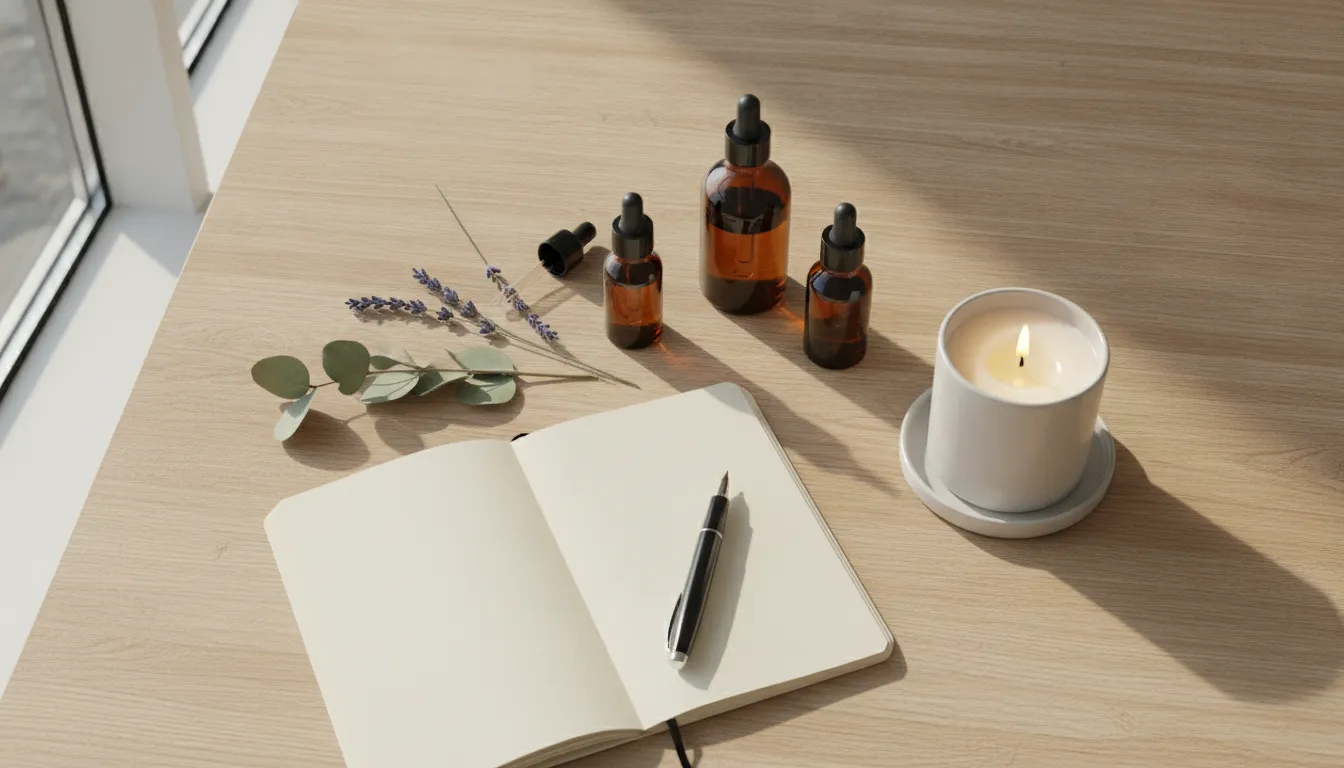
Aromatherapy is not a miracle, but it’s not quackery either. It’s a practice with deep historical roots, being studied with increasing seriousness by science, and can contribute to well-being in certain contexts—especially as support for relaxation, sleep quality, and managing everyday stress.
What science asks of us is balance: to make room for complementary practices without abandoning conventional medical care, especially when there are health conditions that require proper diagnosis and treatment. Responsible self-care means combining curiosity with critical thinking—and that, in itself, is an act of self-respect.
This content is informative and educational, and does not replace evaluation, diagnosis, or treatment by a qualified healthcare professional. Always consult a doctor or other qualified professional for guidance on your individual health.