
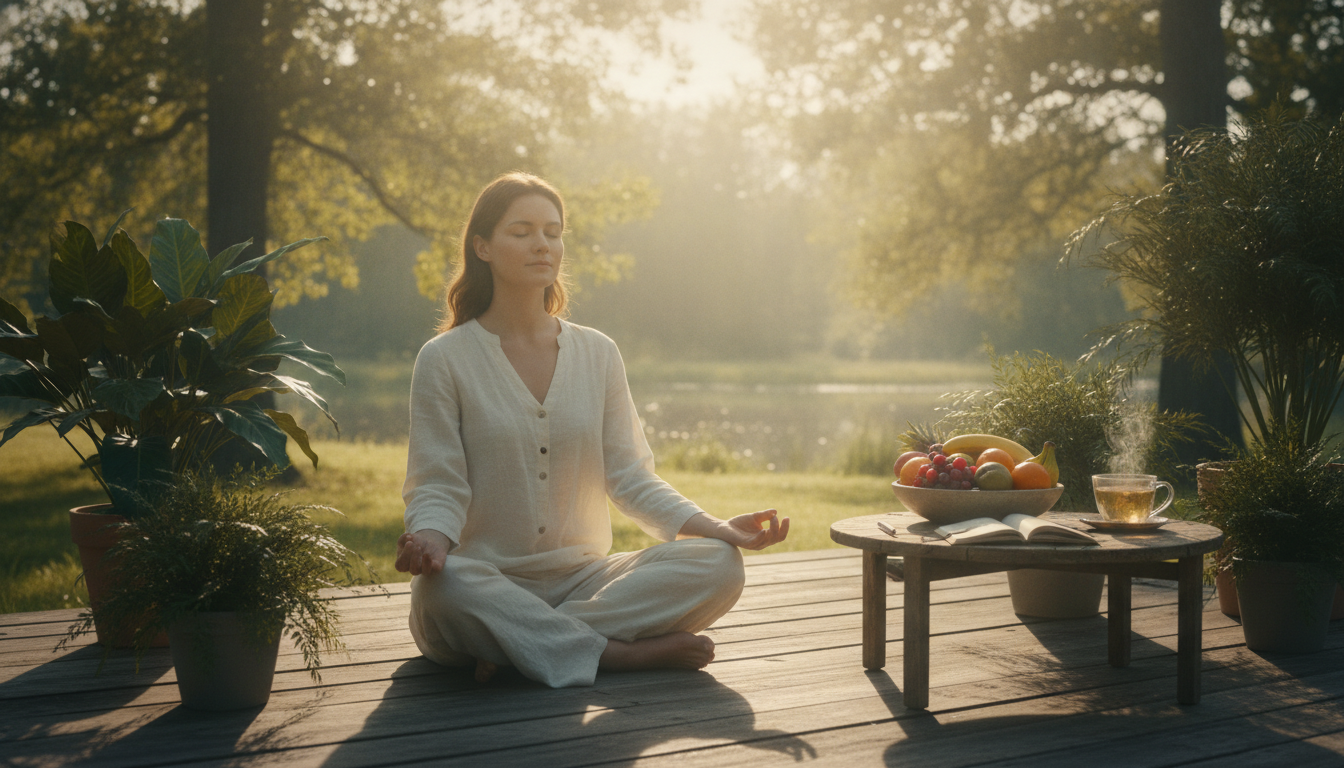
Work-Life Balance: How to Find Your Equilibrium Between Personal Life and Work
Have you ever reached the end of a workday with the feeling that nothing was left for you? That energy that should circulate between personal projects, relationships, and moments of rest was completely absorbed by meetings, messages, and professional demands. If this sounds familiar, know that you are not alone. In 2026, with the boundaries between the office and home more porous than ever — thanks to remote work, hybrid arrangements, and constant connectivity — maintaining a healthy balance between personal and professional life has become one of the greatest challenges of contemporary health.
This imbalance is not just a matter of comfort or preference. Organizations like the World Health Organization (WHO) recognize that work-related stress is associated with significant impacts on physical and mental health, including sleep disorders, anxiety symptoms, and exhaustion — a condition known internationally as burnout, recognized by the WHO itself as an occupational phenomenon. Understanding this is the first step toward acting with greater awareness.
The good news is that seeking balance does not mean dividing time into equal parts or following a rigid formula. It means, above all, knowing your own needs, building healthy boundaries, and cultivating habits that sustain your well-being over time. This article brings together evidence-based information to help you reflect on this process — and, when necessary, seek the right support.
What it really means to balance life and work
The concept of balance between personal and professional life — known in English as work-life balance — is often misinterpreted. Many people associate it with a 50/50 division between work and personal life. But researchers and occupational health professionals understand this balance in a broader way: it is the ability to meet professional demands without systematically compromising health, relationships, and personal projects.
This balance is dynamic. In some phases of life, work naturally demands more. In others, personal life requires full presence. The problem arises when one side dominates chronically and without space for recovery.
It is also worth distinguishing balance from separation. Not everyone has — or desires — a rigid boundary between life and work. What matters is that both spheres can coexist in a way that does not generate persistent exhaustion, isolation, or loss of meaning.
Signs that your balance may be compromised
Recognizing signs of imbalance is essential to act before the problem deepens. Some indicators that typically emerge when work occupies excessive space in life include:
- Difficulty “disconnecting” even outside work hours
- Constant guilt when dedicating time to leisure or family
- Sleep disrupted by professional worries
- Irritability or impatience with loved ones
- Abandonment of hobbies, physical activities, or social gatherings
- Feeling that work is never “good enough”
- Tiredness that does not improve with rest
These signs are not weakness or lack of commitment. They are natural responses of the body and mind to a sustained load beyond what is possible to bear. If you identified with several of them, it is worth paying attention to this moment — and, if necessary, talking to a health professional.
Practical strategies to build more balance
There is no one-size-fits-all solution. What evidence suggests is that small consistent changes, applied regularly, tend to have more lasting impact than radical and temporary transformations. See some approaches that can help:
Set clear time boundaries
Defining a start and end time for work — and communicating this to the people around you — tends to help reduce the feeling that work “never ends.” This is especially relevant in remote or hybrid models, where the physical environment does not offer this demarcation naturally.
- Choose a realistic closing time for your context.
- Create a transition ritual: a short walk, tea, a few minutes away from screens.
- Disable work notifications outside these hours whenever possible.
- Communicate your boundaries clearly — with colleagues and, if necessary, with managers.
Protect your recovery time
Rest is not a luxury — it is a physiological necessity. Studies in the field of work psychology suggest that periods of genuine rest (without exposure to work content) are associated with greater well-being and better cognitive performance. Protecting free time means treating it with the same respect as professional meetings.
Cultivate connections outside the work environment
Maintaining social and emotional bonds is one of the most robust pillars of mental health. Setting aside time for family, friends, and community — even in small regular doses — tends to contribute to the sense of belonging and meaning beyond work.
Include movement in your daily routine
Regular physical activity is associated with benefits for both physical health and mental well-being, according to organizations like the WHO. You don’t need to follow an intense program: walks, stretching, or any movement you enjoy and can maintain regularly can already make a difference. If you want to better understand how to build this habit, the article How to Build the Exercise Habit For Real provides accessible, evidence-based guidance.
Revise your expectations about productivity
The culture of hyperconnectivity creates silent pressure to always be available and always productive. Questioning this narrative can be an act of self-care. Ask yourself: what really needs to be done today? What can wait? Learning to prioritize — and accepting that not everything fits in one day — tends to relieve a significant portion of the overload.
The role of mental health in this process
Talking about work-life balance is, inevitably, talking about mental health. Anxiety related to job performance, fear of being “enough,” and difficulty saying no are issues many people carry silently. Recognizing them without judgment is essential.
If you feel that intrusive thoughts about work, persistent guilt, or difficulty relaxing are significantly interfering with your quality of life, this deserves attention. Not because something is wrong with you — but because you deserve support.
To learn more about deconstructing misconceptions about mental health, the article Myths and Truths About Mental Health Worth Knowing can be a good starting point.
Remote and hybrid work: specific challenges in 2026
In 2026, remote and hybrid work has become a reality for a significant portion of the population. With it came real benefits — flexibility, less commuting — but also specific pitfalls for balance:
- Home as a permanent office: without physical separation, the brain may have difficulty “switching modes.”
- Back-to-back meetings: the ease of scheduling virtual meetings has created even more fragmented calendars.
- Social isolation: the absence of interaction with colleagues can increase feelings of loneliness.
- Absence of cultural boundaries: in environments where everyone is always “online,” pressuring yourself to do the same becomes almost automatic.
Strategies like creating a physical space dedicated to work at home, establishing structured breaks, and maintaining regular social contact — even if virtual — tend to help navigate this context.
When to seek a health professional
Some situations indicate that support from a professional is important and should not be delayed:
- Symptoms of persistent exhaustion, even after rest periods
- Continuous sleep difficulties that affect daily functioning
- Feelings of deep sadness, hopelessness, or emptiness for prolonged periods
- Anxiety crises or panic attacks
- Use of alcohol or other substances as a way to cope with stress
- Thoughts that life has no value or of self-harm
Psychologists and psychiatrists are qualified professionals to help in these situations. Family doctors and general practitioners can also be a first point of contact. Seeking help is a sign of self-care, not weakness.
If you are in intense distress right now, know that support is available. In Brazil, the CVV (Center for the Valorization of Life) offers free service at the number 188, 24 hours a day, every day. In emergency situations, seek the nearest UPA or emergency room.
Conclusion

Finding balance between personal and professional life is not a fixed destination — it is an ongoing process, made of conscious choices, adjustments, and, above all, compassion for yourself. There is no perfect model, and there should not be: each person has their own rhythm, context, and unique needs.
What makes a difference is starting to pay attention. To the signs your body gives, to the emotions that arise, to the things that are put off indefinitely. And, when the weight seems too heavy to carry alone, remember that asking for help is part of care — not an exception to it.
Take care of yourself with kindness.
This content is exclusively informative and educational in purpose, and does not substitute for evaluation, diagnosis, or treatment by a qualified health professional. Each person has individual needs that only a qualified professional can properly assess.