Why Small Choices Make All the Difference
Have you ever stopped to think about how many food-related decisions you make in a day? From breakfast to your bedtime snack, researchers estimate that we make dozens of micro food choices daily — and most of them happen on autopilot. The good news is that you don’t need a radical overhaul of your plate to start taking better care of yourself. Often, it’s precisely the small, sustainable changes that produce the most lasting results.
The idea that “eating healthy” requires sacrifice, severe restriction, or heroic willpower is, fortunately, increasingly questioned by the science of nutrition and eating behavior. The Food Guide for the Brazilian Population, published by the Ministry of Health, reinforces exactly this: healthy eating isn’t about perfection, but about balance, variety, and pleasure. Eating well can — and should — be something accessible, enjoyable, and adapted to each person’s reality.
This article brings together evidence-based guidance for those who want to take concrete steps toward more nutritious and balanced eating. Remember: each body is unique, and the suggestions here are educational in nature. For personalized guidance, working with a nutritionist or physician is always the safest and most effective approach.
The Power of Minimally Processed Foods
One of the most well-founded pillars of contemporary healthy eating is the preference for natural or minimally processed foods. This concept, popularized by the NOVA classification — developed by researchers at the University of São Paulo and adopted by the Ministry of Health’s Food Guide — distinguishes foods by the extent and purpose of their industrial processing.
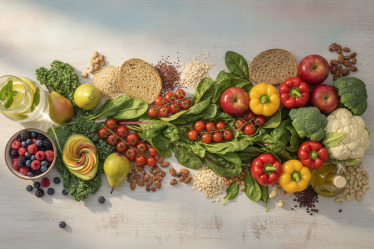
Fruits, vegetables, leafy greens, eggs, beans, brown rice, fresh meats, and milk are examples of foods that reach the table with their nutritional characteristics practically intact. Studies published in peer-reviewed scientific journals suggest that diets based on these foods are often associated with more nutritious eating patterns and lower consumption of excess sodium, sugar, and added fats.
In practice, a simple way to start is by looking at the ingredient list of the products you buy. The shorter and more understandable this list is, the closer you are to natural food. This doesn’t mean eliminating every industrialized product, but rather making fresh foods the center of your daily eating.
Simple Habits That Often Make a Difference
Before thinking about “what to eat,” it’s worth observing how you eat. Eating behavior — where, with whom, at what pace, and with what attention — influences both the experience and the benefit of the meal just as much as the foods themselves.
Some practices that eating behavior studies associate with more balanced patterns:
- Eating with mindful attention (mindful eating): Turning off the television or putting your phone away during meals can help you better perceive your body’s hunger and fullness signals.
- Chewing slowly: The digestive process begins in the mouth, and chewing well typically contributes to more comfortable digestion.
- Having meals at relatively regular times: This can help your body organize its internal rhythms, according to research on chronobiology and eating.
- Sitting at the table: Meals eaten in an appropriate setting, without rushing, tend to be more conscious and satisfying.
These habits aren’t rigid rules, but invitations to a more mindful relationship with your own eating.
More Color on Your Plate: The Variety That Nourishes
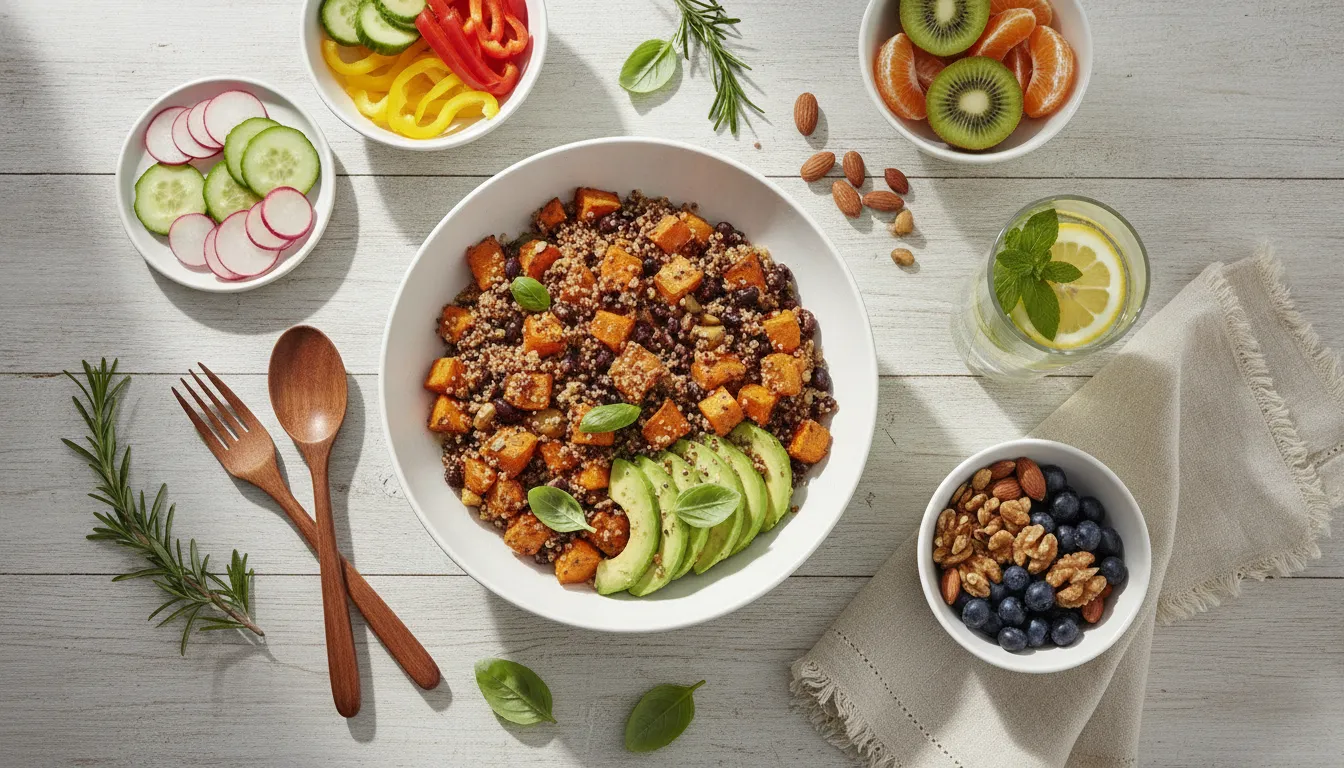
One of the most consistent guidelines in nutritional literature is to vary the colors of foods throughout the day. This is because different pigments in fruits and vegetables correspond to different groups of bioactive compounds — such as carotenoids, flavonoids, and anthocyanins — that play varied roles in the body.
The World Health Organization (WHO) recommends consuming at least 400 grams of fruits and vegetables daily as part of a balanced diet for the general population. In Brazil, the Food Guide translates this into practical terms: fruits, vegetables, and leafy greens should be present in all main meals.
Some practical ideas to add color to your plate:
- Add a seasonal fruit to breakfast.
- Include at least two types of vegetables in lunch and dinner.
- Try a new vegetable each week — arugula, watercress, ora-pro-nóbis, or serralha.
- Use carrots, cucumber, or cherry tomatoes as snacks between meals.
- Add dark leafy greens (kale, spinach) to soups, omelets, or smoothies.
Variety also prevents monotony and makes eating more pleasurable — which is essential for the sustainability of any habit change.
Water at the Center of Hydration
Among so many beverage options available on the market — industrial juices, energy drinks, soft drinks, and the endless innovations that emerge each year — water remains the most well-evidenced choice for daily hydration. The Ministry of Health recommends that water be the main beverage consumed throughout the day.
Some strategies that typically help increase water consumption naturally:
- Keep a water bottle visible and accessible during the day.
- Infuse water with lemon slices, mint leaves, or cucumber slices — without adding sugar.
- Associate the act of drinking water with specific moments of your routine, such as when you wake up, before each meal, or when you arrive home.
- Observe your urine color: light tones typically indicate good hydration; very dark urine may signal it’s time to drink more water.
Unsweetened herbal teas and natural coconut water are also options that can make up balanced hydration. Sugary beverages and ultraprocessed drinks should be consumed in moderation, according to official health recommendations.
Reducing Ultra without Suffering
Talking about reducing the consumption of ultraprocessed foods might sound restrictive, but the most effective — and sustainable — approach is rarely total prohibition. The goal isn’t to eliminate, but to shift the center of your diet toward fresh and minimally processed foods.
Ultraprocessed products are manufactured with ingredients that rarely appear in home kitchens: preservatives, artificial colors, stabilizers, flavorings, high-fructose syrups, among others. Examples include packaged snacks, industrial cured meats, filled cookies, instant noodles, and soft drinks.
Research published in recent years has investigated associations between frequent ultraprocessed consumption and health outcomes, but it’s important to note that correlation isn’t causation and that science in this area is still developing. What current scientific consensus suggests is that your overall diet matters more than any single food.
Small swaps that you can try:
- Plain yogurt instead of artificially flavored yogurt.
- Naturally fermented or whole grain bread instead of commercial sandwich bread with many ingredients.
- Fruits or nuts instead of filled cookies as snacks.
- Fresh seasonings (garlic, onion, herbs) instead of instant broths and industrial seasoning mixes.
For a more detailed guide on how to structure balanced eating day-to-day, see our article Healthy eating day-to-day: a guide to getting started.
Diet and Mental Wellbeing: A Real Connection
The relationship between what we eat and how we feel is a growing field of research. Studies in nutritional neuroscience suggest that the gut and brain communicate in complex ways — a connection known as the gut-brain axis — and that varied eating patterns rich in fiber may be associated with a more diverse intestinal microbiota.
This doesn’t mean that diet alone resolves mental health issues — far from it. But it can be part of integral care for wellbeing. Just as physical activity brings real benefits to body and mind, balanced eating typically contributes to a general feeling of more energy and motivation.
It’s also important to care for your emotional relationship with food. Eating due to anxiety, guilt, or as your only source of comfort can be a sign that it’s worth talking to a psychologist or nutritionist with a behavioral approach. There’s no judgment in that — it’s care.
When to Consult a Healthcare Professional
The guidelines in this article are general and educational. There are situations where professional support is essential:
- If you have diagnosed health conditions (diabetes, hypertension, kidney disease, among others) that require specific dietary adaptations.
- If you experience frequent digestive symptoms, such as bloating, abdominal pain, or changes in bowel movements.
- If you notice a difficult relationship with food — excessive restriction, compulsion, or intense guilt after eating.
- If you’re pregnant, breastfeeding, or in childhood or adolescence, when nutritional needs have important particularities.
- If you want personalized guidance to improve your diet safely and effectively.
Nutritionists, physicians, and when necessary, psychologists specialized in eating behavior are the professionals indicated for this support.
Conclusion: Start From Where You Are

Taking care of your diet doesn’t need to start with a radical transformation. It can start with one more fruit at breakfast, with the decision to drink more water, with the pleasure of sitting at the table without your phone. Each small choice is an act of self-care — and these acts accumulate.
Be gentle with your process. Habit changes take time, have advances and setbacks, and that’s absolutely normal. What matters most is that you feel good about the choices you make and that they make sense for your real life — not for an unattainable ideal.
If you need help taking the next steps, reach out to a healthcare professional. You don’t need to do this alone.
This content is informational and educational and does not replace the assessment, diagnosis, or guidance of a healthcare professional. Always consult a physician, nutritionist, or other qualified professional for guidance appropriate to your case.