Is Balance Between Personal and Professional Life Possible?
Have you ever reached the end of a work week with the feeling that nothing was left of you for anyone else — not even for yourself? This experience is increasingly common. In 2026, the world of work underwent profound transformations: hybrid and remote models became consolidated, the boundaries between office and home became increasingly blurred, and constant connectivity made it difficult to simply “unplug.” What was once a debate limited to stressed executives has become a matter of public health, discussed by organizations like the World Health Organization (WHO) and Brazil’s Ministry of Health.
The good news is that balance between personal and professional life is not an inaccessible myth reserved for a few privileged people. It is a continuous — and imperfect — process of adjustments, choices, and self-knowledge. There is no single formula, because each person has a different routine, economic reality, and needs. What exists are evidence-based strategies that tend to contribute to a healthier and more satisfying life, both at work and outside it.
In this article, we will explore what science and experts say about this balance, what signs deserve attention, and how to take concrete steps toward a routine that makes more sense for you. After all, caring for mental and physical health is not a luxury — it is a necessity.
What We Mean When We Talk About “Balance”
The term “work-life balance” gained popularity in recent decades, but scholars have questioned whether the metaphor of a scale is the most appropriate. It suggests that work and personal life are opposites competing for the same space, as if there were a fixed weight to be divided.
Researchers in occupational health and positive psychology today propose a more dynamic view: what we are seeking is less an equal division of hours and more a sense of control and meaning in both dimensions. A week with high work demands can be bearable if the person feels they have choice, that there is reward in the effort, and that there is time for recovery afterward. The problem arises when the imbalance becomes chronic and involuntary.
Beyond semantics, what matters is recognizing that this balance is dynamic: it changes according to the stage of life, family context, health conditions, and even the season of the year. Accepting this fluidity is already an important step.
Why Imbalance Damages Your Health
The relationship between work overload and illness is one of the most studied topics in occupational medicine and organizational psychology. The WHO recognizes professional burnout as an occupational phenomenon, characterized by intense exhaustion, cynicism toward work, and reduced professional effectiveness.
Studies suggest that long work hours and difficulty disconnecting are associated with an elevated risk of:
- Sleep disorders
- Anxiety and depression
- Cardiovascular diseases
- Compromised immune system
- Difficulties in personal relationships
It is important to note that these are population risks identified in research — each person responds differently to stress situations, and only a health professional can assess each person’s individual situation.
If you want to delve deeper into the myths and truths about mental health worth knowing, we have a dedicated article on the topic here on our blog.
Factors That Make Balance More Difficult Today
Before talking about solutions, it is worth understanding what has made this balance more challenging in recent years:
The Culture of Hyperconnectivity
Messaging apps, emails, and virtual meetings available at any time have created an implicit expectation of immediate response. Studies in organizational psychology point out that the mere possibility of being contacted outside work hours already generates tension, even when the person does not respond.
Remote Work Without Structure
For many people, working from home eliminated commuting but also erased the rituals that marked the beginning and end of the workday. Without this transition, work “invades” the home space in a subtle and persistent way.
Structural Inequalities
It is impossible to talk about balance without acknowledging that it is not available in the same way for everyone. Informal workers, caregivers — mostly women — and people in conditions of economic vulnerability face real obstacles that go beyond individual strategies. Public policies and organizational changes are equally necessary.
Strategies That Tend to Help
The following tips are based on evidence and recommendations from health organizations, but they function as a starting point — not as a prescription. Adapt them to your reality.
1. Establish Work Hour Boundaries Clearly
Defining a start time and, especially, an end time for work tends to contribute to mental recovery. Research in work psychology suggests that transition rituals — a walk, changing clothes, physically shutting down the computer — can help the brain “exit work mode”.
2. Prioritize Sleep Actively
The WHO and various medical societies highlight sleep as a fundamental pillar of health. Sleeping well is not laziness — it is maintenance. Maintaining regular schedules and creating an environment conducive to rest are widely recommended practices.
3. Protect Time for What Matters Outside Work
This may seem obvious, but many people only realize they have neglected relationships, hobbies, and self-care when they are already exhausted. Reserving time on your schedule for leisure activities, social connection, and rest is not indulgence — it is prevention.
4. Physical Movement in Daily Life
Studies suggest that regular physical activity is associated with reduced anxiety symptoms and improved mood. It does not need to be an elaborate plan: a daily walk can already make a difference. If you want to understand how to turn this into a real habit, see our article on how to build the habit of exercising for real.
5. Learn to Say No — With Compassion
Difficulty refusing demands is one of the main causes of overload. Saying no to extra commitments is not a lack of commitment; it is realistic management of energy and capacity.
6. Talk About It
With colleagues, with leaders, with family. Balance is rarely achieved alone. Negotiating expectations, redistributing household tasks, and creating clear agreements in the work environment are essential collective movements.
The Role of Nutrition and Self-Care
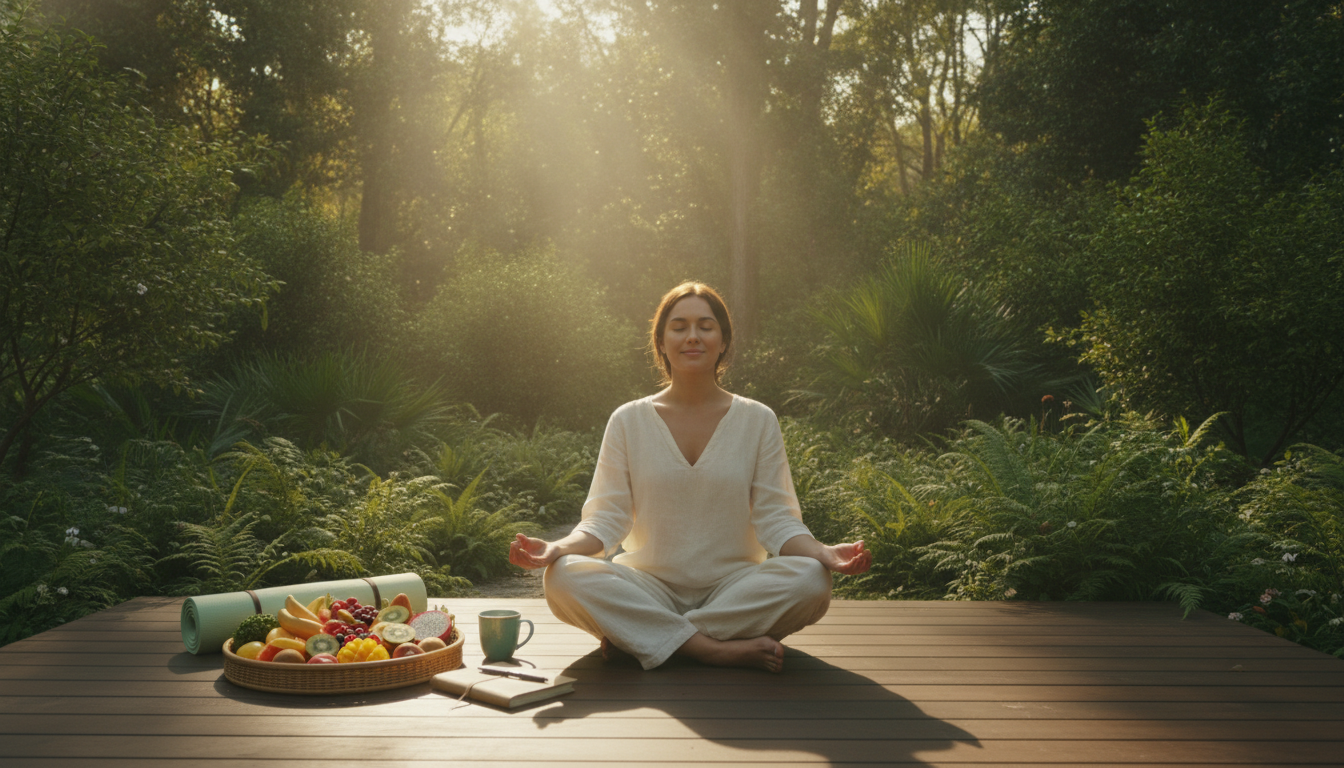
A balanced and varied diet — with emphasis on natural foods, such as fruits, vegetables, greens, and grains — tends to contribute to overall well-being and maintaining energy throughout the day. This does not mean restrictive diets or rigid meal plans, but rather attention to the quality of what you eat, especially during stressful periods.
Self-care practices, such as moments of pause, breathing techniques, and contact with nature, have also been investigated by science as stress management tools. It is important, however, to have realistic expectations: these practices can help in daily life, but they do not replace medical or psychological treatment when necessary.
When to Seek Professional Health Support
Some situations indicate that it may be time to seek specialized support:
- Persistent difficulty sleeping or feeling exhausted even after rest
- Irritability, frequent crying, or feeling empty without apparent cause
- Loss of interest in activities that were once pleasurable
- Physical symptoms such as frequent headaches, muscle tension, or digestive problems without clinical explanation
- Feeling that work is “taking over” everything, including your identity
- Recurrent negative thoughts about yourself or the future
If you identify with any of these points, seeking help from a psychologist, psychiatrist, or trusted doctor is the safest path. There is no right time to ask for help — and seeking support is a sign of self-care, not weakness.
If you are experiencing intense suffering or crisis, know that the CVV (Center for the Valorization of Life) offers free assistance at the number 188, 24 hours a day, every day. In emergency situations, go to the emergency room or call SAMU (192).
Conclusion: Balance as Practice, Not as Destination

Balance between personal and professional life is not a permanent state that you reach and that’s it. It is a daily practice, made up of small adjustments and conscious choices — and often difficult conversations and asking for help when needed.
In a world that still values exhaustion as a sign of productivity, caring for yourself is an act of resistance and intelligence. You do not need to be perfect on this journey. You just need to start — and keep going.
To deepen your understanding of the topic, we also recommend reading personal life and work: how to find your balance, where we explore other practical perspectives on the subject.
> Important Note: This content is exclusively informational and educational in nature. It does not replace evaluation, diagnosis, or treatment by a qualified health professional. Each person has a unique story and context — speak with your doctor, psychologist, or another health professional about the best strategies for your situation.