Healthy Eating: Separating Myths from Facts
Have you ever gotten lost among so many pieces of information about what to eat, what to avoid, which diet to follow, or which food is the “villain of the moment”? If the answer is yes, know that you are far from being alone. In 2026, we live in an era of abundance of content about food — on social media, in podcasts, in short videos — and, paradoxically, this has made it harder to know who to trust. Every week, it seems like a new superfood, a new protocol, or a new list of what is “forbidden to eat” emerges.
The problem is that much of this information circulates without solid scientific backing, mixing partial truths with exaggerations and, in some cases, completely wrong statements. This generates confusion, anxiety about food, and often behaviors that end up doing more harm than good to health. The good news is that the science of nutrition — when consulted carefully and honestly — offers guidance much simpler and more accessible than the internet usually suggests.
This article was written to help you navigate this labyrinth with more clarity. We will explore some of the most common myths about food, confront them with what scientific evidence really shows, and offer a calmer starting point for thinking about your relationship with food. Remember: this is general educational content. For personalized guidance, it is always best to talk with a nutritionist or doctor you trust.
Why do so many myths about food arise?
Before diving into the myths themselves, it’s worth understanding why they proliferate so much. There are a few important factors:
- Isolated studies make headlines without waiting for confirmation by other research or systematic reviews.
- Commercial interests frequently finance or publicize studies that favor certain products or dietary restrictions.
- The science of nutrition is complex: what works for one person may not work for another, and studies with humans have real methodological limitations.
- Social media amplifies what is sensational, not necessarily what is correct.
This does not mean that there is no reliable knowledge — there is. Organizations like the World Health Organization (WHO), the Brazilian Ministry of Health, and scientific societies like the Brazilian Society of Food and Nutrition (SBAN) produce guidelines based on broad literature reviews. These are the sources that should guide any serious information on the subject.
Myth 1: Carbohydrates are always villains
Few myths have endured as much as the idea that carbohydrates are enemies of health. It is important to understand that carbohydrate is an extremely broad group of nutrients — ranging from refined sugar to fibers found in legumes, fruits, and whole grains.
What the evidence suggests is that quality and quantity matter more than the category itself. Carbohydrates found in minimally processed foods, such as brown rice, oats, beans, lentils, fruits, and vegetables, tend to contribute to the proper functioning of the body, providing energy, fiber, and essential micronutrients.
The excessive consumption of added sugars and highly refined flours — present in ultraprocessed foods — is associated, in observational studies, with a series of negative health outcomes. The distinction, therefore, is not “carbohydrate yes or no,” but where the carbohydrate comes from and in what context it is consumed.
Myth 2: Fat is bad and should be avoided at all costs
For decades, fat was treated as the main culprit for cardiovascular disease and weight gain. This view led to a flood of “zero fat” products in past decades — which in practice frequently replaced fat with sugar to maintain flavor.
Science has evolved greatly in this field. Today, it is understood that the type of fat consumed matters a lot. Unsaturated fats, found in foods such as olive oil, avocado, nuts and seeds (cashews, walnuts), and cold-water fish, are usually associated with cardiovascular health benefits in long-term studies.
Meanwhile, industrial trans fats — present in ultraprocessed products — are recognized by the WHO as harmful, and Brazil has advanced in regulations to reduce them in foods. Saturated fats fall into a zone of more active scientific debate, with general recommendations for moderate consumption by major health guidelines.
Myth 3: “Detox” foods cleanse the body
The word “detox” has become synonymous with health in recent years, but it’s important to understand what science says about it. The human body has its own and highly efficient systems for eliminating substances: the liver, kidneys, lungs, and skin perform this work continuously.
There is no robust scientific evidence that detox juices, “cleansing” diets, or specific food combinations accelerate or improve this process in healthy people. What these products and protocols frequently do is increase the consumption of fruits and vegetables — which, in itself, tends to be beneficial — but the “detox” effect itself has no solid scientific backing.
This does not mean that fruit and vegetable juices are bad. It simply means that the promise to “cleanse the body” goes beyond what the evidence supports.
Myth 4: Eating at midnight automatically makes you gain weight
The belief that eating after a certain time makes you gain weight by itself is very popular, but the reality is more nuanced. What most influences the energy balance is the total and quality of what is consumed throughout the day, not just the time alone.
That said, research in the field of chronobiology — which studies how circadian rhythm affects metabolic processes — suggests that the body may process nutrients differently at different times of day. However, this does not mean that a late-night snack is automatically harmful for everyone.
The habit of eating a lot at night is usually associated with patterns such as skipping meals during the day or eating for emotional reasons. These patterns deserve attention, not the time itself as a universal rule.
Myth 5: Supplements replace a balanced diet
The supplement market has grown enormously in recent years, and with it the idea that it is possible to “compensate” for an unbalanced diet with vitamins, protein powder, and other products. This does not have scientific backing.
Supplements can have specific indications — such as vitamin D supplementation in populations with documented deficiency, or folic acid in pregnant women — but these indications are individual and should be evaluated by a healthcare professional. Self-medication with supplements can be harmless or, in some cases, harmful, especially when high doses are used without monitoring.
Whole, varied, and balanced food offers a combination of nutrients, fiber, and bioactive compounds that no isolated supplement can completely replicate. To learn more about what makes up a solid food foundation, check out our article What really makes up a balanced diet.
What science really recommends (in general)
The main nutritional guidelines in the world — including the Food Guide for the Brazilian Population, published by the Ministry of Health — converge on relatively simple principles:
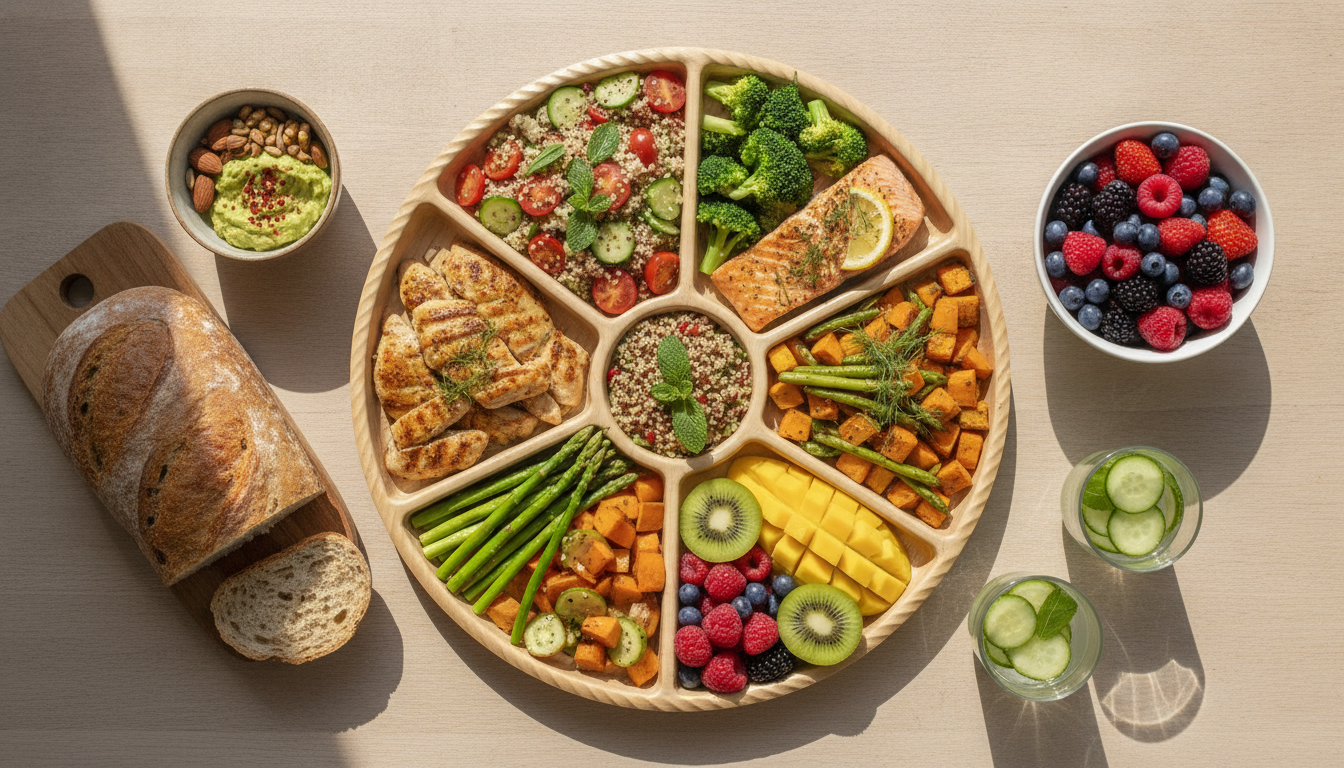
- Prefer fresh or minimally processed foods as the basis of your diet: fruits, vegetables, greens, grains, legumes, eggs, meats, and dairy products.
- Use oils, fats, salt, and sugar in small amounts as seasonings or ingredients in homemade preparations.
- Limit ultraprocessed foods: products with long lists of industrial ingredients, high in sugar, sodium, and low-quality fats.
- Eat in calm environments, without screens, paying attention to what is being consumed — the so-called mindful eating.
- Value food as culture and pleasure, not just as fuel. Eating together with other people, cooking at home, and appreciating food is part of a healthy relationship with eating.
These principles are broad precisely because each person has different needs, histories, and contexts. There is no single formula.
When to seek professional health care
While general guidance is useful for building food awareness, there are situations where professional evaluation is essential:
- If you have specific health conditions such as diabetes, kidney disease, cardiovascular disease, allergies, or food intolerances.
- If you notice a difficult relationship with food: excessive restriction, episodes of binge eating, intense guilt after eating, or fear of certain foods.
- If you are in special life phases such as pregnancy, breastfeeding, childhood, adolescence, or aging.
- If you want significant dietary changes and want to do so safely and sustainably.
A nutritionist is the qualified professional for individualized dietary guidance. In cases where the relationship with food involves intense emotional distress, joint monitoring with a psychologist can also be very valuable. It’s worth remembering that caring for well-being goes beyond nutrition — practices such as Pilates and its benefits for body and mind also contribute to more comprehensive health.
Conclusion
Navigating the world of food in 2026 requires a generous dose of critical thinking and kindness to yourself. There is no single food capable of transforming your health, just as no isolated food is capable of destroying it. Healthy eating is built over time, with consistency, pleasure, and balance — not with rigid restrictions nor with the search for perfection.
If you’ve reached here feeling like you need to “start from scratch” or that you did everything “wrong,” take a breath. Each meal is a new opportunity, and small sustainable changes tend to have much more impact than big short-term revolutions. Be kind to your process.
This content is informative and educational, and does not replace the evaluation of a healthcare professional. For personalized guidance on nutrition and health, consult a nutritionist or doctor you trust.