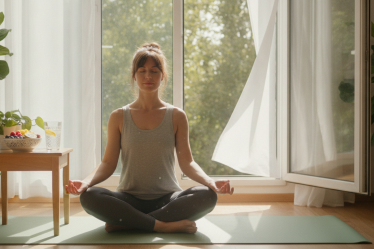
Why do small changes make such a difference?
We live in a time when the word “transformation” is almost always accompanied by enormous demands: the perfect diet, intensive workout routines, maximum productivity. It’s a lot of pressure for those who already have a full schedule, financial concerns, relationships to care for, and their own mental health to protect. If you’ve ever felt that improving your life requires a herculean effort that honestly doesn’t fit into your week — know that this feeling is far more common than it seems, and that there is another way.
The good news, supported by decades of research in behavioral science and public health, is that small, consistent, and sustainable changes tend to contribute more to long-term well-being than large sudden revolutions that last only days. The concept behind this is not new: the World Health Organization (WHO) continuously reinforces that simple habits — such as regular movement, quality sleep, social connection, and balanced nutrition — are fundamental pillars of a healthy life, regardless of age or condition.
This article doesn’t bring magic formulas or promises of guaranteed results. What you’ll find here are practical, evidence-based suggestions for those who want to start from where they are — with the time and energy you have available today. And, as always, each person is unique: talking with a health professional is the best way to adapt any change to your individual reality.
The power of micro-habits in daily life
Behavioral psychology researchers have long observed that new behaviors are more likely to be consolidated when they are small enough not to generate resistance. The logic is simple: the brain tends to reject changes that seem threatening or exhausting. When the initial step is minimal, the barrier to entry drops — and repetition creates the path.
Micro-habits are adjustments so discrete that they almost seem insignificant. But, accumulated over weeks and months, they tend to generate noticeable effects on energy, mood, and overall sense of well-being. Some examples that studies suggest have positive impact:
- Stand up from your chair and take a brief walk around your house or office every hour of sedentary work
- Replace some minutes of passive scrolling on social media with a calm break with a cup of tea
- Add a serving of vegetables or fruit to a meal that normally wouldn’t have any
- Take three slow, conscious breaths before responding to a message that caused tension
None of these gestures will “solve” anything on their own. But together, and repeated, they shape the internal environment — and that’s exactly where quality of life begins to build.
Movement: it doesn’t have to be at a gym
In 2026, the discussion about physical activity finally gained a more inclusive layer: it’s no longer necessary to go to a gym, run marathons, or follow elaborate workouts to reap the benefits of movement. The WHO recommends, for adults, at least 150 minutes per week of moderate-intensity physical activity — which equals just over 20 minutes a day. And this can be achieved in quite accessible ways.
Ways to include more movement without major changes
- Walk when possible — getting off the bus one stop early, preferring stairs to elevators on short trips, or taking short walks after meals are choices that accumulate.
- Dance at home — any style, for a few minutes, raises your heart rate and even contributes to your mood.
- Stretch when you wake up — five to ten minutes of light stretching first thing in the morning can help reduce muscle stiffness and signal to your body that the day has begun.
- Try something you enjoy — swimming, light cycling, yoga, pilates, or even gardening. The movement you enjoy is the movement you repeat. If you’re curious about practices like pilates, for example, this text about pilates and its benefits for body and mind can be an interesting starting point.
Important: before starting any new physical activity, especially if you have pre-existing health conditions, talk with a doctor or fitness educator.
Sleep: the most underestimated habit
Sleep may be the most overlooked factor when we talk about quality of life — and one of the most studied. Large-scale studies suggest that sleeping less than necessary chronically may be associated with changes in mood, concentration, immunity, and other aspects of physical and mental health. Most adults need seven to nine hours of sleep per night, according to organizations like the National Sleep Foundation, although there are individual variations.
Some practices that tend to contribute to more restorative sleep:
- Keep sleep and wake times reasonably consistent, including on weekends
- Reduce exposure to blue light screens (cell phone, tablet, television) in the last hour before bed
- Keep your bedroom dark, cool, and quiet when possible
- Avoid heavy meals and caffeine close to bedtime
If you face persistent sleep difficulties, it’s worth talking to a health professional — there may be specific reasons for this that deserve individual attention.
Balanced nutrition without extremes
Talking about healthy eating without falling into extremes is a challenge, especially in a scenario where new “fad diets” emerge all the time. The approach most consistent with available scientific evidence remains the one recommended by the Dietary Guide for the Brazilian Population, from the Ministry of Health: prioritize natural and minimally processed foods, eat in company when possible, and pay attention to your body’s hunger and satiety signals.
Small and sustainable changes in eating habits may include:
- Include more color variety on your plate throughout the week (each color of vegetable or fruit carries different nutrients)
- Gradually reduce — without absolute prohibition — consumption of ultra-processed foods, replacing them gradually with more natural options
- Drink water more regularly throughout the day
- Cook at home more frequently, which usually favors more nutritious choices
For those who want to better understand what is myth and what is fact in the world of nutrition, this article about healthy eating: separating myths from facts can be a useful resource.
Mental health: care that fits into everyday life
Mental health is not the absence of suffering — it’s the ability to deal with life’s difficulties, maintain meaningful relationships, and find purpose in daily activities. Taking care of it can also be done in small, consistent doses.
Some practices that studies suggest have a positive effect on emotional well-being:
- Write about feelings — keeping a brief journal, without judgment, can help organize thoughts and process difficult emotions
- Practice gratitude realistically — noting one or two simple things that went well during the day can, over time, contribute to a more balanced perspective
- Maintain social connections — even if briefly: a message to someone you care about, a face-to-face conversation, a group with shared interests
- Limit exposure time to news and social media — studies suggest that excessive and passive consumption of negative content can increase anxiety
If you’re going through a moment of intense suffering, prolonged sadness, anxiety that interferes with daily activities, or any emotional crisis, seek support from a psychologist, psychiatrist, or trusted person. You don’t have to face this alone. In Brazil, CVV (Center for Life Appreciation) is available 24 hours at 188 (free call). In emergency situations, seek the nearest health service or call SAMU (192).
The role of pauses and intentional deceleration
In a culture that still romanticizes work excess and constant productivity, learning to stop — for real — is one of the most challenging and, at the same time, most relevant changes for quality of life. Intentional pauses throughout the day are not laziness: they are part of healthy nervous system functioning.
Conscious breathing practices, guided meditation, and progressive muscle relaxation are some of the research-supported approaches for stress reduction. They do not replace medical or psychological treatment when needed, but can be useful complementary tools in everyday life. Meditation apps and mental health platforms became even more accessible in 2026, making it easier to experiment with these practices with basic guidance.
When to seek a health professional
Micro-habits and lifestyle changes are valuable resources, but there are situations where guidance from a professional is essential. Consider seeking specialized help if:
- You feel persistent fatigue even with good sleep, with no apparent explanation
- Changes in appetite, sleep, or mood are present for more than two weeks
- You have recurring physical pain that doesn’t improve with rest
- Feelings of intense sadness, anxiety, or hopelessness are interfering with work or relationships
- You want to start an exercise routine and have pre-existing health conditions
- You have specific nutrition questions for your health status
Doctors, nutritionists, psychologists, physical therapists, and fitness educators are allies — not adversaries — in this journey. Taking care of your health is an act of self-care, not weakness.
Start from where you are
Quality of life is not a fixed destination. It’s a daily construction, made of imperfect choices, constant adjustments, and above all, kindness to yourself. You don’t need to transform everything at once. One more glass of water, five minutes of movement, an honest conversation with someone you care about — each gesture counts.
If you’re looking to start at some specific point, exploring your self-esteem in daily life with habits that make a difference can be a gentle and effective path. The most important thing is that the step is yours — at your pace, with your story.
> This content is informative and educational, and does not replace the evaluation, diagnosis, or monitoring by a health professional. Each person has a unique history and body. Always consult with a doctor, nutritionist, psychologist, or other qualified professional for personalized guidance.