

The Benefits of Mindful Breathing for Your Health
Have you ever stopped to notice how you’re breathing right now? Probably not—and that’s completely normal. Breathing is one of the few functions of our body that happens automatically, without us having to think about it. We breathe tens of thousands of times a day without paying any attention to the process. But what happens when we start to deliberately notice each inhalation and exhalation?
In recent years, scientific interest in mindful breathing has grown significantly. Researchers from various fields—neuroscience, cardiology, and psychology—have been investigating how simply changing the way we breathe can influence the nervous system, emotional well-being, and overall physical health. The results, while not conclusive in all aspects, are promising enough to warrant a deeper understanding of this topic.
This article does not aim to offer a magical solution or a treatment protocol. The goal is to explain, in an accessible and evidence-based manner, why dedicating a few minutes a day to your breathing can be a simple yet powerful act of self-care—and when it’s worth consulting a healthcare professional about it.
What Does “Mindful Breathing” Mean?
Mindful breathing—also known as conscious breathing or mindful breathing—is the act of directing your awareness to the breathing process: noticing the air entering and leaving, the expansion of the chest or abdomen, the rhythm, the air temperature. It’s not about breathing “differently” in any radical way, but about stepping out of autopilot for a few moments.
This practice is at the heart of ancient traditions like yoga and meditation and is also part of contemporary approaches like mindfulness, widely studied in clinical contexts. The difference between breathing mindlessly and breathing mindfully may seem subtle, but studies suggest that this difference has real consequences for the body.
The Nervous System and the Body’s Emergency Brake
To understand why mindful breathing can be beneficial, it’s helpful to know a bit about the autonomic nervous system. It regulates involuntary functions of our body—such as heartbeats, digestion, and, of course, breathing—and is divided into two main branches:
- Sympathetic nervous system: Activated in stressful or dangerous situations, it prepares the body to “fight or flee”—increasing heart rate, tensing muscles, and speeding up breathing.
- Parasympathetic nervous system: Responsible for rest and recovery, it promotes relaxation, reduces heart rate, and aids digestion.
Breathing is the only autonomic process that we can also consciously control. This makes it a sort of “gateway” to influencing the nervous system. When we breathe slowly and deeply, studies suggest that we tend to activate the parasympathetic system more—the body’s so-called “brake.” The vagus nerve, which connects the brain to various organs in the body, seems to play an important role in this process.
What Science Says: Potential Benefits of Mindful Breathing
It’s important to be honest here: the science on mindful breathing is still developing, and many studies have limitations such as small samples or short follow-up periods. That said, some areas present evidence consistent enough to deserve attention.
Reduction in Perceived Stress and Anxiety
Several studies published in peer-reviewed journals suggest that slow and controlled breathing techniques can help reduce the subjective feeling of stress and anxiety. A 2023 review published in the Journal of Clinical Medicine analyzed different breathing techniques and found associations with improved stress markers in healthy populations. Diaphragmatic breathing—where the abdomen expands—is one of the most studied in this context.
Influence on Heart Rate Variability
Heart rate variability (HRV) is an indicator of how flexible the heart is in adapting to different situations. Higher HRV values are usually associated with greater stress resilience and better overall cardiovascular health. Studies suggest that slow and rhythmic breathing can contribute to increased HRV—which is considered positive by researchers in the field.
Potential Support for Mental Health
Mindful breathing is often incorporated into recognized therapeutic approaches such as Cognitive Behavioral Therapy (CBT) and mindfulness-based stress reduction programs (MBSR). These programs have scientific backing as mental health support tools—not as standalone treatments, but as part of broader care. If you live with anxiety, depression, or other emotional distress, it’s crucial to seek support from a psychologist or psychiatrist. Self-care complements but does not replace professional guidance.
To learn more about how the mind and body interact, check out: Mind and Body: What Studies Reveal About This Connection
Sleep Quality
Some research suggests that relaxation practices that include mindful breathing, when performed before sleep, may be associated with improved sleep quality in some people. The proposed mechanisms involve reducing sympathetic system activation throughout the day. It’s worth noting that persistent sleep difficulties deserve medical evaluation.
How to Start: A Simple Starting Point
No equipment, app, or specialized training is needed to try mindful breathing. Below is a basic starting point—not a medical protocol, but a reference for those who want to explore the topic safely.
- Choose a quiet moment. It can be upon waking, before sleeping, or during any break in the day. Five minutes is enough to start.
- Sit or lie down comfortably. Keep your spine reasonably aligned, without excessive tension.
- Close your eyes (if comfortable) and direct your attention to your breathing. Just observe: the air entering through the nose, the expansion of the abdomen or chest, the air leaving.
- Try breathing a little slower than usual. Don’t force it. The idea is to soften, not hold your breath.
- When your mind wanders—and it will—gently bring your attention back. This is normal and not a failure; it’s exactly the exercise.
- At the end, breathe naturally for a few moments before resuming your activities.
Remember: the goal is not to “empty the mind” or reach any special state. It’s simply to be present for a few moments.
Mindful Breathing and Complementary Therapies: What the Evidence Shows
Mindful breathing appears in various complementary practices: yoga, tai chi, meditation, heart coherence, among others. It’s honest to say that the level of evidence varies greatly among these approaches.
Yoga, for example, has a reasonably solid body of research suggesting benefits for stress and flexibility. Other practices still lack more robust studies. In all cases, complementary therapies do not replace indicated medical treatments—they can, in many situations, go hand in hand with conventional care, always with the knowledge of the healthcare professional responsible for your care.
If you want to delve deeper into the topic, read: Mindful Breathing: What Happens in Your Body
When to Seek a Healthcare Professional
For most people, mindful breathing is a safe practice with no contraindications. But there are situations where it’s essential to seek medical guidance before or during any breathing practice:
- Respiratory diseases like asthma, COPD, or sleep apnea—some techniques may not be suitable without specialized guidance.
- Cardiovascular conditions—any new practice should be discussed with a cardiologist.
- Dizziness, intense shortness of breath, or discomfort during or after breathing exercises—these signs deserve evaluation.
- Intense emotional distress, persistent anxiety, or depression symptoms—a psychologist or psychiatrist can offer appropriate support. If you’re in crisis or feel you can’t cope alone, know that help is available. The CVV (Centro de Valorização da Vida) is available at 188, free of charge, 24 hours a day. In an emergency, contact SAMU (192) or the nearest UPA.
Conclusion: A Simple Gesture That Deserves Attention
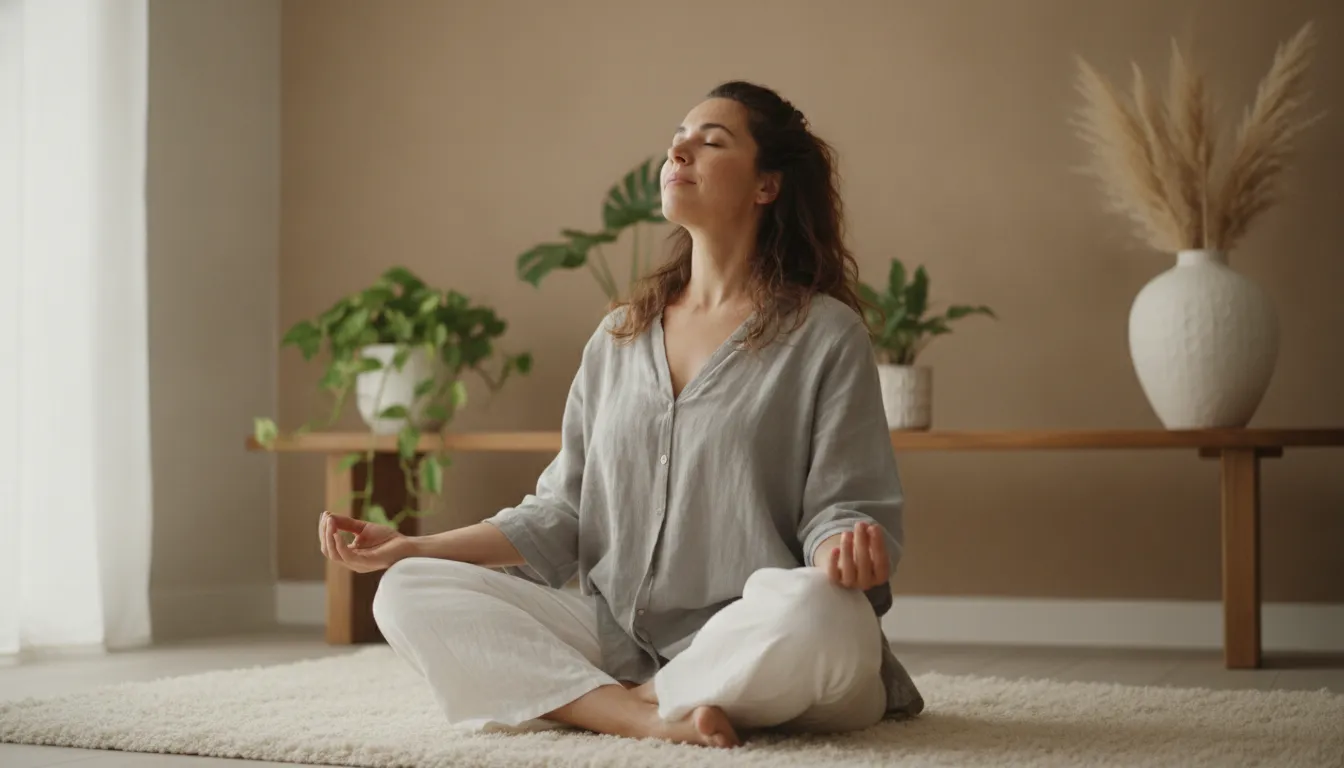
In a fast-paced world where demands pile up and time always seems short, dedicating a few minutes to breathing may sound almost naive. But what science is suggesting—with the caution that scientific rigor demands—is that this simple gesture can have real effects on the nervous system, emotional well-being, and overall quality of life.
There is no miracle cure or guaranteed result. What exists is the possibility of, with consistency and without great resources, cultivating a habit that can contribute to a life with less stress and more presence. And that, in itself, seems worth the attempt.
Take care with kindness—and if you have questions about how mindful breathing can fit into your health context, talk to a trusted healthcare professional.
This content is informative and educational and does not replace the evaluation, diagnosis, or treatment performed by a qualified healthcare professional. Each person is unique, and only a qualified professional can offer guidance appropriate to your case.