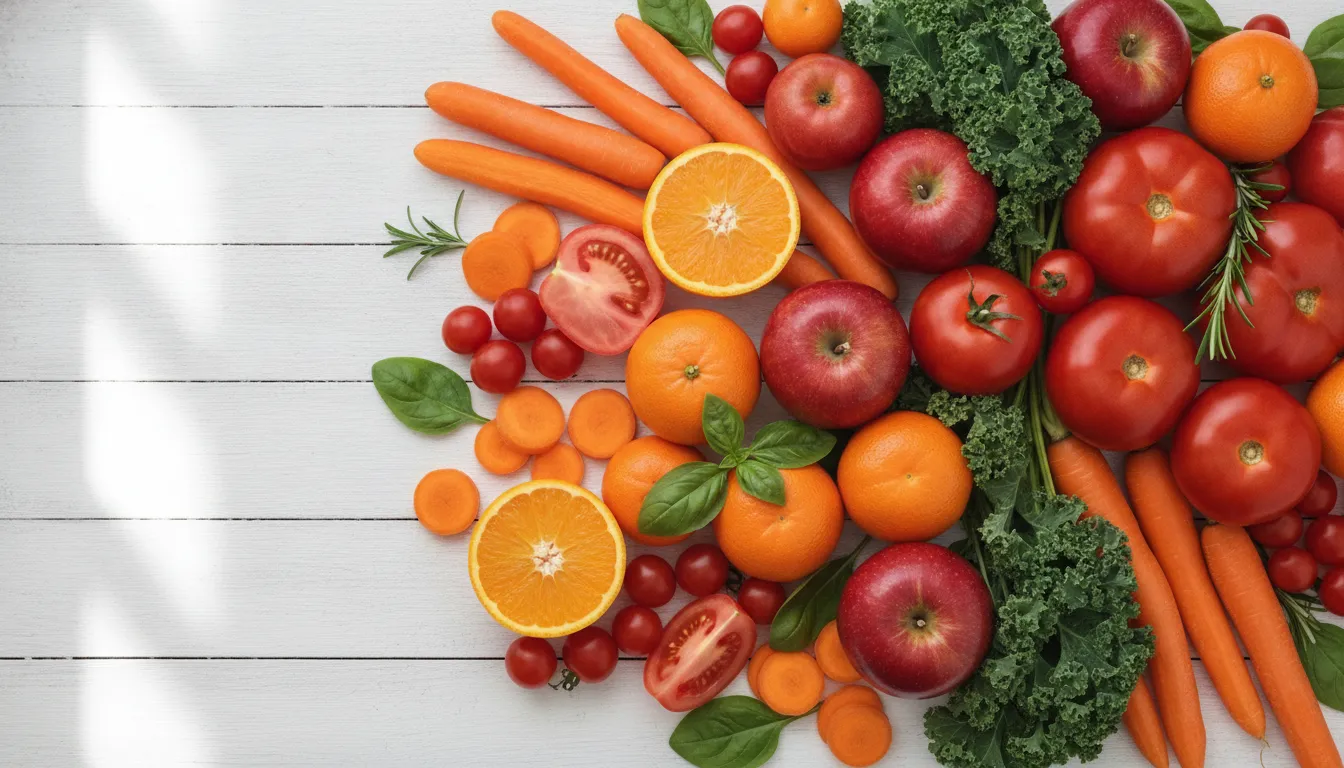
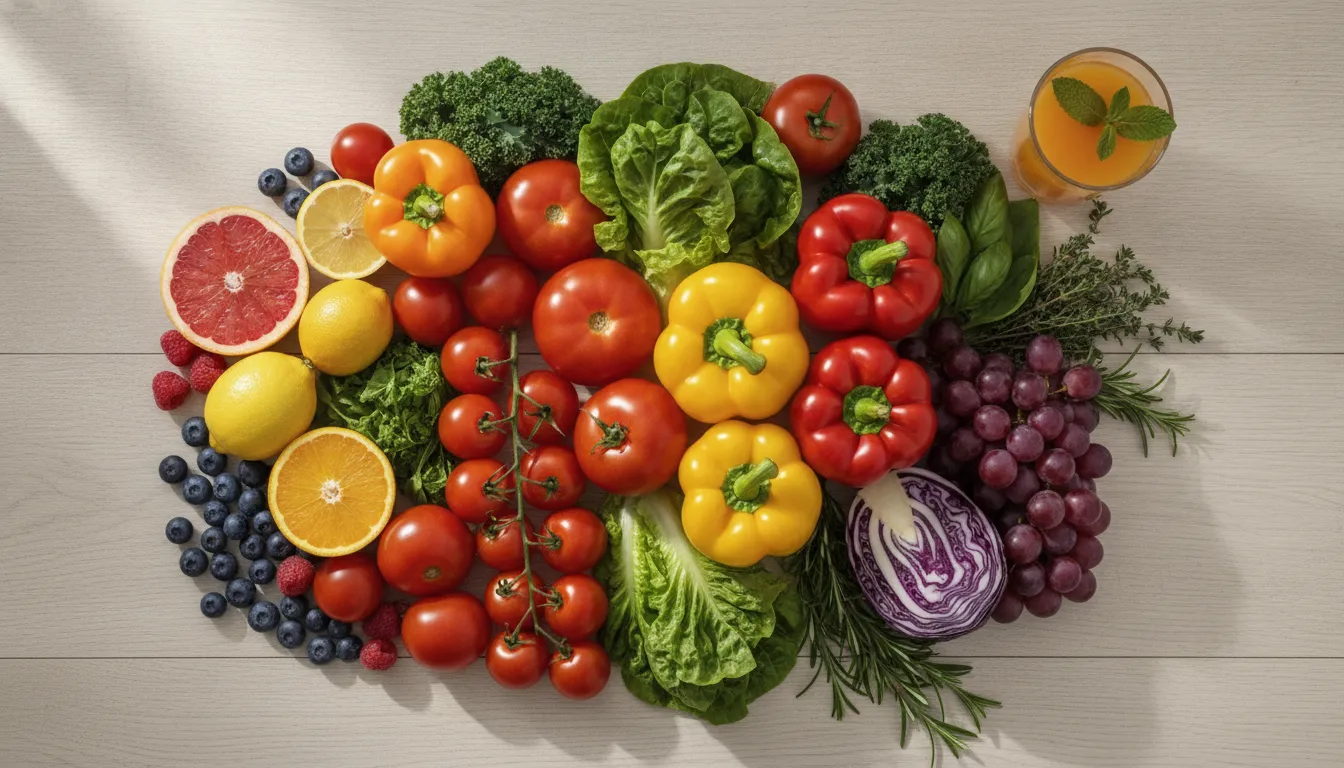
Think for a moment about your daily routine: how many times have you walked past the market or grocery store and looked at those vibrant displays — the red of tomatoes, the green of spinach, the orange of carrots — and thought, “I need to eat more of this”? This intuition is not without reason. For decades, researchers, health organizations, and nutrition professionals have been investigating the relationship between the consumption of fruits and vegetables and people’s quality of life, and the results consistently point in one direction: these foods play a significant role in maintaining health.

The World Health Organization (WHO) generally recommends the daily consumption of fruits, vegetables, and greens as part of a balanced diet. The Dietary Guidelines for the Brazilian Population, published by the Ministry of Health, also place these foods at the center of a healthy diet, encouraging them to occupy a good portion of the plate in main meals. But what is behind these recommendations? What makes these foods so important?

This article provides evidence-based information to help you better understand the role of fruits and vegetables in health and find practical — and pressure-free — ways to include them more frequently in your routine. Remember: this content is educational and general. For individual dietary guidance, always consult a nutritionist or doctor.

Why Are Fruits and Vegetables So Important?

Fruits, vegetables, and greens are natural sources of a range of compounds that the body needs to function well. Among them are vitamins (such as vitamin C, folate, B vitamins, and beta-carotene, a precursor of vitamin A), minerals (such as potassium, magnesium, and iron), dietary fibers, and bioactive compounds, such as flavonoids and carotenoids, which have been studied for their role in cellular protection.

Each of these nutrients and compounds performs different functions in the body. Fibers, for example, often contribute to good intestinal function and the feeling of satiety. Potassium is associated with blood pressure regulation. Vitamin C is involved in immune processes and collagen synthesis. Antioxidants present in many fruits and vegetables are studied for their relationship with protection against oxidative stress in cells.

The important point here is not to treat each nutrient in isolation as a “solution” to a problem. Nutrition science has advanced precisely in understanding that the whole diet matters more than any isolated food. Fruits and vegetables, within a balanced and varied diet, tend to contribute positively to health in a broad way.

What Studies Suggest About Health and Longevity

Research published in peer-reviewed scientific journals has investigated the association between regular consumption of fruits and vegetables and different health outcomes. In general, population studies suggest that diets rich in these foods are associated with a lower incidence of certain non-communicable chronic diseases, such as cardiovascular diseases and some types of type 2 diabetes.

It’s important to be honest here: most of these studies are observational, meaning they identify associations but do not directly prove cause and effect. People who consume more fruits and vegetables also tend to have other healthy habits, making it difficult to isolate the effect of each factor. Even so, the body of evidence accumulated over decades is robust enough to support the recommendations of the world’s leading health organizations.

Another growing area of research concerns gut health. Fiber consumption — abundant in vegetables, legumes, and fruits with skin — is associated with the diversity of the gut microbiota, which in turn has been studied in relation to the immune system, mood, and overall well-being. It’s an expanding field, and much is still being investigated, but the initial results are promising.

Variety Is Key

One of the most consistent guidelines in evidence-based nutrition is variety. Different fruits and vegetables contain different profiles of nutrients and bioactive compounds. Therefore, varying choices throughout the week is usually more beneficial than focusing on just two or three foods, no matter how nutritious they are.

A practical way to think about this is the idea of a colorful plate: the more different colors present in meals, the greater the diversity of nutrients tends to be. Here are some examples:

Color

Examples

Key Compounds

Red/Orange

Tomato, carrot, papaya, pumpkin

Beta-carotene, lycopene

Dark Green

Spinach, kale, broccoli

Folate, iron, vitamin K

Purple/Blue

Beetroot, grape, plum, red cabbage

Anthocyanins

Yellow/White

Banana, onion, garlic, pear

Flavonoids, potassium

Light Green

Zucchini, cucumber, lettuce, green beans

Fibers, B vitamins

This doesn’t mean you need to eat all the colors every day. It’s a guideline, not a strict rule.

Practical Tips for Including More Fruits and Vegetables in Your Routine

Knowing that these foods are good is one thing. Consistently including them in your daily life, especially with the hustle and bustle of modern life, is another. Here are some practical suggestions — without pressure and without perfectionism:

  1. Start with what you already like. There’s no need to start with foods you don’t enjoy. Identify two or three fruits or vegetables you already eat with pleasure and think about how to increase their frequency.
    1. Keep fruits in sight. Behavioral studies suggest that accessibility influences food choices. A fruit bowl on the table or pre-washed fruits in the fridge makes daily consumption easier.
      1. Include vegetables in dishes you already make. Adding greens to rice, vegetables to pasta, or greens to omelets is a way to increase consumption without having to create new habits from scratch.
        1. Try new preparations. Sometimes we don’t like a food one way, but we like it another. Those who don’t appreciate boiled broccoli might enjoy it sautéed with garlic and olive oil, or roasted in the oven.
          1. Take advantage of seasonal fruits. Besides being tastier, they tend to be more financially accessible. Farmers’ markets and popular markets are good options for finding variety at lower prices.
            1. Don’t blame yourself for the days you can’t. A healthy diet is built over time, with consistency — not perfection. One different day doesn’t erase a pattern built over weeks.

              For those who want to go further in building sustainable habits, the article Physical Activity: What It Does for the Body and Mind offers complementary reflections on how small consistent changes can add up over time.

              Healthy Eating and Mental Health: A Connection Worth Attention

              In recent years, an area called nutritional psychiatry has been growing and investigating the relationship between diet and mental health. Studies suggest that balanced dietary patterns, rich in fruits, vegetables, legumes, and whole foods, may be associated with lower rates of depressive and anxious symptoms compared to diets high in ultra-processed foods.

              However, it’s crucial to be careful with this information: diet does not replace mental health treatment. Cases of depression, anxiety, eating disorders, and other conditions require the guidance of a psychologist, psychiatrist, or specialized health team. Diet can be a component of care within a broader context, but never the sole answer.

              If you’re going through a difficult emotional time, know that seeking help is an act of courage. Talk to someone you trust, seek a mental health professional, or contact the CVV (Centro de Valorização da Vida), which is available 24 hours a day at 188 (free call, from any phone in Brazil).

              The Role of Context: Income, Access, and Cultural Diversity

              Talking about healthy eating without acknowledging access inequalities would be dishonest. In Brazil, access to fresh fruits and vegetables is still unequal across regions and social classes. Farmers’ markets, popular markets, community gardens, and government food distribution programs are important resources that deserve to be valued and expanded.

              Moreover, Brazilian food culture is already, in many aspects, rich in natural foods. Beans and rice, greens like kale and taioba, tropical fruits like açaí, passion fruit, mango, and guava — all these are part of a food heritage that deserves to be valued. Healthy eating doesn’t need to be expensive or sophisticated: it can and should be culturally diverse and accessible.

              When to Seek a Health Professional

              Fruits and vegetables are part of a balanced diet, but there are situations where professional guidance is essential:

              • If you have chronic health conditions like diabetes, kidney diseases, inflammatory bowel diseases, or others that may interfere with nutrient absorption or require dietary restrictions.
              • If you are pregnant or breastfeeding, a phase with specific nutritional needs.
              • If you notice persistent symptoms like excessive fatigue, hair loss, brittle nails, or other signs that may indicate nutritional deficiencies.
              • If you have difficulty with eating associated with emotional distress, restrictive or compulsive behaviors — in these cases, a nutritionist and a mental health professional can work together to help.
              • If you want to personalize your diet with specific health goals — a nutritionist is the professional qualified for this type of individualized guidance.

                Conclusion

                Fruits and Vegetables: Allies for Your Health Daily - Conclusion

                Including more fruits and vegetables in your daily life is a gesture of self-care — and it can be simpler than it seems. It’s not about following a perfect diet, but about gradually building an eating pattern that makes sense for your reality, tastes, and possibilities.

                Every step counts. One more fruit at snack time, one more green leaf at lunch, a vegetable soup for a winter dinner. These are small choices that, added up over time, tend to contribute to a life with more energy, more quality, and more well-being.

                Take care of yourself with kindness — and remember, you don’t have to do it alone. Health professionals are here to help find the path that makes sense for you.

                This content is informative and educational and does not replace the evaluation, diagnosis, or guidance of a health professional. Always consult a doctor, nutritionist, or other qualified professional for appropriate guidance for your case.

                Leave a Reply

                Your email address will not be published. Required fields are marked *

                This site uses Akismet to reduce spam. Learn how your comment data is processed.