
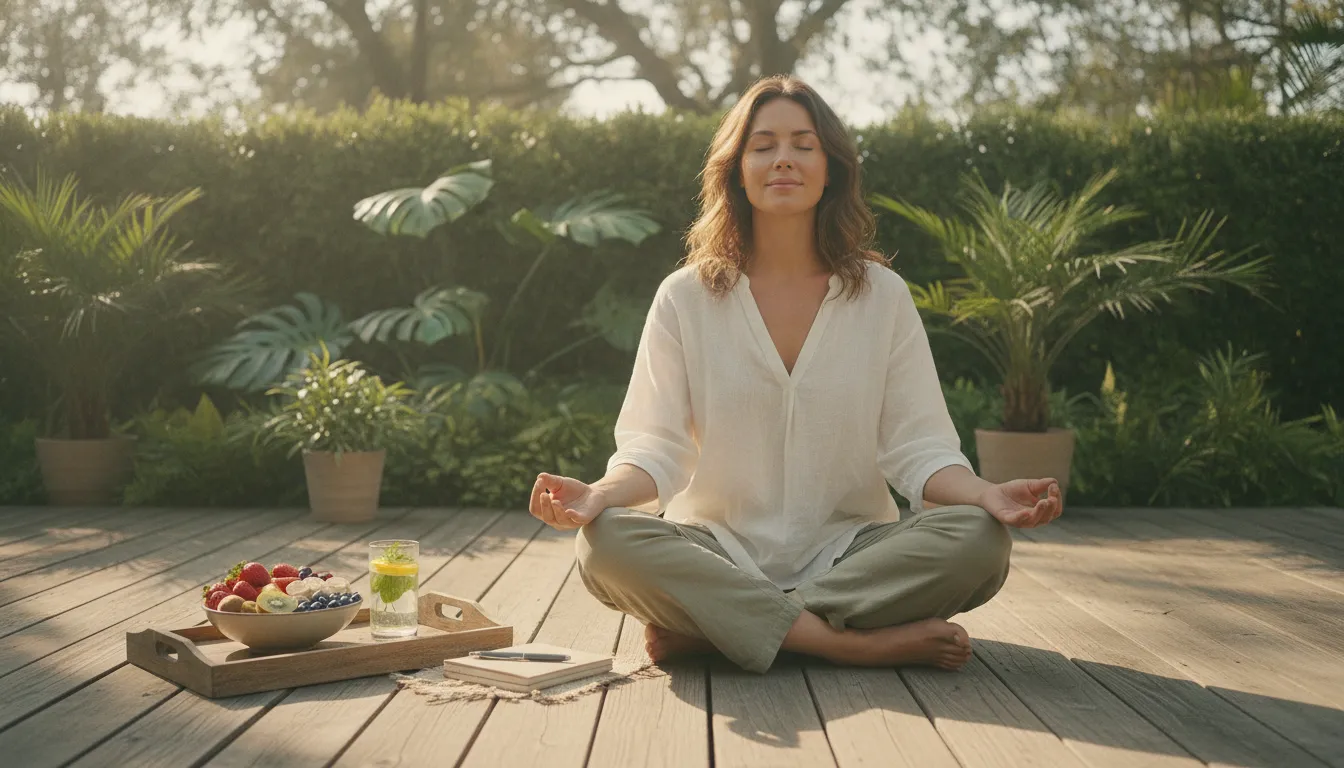
What is self-care, really?
Have you ever stopped in the middle of a busy day and realized you were so busy taking care of everything and everyone that you completely forgot about yourself? This feeling, so common in today’s fast-paced world, is exactly the starting point for understanding self-care. In 2026, with increasingly busy schedules, constant notifications, and a culture that often confuses productivity with personal value, taking care of oneself has become not just an act of kindness, but a real health necessity.
Self-care can be defined as the set of attitudes, habits, and practices that a person intentionally adopts to preserve and promote their physical, mental, and emotional health. The World Health Organization (WHO) recognizes self-care as a fundamental component of public health, understanding that it encompasses everything from basic hygiene and nutrition habits to emotional regulation practices and seeking professional support when necessary.
The most important thing is to demystify a common misconception: self-care is not selfishness, luxury, or frivolity. Nor is it limited to a relaxing bath or a spa day, although moments of pleasure and rest are part of the concept. Taking care of oneself is a responsible act that, studies suggest, tends to positively impact not only the practitioner but also those around them.
Why self-care matters for health
The relationship between self-care and health is broad and well-documented. When we neglect basic needs such as adequate sleep, balanced nutrition, movement, and social connection, the body responds with warning signs: persistent fatigue, irritability, difficulty concentrating, and over time, increased vulnerability to illness.
From a mental health perspective, the absence of self-care is often associated with higher levels of chronic stress. Research in the field of positive psychology suggests that people who cultivate self-care routines report a greater sense of well-being, more emotional clarity, and better ability to cope with adversity. This does not mean that self-care solves everything, nor does it replace medical or psychological treatments, but it can serve as a foundation for overall health.
It is also worth noting that self-care is deeply individual. What works for one person may not make sense for another. Therefore, throughout this article, the idea is not to present a ready-made formula but to offer paths and reflections for each person to build their own practice.
The different dimensions of self-care
Self-care does not happen in just one area of life. It unfolds into several interconnected dimensions:
Physical self-care
Involves taking care of the body with attention and respect. This includes: