
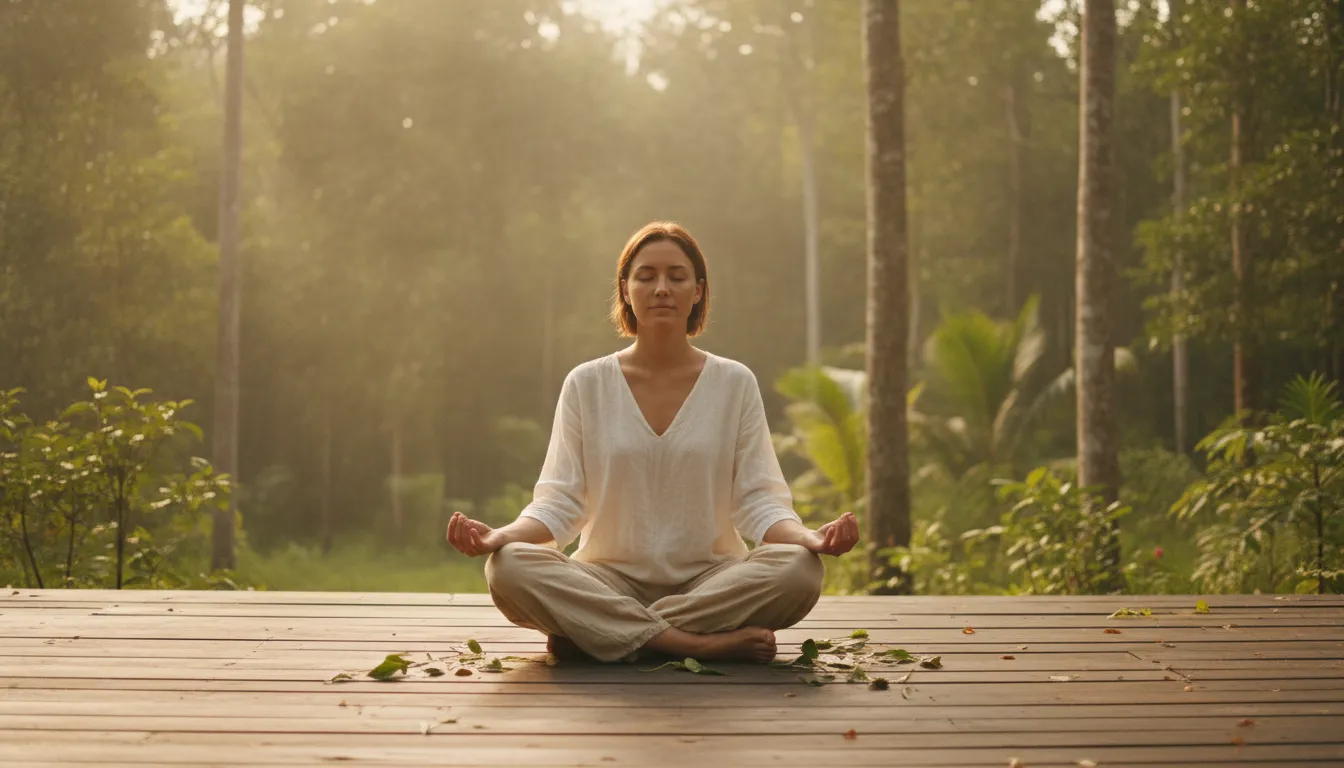
Introduction
Have you ever paused for a few minutes in the middle of a hectic day and realized how fast your mind was racing? Thoughts about work, family concerns, endless to-do lists — all at once. This feeling is increasingly common, and in 2026 the fast pace of modern life continues to take its toll on many people’s mental health. It’s no coincidence that contemplative practices like meditation have garnered so much interest in recent years, both among the general public and the scientific community.
Meditation is neither a passing trend nor an exclusive practice of Tibetan monks. It has existed for millennia in different cultures and traditions, and in recent decades it has been studied with scientific rigor. Researchers from universities around the world have been investigating its effects on stress, anxiety, sleep, attention, and other dimensions of well-being. The results are promising — although, as in any area of science, there is still much to learn.
This article compiles what studies and experts have observed about meditation and its potential benefits for mental health. The goal is to provide clear, honest, and accessible information so that you can make more informed decisions about your own care. And, of course, whenever necessary, the advice is the same: talk to a healthcare professional. Each person is unique, and no text replaces that individualized perspective.
What is meditation, anyway?
The word “meditation” encompasses a broad set of practices, which sometimes causes confusion. Generally, meditating involves intentionally directing attention — whether to the breath, body sensations, an object, a word, or simply the present moment — with an attitude of openness and non-judgment.
Among the most studied modalities are:
- Mindfulness: focusing on the present moment, observing thoughts and sensations without automatically reacting to them.
- Loving-Kindness Meditation: intentionally cultivating feelings of compassion for oneself and others.
- Focused Attention Meditation: sustaining concentration on a single point, such as the breath.
- Movement-based practices: like yoga and tai chi, which combine conscious movement with mindfulness.
Each modality has its own characteristics and may suit different people and goals better. There is no universally “right” approach — the important thing is to find what makes sense for you.
What science observes about meditation and mental health
Research on meditation has grown significantly in recent decades. Systematic reviews and meta-analyses — the types of studies considered most robust in the hierarchy of scientific evidence — have investigated its effects on different conditions.
Stress and Anxiety
Studies suggest that regular mindfulness practices may be associated with reducing stress and anxiety symptoms in diverse populations. A review published in JAMA Internal Medicine indicated that mindfulness-based meditation programs were associated with modest but significant improvements in symptoms of anxiety, depression, and pain. It’s important to note that results vary among individuals and contexts, and meditation is studied as a complementary practice, not as a substitute for established treatments.
Depression
Programs like MBCT (Mindfulness-Based Cognitive Therapy), which combines mindfulness with elements of cognitive-behavioral therapy, have been investigated especially in people with a history of recurrent depression. Research suggests that this approach may help reduce the risk of relapse in some cases. Still, any decision about depression treatment should always be made with a qualified mental health professional.
Emotional Regulation
Meditation is often associated with a greater ability to observe one’s own thoughts and emotions without being dominated by them — what researchers call “decentering” or “cognitive defusion.” With practice, many people report reacting less automatically to stressful situations, which can contribute to healthier interpersonal relationships and better quality of life.
Sleep
There is preliminary evidence that mindfulness practices may contribute to improving sleep quality in some people, possibly by helping reduce so-called “ruminative thinking” — that cycle of worries that often prevents rest. If you’re curious about how sleep impacts mental health, you might be interested in this content on the impact of sleep deprivation on the body and mind.
Meditation as a Complementary Practice: Understanding the Limits
It’s essential to be honest about what meditation is — and what it is not.
Meditation is not a medical treatment and does not replace psychotherapy, medication, or other resources indicated by professionals. It can be a valuable complementary practice, especially when integrated into broader mental health care. But presenting it as a “cure” for mental disorders would be dishonest and potentially harmful.
Just as with other complementary practices — like aromatherapy, which you can read more about in Does Aromatherapy Have Real Benefits? What Research Says — meditation has a growing body of evidence but still faces methodological limitations in some studies, such as small samples and difficulty in blinding participants.
This doesn’t mean the practice isn’t worthwhile. It means we should approach it with realism and balanced expectations.
How to Start: A Practical Starting Point
If you’ve never meditated and want to try, you don’t need any special equipment, a perfect environment, or free hours. Here’s a simple suggestion for beginners:
- Choose a quiet moment — it could be in the morning, before bed, or even during a work break.
- Sit comfortably, with your spine relatively straight, whether in a chair, on the floor, or wherever you prefer.
- Set a small amount of time to start — five to ten minutes is already a valid starting point.
- Direct your attention to your breath: notice the air coming in and out, the sensation in your nose, chest, or abdomen.
- When the mind wanders — and it will wander, that’s completely normal — simply notice it and gently bring your attention back to the breath. Without judging yourself.
- When finished, observe how you feel, without expectations of a specific result.
Over time, many people find apps, guided videos, or practice groups that help maintain regularity. Consistency often matters more than the duration of each session.
Meditation, Self-Knowledge, and Mental Health: A Long-Term Relationship
One of the aspects that makes meditation interesting from a mental health perspective is that it invites self-observation — of one’s own thought patterns, emotional reactions, and mental habits. This self-knowledge can be a powerful starting point for broader changes.
Many people who practice meditation report noticing, over time, that they can more quickly identify when they are stressed, anxious, or exhausted — and this, in itself, is already an important step to seek help or make adjustments before suffering intensifies.
It’s also worth demystifying the idea that meditating means “emptying the mind” or “not thinking about anything.” This is a common misconception. The practice is not about eliminating thoughts, but about changing the relationship with them — learning to observe without being swept away.
When to Seek a Health Professional
Meditation can be a valuable self-care resource, but there are situations where seeking professional support is essential — and the sooner, the better.
Consider seeing a psychologist, psychiatrist, or doctor if you:
- Are experiencing intense and persistent emotional distress
- Feel that anxiety or sadness is significantly interfering with work, relationships, or daily activities
- Have recurrent difficulties sleeping and this is affecting your quality of life
- Are facing thoughts that worry you or seem difficult to control
- Feel you need more than self-care practices to get through the moment
Caring for mental health is an act of responsibility towards oneself, not a sign of weakness. Professionals like psychologists and psychiatrists have specific training to provide the appropriate support for each situation.
If you are in intense distress or crisis, know that help is available. In Brazil, the CVV (Centro de Valorização da Vida) can be reached at 188 (toll-free, 24 hours a day). In case of emergency, seek the nearest emergency room or CAPS (Centro de Atenção Psicossocial).
Conclusion

Meditation is a practice with a long history and a growing body of scientific evidence suggesting it can positively contribute to mental well-being — especially regarding stress, anxiety, emotional regulation, and sleep quality. It is not a magic solution nor a substitute for professional treatments, but it can be a significant ally in everyday mental care.
The most important thing is to approach it with curiosity, patience, and realistic expectations. Each person will find their own path in this practice — and it’s okay if the beginning seems difficult or if the mind doesn’t “quiet” immediately. That’s part of the process.
If this article piqued your interest in exploring more about mental health in an evidence-based way, you can also check out Mental Health: Separating Myths from Common Truths — content that helps dispel very common misconceptions on the subject.
Take care of yourself with kindness and seek support whenever needed.
This content is informative and educational, produced based on available evidence up to the publication date. It does not replace the evaluation, diagnosis, or treatment by a qualified health professional. Each person has a unique story and needs — always consult a doctor, psychologist, or other qualified professional for individual guidance.