
Introduction
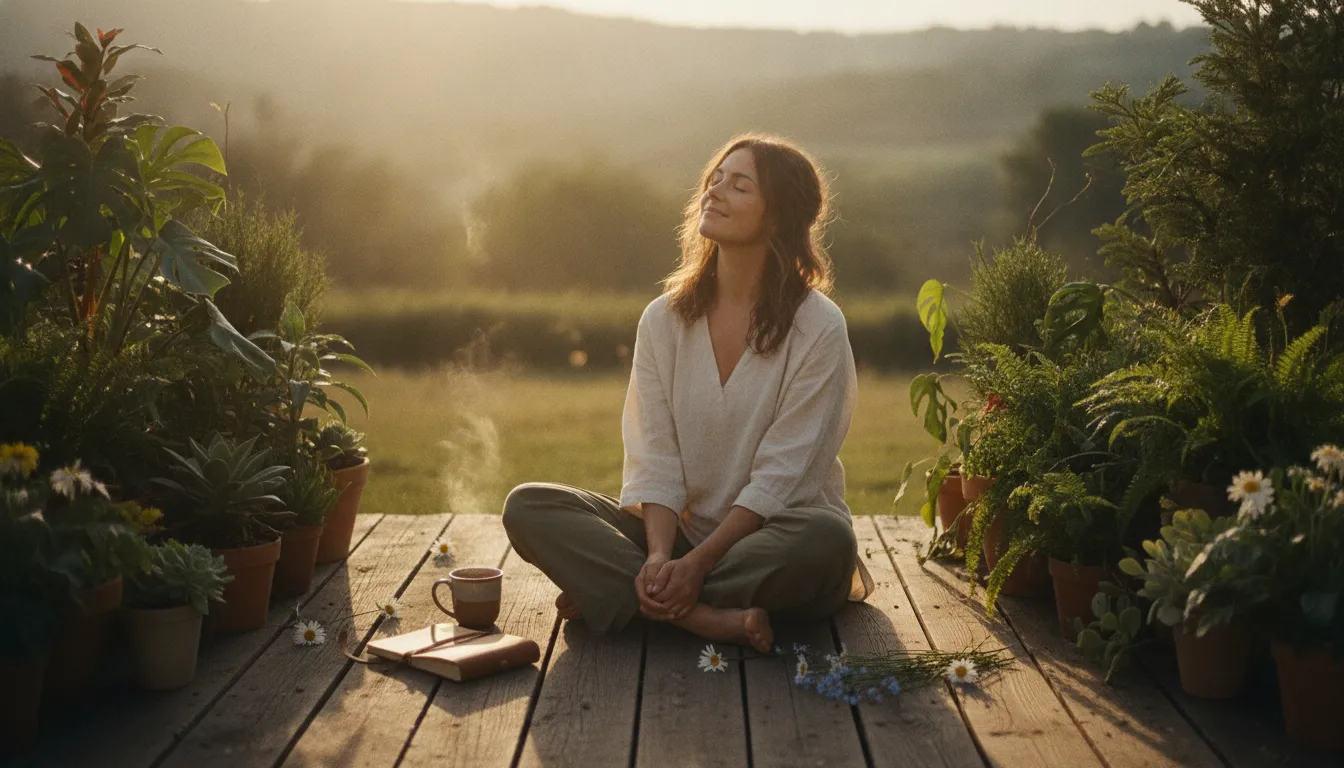
Have you ever stopped in the middle of a busy day to notice something simple that made you feel good — the smell of coffee in the morning, an unexpected message from a friend, the sunlight streaming through the window? These small moments exist almost every day, but often go unnoticed amidst the hustle, worries, and constant flow of information that characterize life in 2026. Practicing gratitude is precisely the exercise of bringing these moments back to the center of our attention.
More than a philosophical or spiritual concept, gratitude has been studied in recent decades as a habit with potential positive impacts on emotional well-being and mental health. Research in the field of positive psychology suggests that cultivating a mindset of recognizing the good in life — even in the face of difficulties — often contributes to a greater sense of satisfaction, social connection, and emotional balance. It’s not about ignoring what’s difficult, but about expanding the ability to also perceive what nurtures.
In this article, you will find practical, accessible, and evidence-based ways to incorporate gratitude into your routine. It doesn’t matter if you’ve never tried anything like this before or if you’ve tried and abandoned it along the way — the idea here is to present possible paths, without pressure and without miraculous promises.
What Science Says About Gratitude
Positive psychology, a field that gained momentum in the 2000s with researchers like Martin Seligman and Robert Emmons, has devoted considerable attention to studying gratitude as an intentional practice. Studies in this area suggest that people who regularly practice gratitude may experience a greater sense of subjective well-being, better quality relationships, and a lower tendency to ruminate — that habit of replaying negative thoughts in a loop.
It’s important to be honest here: most research on gratitude involves specific samples, varied methodologies, and results that don’t always replicate with the same intensity in all contexts. The science in this area is promising but still developing. What can be said with more certainty is that practicing gratitude can help regulate emotions and shift focus — which, in itself, often has positive effects on mood and perception of daily life.
Moreover, some studies suggest a relationship between gratitude and better sleep quality, increased motivation, and strengthened emotional bonds. If you have trouble sleeping, also check out practical tips for sleeping better every night, as emotional well-being and sleep are deeply connected.
Why It’s Hard to Be Grateful Daily
Before discussing how to practice, it’s worth understanding why it can be challenging. The human brain has a natural tendency known as the negativity bias: it tends to give more weight and attention to negative experiences than to positive ones. Evolutionarily, this made sense — being alert to threats was essential for survival. Today, this mechanism is still active but in a very different context.
In addition, we live in an environment full of stimuli that reinforce comparison and dissatisfaction: social media, real-time news, productivity pressures. Feeling like “it’s never enough” is an increasingly common experience. Therefore, gratitude is not something that arises spontaneously for most people — it needs to be cultivated, like a muscle that strengthens with repeated exercise.
Recognizing this difficulty is not a weakness. It is the first step to developing the practice with more compassion for oneself.
Practical Ways to Cultivate Gratitude
There is no single formula. Below are some approaches that often work well and that you can adapt to your reality.
Gratitude Journal
One of the most studied practices is written recording. The idea is simple:
- Choose a time of day — many people prefer morning or before bed.
- Write down three to five things you feel grateful for that day.
- Try to be specific. Instead of “I am grateful for my family,” write “I am grateful for the conversation I had with my sister today, which made me feel understood.”
- Don’t worry about perfect writing. The goal is the process, not the aesthetic result.
- Maintain the practice for at least a few weeks before evaluating if it’s working for you.
Specificity matters because it brings the mind back to concrete details — and it is these details that activate the real feeling of gratitude, not just the abstract thought.
Letters and Messages of Gratitude
Expressing gratitude to others is a powerful way to strengthen bonds and make the practice more concrete. This can be done in simple ways:
- Send a text message acknowledging something someone did for you.
- Write a letter (physical or digital) to someone who had a positive impact on your life.
- Say “thank you” more consciously and in detail, explaining why.
Studies in the area suggest that both those who express and those who receive gratitude usually benefit emotionally from the exchange.
Mindful Pauses
Gratitude doesn’t need to be a formal practice. It can also arise in small pauses throughout the day:
- When taking the first sip of water in the morning, notice the sensation.
- During a meal, pause for a moment to notice flavors and aromas.
- Upon completing a task, acknowledge the effort you put into it.
These micro-pauses are ways to train attention to the present — something that mindfulness practice also proposes, and which has a growing evidence base for supporting emotional well-being.
End-of-Day Review
Before going to sleep, instead of reviewing what went wrong, try asking: “What happened today that was worth noting?” It could be something small — a stranger’s smile, a completed task, a pleasant moment of silence. This habit can help end the day with a more peaceful emotional state.
Gratitude and Mental Health: A Two-Way Relationship
It’s crucial to make it clear: practicing gratitude is not a treatment for mental disorders like depression, anxiety, or other clinical conditions. It can be a complementary tool for mental health care but should never replace professional support.
For people going through a period of intense emotional suffering, forcing a posture of gratitude without support can even generate frustration or guilt. If you feel you are in a difficult moment, the priority is to seek support — from a psychologist, psychiatrist, trusted person, or specialized service.
Mental health deserves the same care as physical health. Taking care of it is not a sign of weakness — it is an act of responsibility towards oneself.
Common Mistakes When Trying to Practice Gratitude
Some common misconceptions can make the practice less effective or even counterproductive:
- Forced gratitude: feeling that you need to “be grateful no matter what” can cause guilt when you simply can’t. The practice should be an invitation, not an obligation.
- Ignoring what’s difficult: healthy gratitude doesn’t mean denying pain or problems. It’s possible to acknowledge what’s good without pretending the bad doesn’t exist.
- Expecting quick results: like any habit, gratitude takes time to consolidate. Consistency over weeks and months usually makes more difference than the intensity of a single day.
- Comparison with others: gratitude is not a competition. What you recognize as positive in your life is valid, regardless of what others have or don’t have.
When to Seek a Health Professional
Practicing gratitude is a valuable self-care resource, but there are times when it is not enough and professional support becomes necessary. Consider seeking help from a psychologist or psychiatrist if you:
- Feel persistent sadness, anxiety, or emptiness for weeks or more.
- Find that you can’t see anything positive in your day, even when trying.
- Are having significant difficulties at work, in relationships, or in daily activities.
- Experience thoughts of hopelessness or that things will never get better.
If you or someone you know is in intense distress or in a crisis situation, know that help is available. In Brazil, the CVV (Centro de Valorização da Vida) can be reached at 188, free of charge, 24 hours a day, 7 days a week. In emergencies, seek the nearest health service or call SAMU (192).
For those in a stage of life where health care needs special attention, such as after 40, it’s worth exploring what is worth prioritizing at this stage: Health after 40: What is Worth Prioritizing.
Conclusion

Practicing gratitude is not about having a perfect life or pretending everything is fine. It’s about developing the ability to notice, more often, what is already present — and that often goes unnoticed in the fast pace of everyday life. It’s an accessible practice that doesn’t require financial resources and can be adapted to any routine.
Start small. One note a day, a sincere message a week, a conscious pause before sleeping. These simple gestures, repeated consistently and without pressure, often create subtle and genuine changes in how you relate to your own life.
Be gentle with yourself in the process. Gratitude, when practiced with honesty and compassion, is a form of care — and you deserve that care.
This content is for informational and educational purposes and does not replace the evaluation, diagnosis, or monitoring of a health professional. Each person has individual needs, and only a qualified professional can guide the most appropriate care for your case.