
Aromatherapy: What the Evidence Says About Its Effects
Have you ever felt that sense of calm when smelling lavender, or noticed how a space with a pleasant aroma seems to make everything a little lighter? This everyday experience is the starting point of aromatherapy — an ancient practice that, in recent decades, has begun to be studied with more scientific rigor. In 2026, it occupies a curious space: it is simultaneously an ancestral tradition and an active field of research, with promising results in some areas and important gaps in others.
Aromatherapy consists of the use of essential oils — concentrated plant extracts — for purposes that can include emotional well-being, relaxation, and support for certain symptoms. It is classified as a complementary therapy, which means that when used, it ideally happens alongside conventional medical care, and never as a substitute. This point is fundamental to any honest conversation on the subject.
In this article, we will explore what science has already identified, what is still under investigation, how aromatherapy is used in practice, and what essential precautions are needed to use it safely. The idea is not to convince you of anything, but to offer information so you can make more conscious choices — always with the support of healthcare professionals.
What is aromatherapy and how does it work
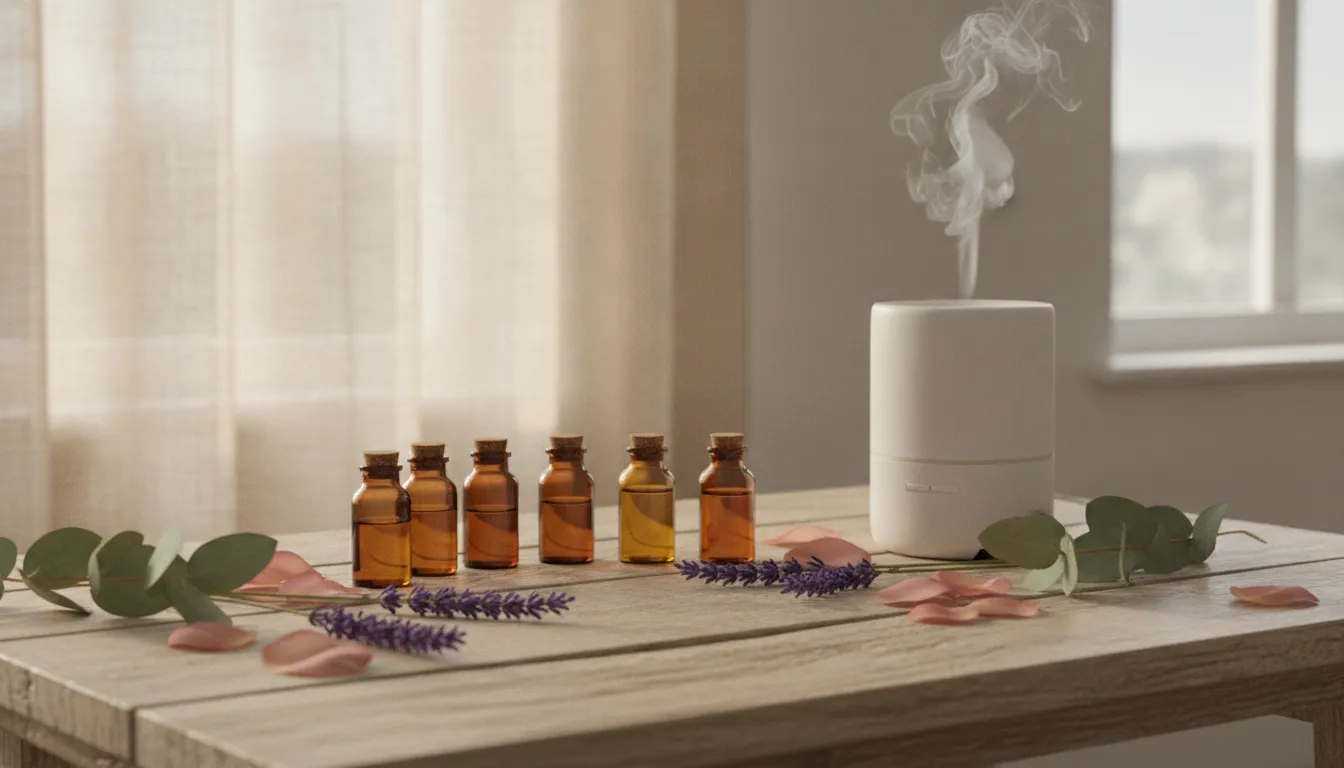
Aromatherapy uses essential oils derived from flowers, leaves, roots, bark, and seeds of plants. These oils can be used in different ways:
- Inhalation, through diffusers, vaporizers, or simply by dropping a few drops on a tissue
- Topical application on the skin, always diluted in a carrier oil (such as coconut or almond oil), since pure essential oils can cause irritation
- Addition to baths, also always diluted
From a biological perspective, researchers suggest that inhaled aromas can stimulate the olfactory system, which has direct connections to brain structures linked to emotion and memory — such as the amygdala and hippocampus. This helps explain why certain scents evoke such vivid memories or can quickly alter mood. However, the exact mechanisms are still being studied, and much of what is known is based on smaller-scale studies or animal models.
What research suggests (and how to interpret it with caution)
This is where the conversation gets more interesting — and more honest. Research on aromatherapy has advanced in recent decades, but still faces important methodological challenges, such as small samples, difficulty creating reliable control groups (how do you create an “aroma” placebo?), and variation in the quality of oils used.
With these caveats in mind, some areas present results that stand out:
Anxiety and stress
Studies published in journals such as the Journal of Alternative and Complementary Medicine and more recent systematic reviews suggest that inhalation of oils such as lavender may be associated with reductions in anxiety measures in specific contexts, such as before medical procedures or in hospital settings. A lavender compound called linalol has been investigated for possible effects on the nervous system. The results are modest, but consistent enough to justify further research.
Sleep quality
Literature reviews suggest that aromatherapy with lavender may contribute to improved sleep quality in some populations, including older people and students during stressful periods. However, the effects vary greatly between individuals, and science does not yet allow categorical statements.
Nausea and discomfort
The essential oil of ginger and peppermint have been studied as possible adjuncts in relieving nausea — especially in the context of chemotherapy and post-operative nausea. Some evidence is encouraging, but experts emphasize that these uses should be discussed with the healthcare team responsible for treatment.
Pain and muscle tension
Some studies have explored the topical use (with diluted oils) of compounds such as eucalyptus and peppermint for feelings of tension and discomfort. Results suggest possible benefit in cases of tension headaches, but evidence is still limited.
What becomes clear: aromatherapy is not a dismissible pseudoscience, but it is also not a panacea with solid evidence for all its claims. The most responsible stance is to acknowledge where data exists, where it is inconclusive, and where quality studies are still lacking.
Common uses and how to incorporate safely
If you are curious about exploring aromatherapy as part of a wellness routine, there are some general practices that are often recommended by professionals in the field:
- Start with inhalation — it is the method considered safest for beginners. Using a diffuser with water or simply inhaling gently from a tissue with one drop of the oil is a simple starting point.
- Never apply pure essential oil directly to your skin. Always dilute in a carrier oil before any topical application.
- Research the source of the oil. Quality varies greatly between brands. Prefer products with clear information about the plant of origin, extraction method, and composition.
- Do a small patch test on skin before using any topical product to check for possible reactions.
- Keep out of reach of children and pets. Many essential oils can be toxic to pets, especially cats, and should be used with great caution around babies.
- Inform your doctor or healthcare team if you use or plan to use aromatherapy, especially if you are pregnant, breastfeeding, undergoing cancer treatment, or taking medication regularly.
Incorporating aromatherapy as part of broader healthy habits — such as regular sleep, physical activity, and stress management — can make the experience more meaningful than using it in isolation.
Most-studied oils: a general overview
| Essential Oil | Most investigated area | General evidence level |
|---|---|---|
| Lavender | Anxiety, sleep | Moderate (promising, but limited) |
| Peppermint | Nausea, headache | Moderate |
| Ginger | Nausea | Moderate |
| Bergamot | Stress, mood | Preliminary |
| Eucalyptus | Congestion, muscle pain | Preliminary |
| Chamomile | Relaxation, anxiety | Limited |
This table is illustrative and does not represent therapeutic approval. Always consult a professional.
Aromatherapy and mental health: a relationship that deserves care
For those living with anxiety, depression, or other mental health disorders, aromatherapy can emerge as a “more natural” alternative and, because of this, be viewed with hope. It is important to welcome this search without judgment — after all, wanting to feel better is completely legitimate.
At the same time, it is important to be honest: aromatherapy does not treat mental disorders. It may, in some contexts, contribute to a more relaxing environment or assist in managing occasional stress symptoms — but this is different from treating a diagnosed mental health condition.
If you are going through an emotionally difficult time, the support of a psychologist or psychiatrist is irreplaceable. You can learn more about how this process works in our article on therapy: how it works and why it can help. And if you are in severe distress or crisis, remember: the CVV (Center for the Valorization of Life) is available 24 hours at number 188, free of charge, throughout Brazil. In an emergency, call SAMU (192) or the nearest urgent care facility.
What we still don’t know: the research gaps
Being evidence-based means also being honest about what is still unknown. Aromatherapy faces real research challenges:
- Standardization: oils from different brands and origins have different chemical compositions, making it difficult to compare across studies.
- Placebo effect: it is difficult to separate the effect of the aroma itself from the well-being generated by the self-care ritual that accompanies it.
- Studied populations: many studies were conducted with specific populations (hospitalized patients, students), and results don’t always generalize.
- Long-term effects: most studies measure short-term effects. Little is known about prolonged use.
This does not invalidate the practice — it means it deserves more quality research, and that claims need to be proportional to what the data shows.
When to seek a healthcare professional
Aromatherapy is generally safe when used responsibly, but there are situations where talking to a professional is especially important:
- If you are pregnant or breastfeeding — several essential oils are not recommended during this period
- If you have respiratory allergies, asthma, or skin conditions
- If you are in medical treatment for any condition (oncological, cardiac, psychiatric, among others)
- If you will use it on children or elderly people
- If you experience any adverse reaction after use, such as skin irritation, difficulty breathing, or dizziness
- If you are seeking aromatherapy to deal with persistent symptoms that still have no diagnosis
A doctor, dermatologist, pharmacist, or qualified therapist can help guide use in an individualized and safe manner.
Conclusion: a practice that deserves honest curiosity
Aromatherapy is a fascinating area — it is at the intersection of tradition, sensoriality, and emerging science. There is evidence suggesting real benefits in specific contexts, especially related to relaxation and stress management. At the same time, there is much we still don’t know, and many popular claims go beyond what the data justifies.
The best way to relate to this practice is with honest curiosity: without magical expectations, without abandoning conventional treatments, and always with openness to discussing with healthcare professionals what is appropriate for your case. Taking care of yourself is a continuous process, made up of small choices and much self-knowledge.
This content is informative and educational, and does not substitute for evaluation, diagnosis, or treatment by a qualified healthcare professional. Each person has individual needs, and healthcare decisions should be made in conjunction with your medical team.