Active Seniors: Simple Strategies to Support Movement
Aging is one of the most universal experiences of human life — and also one of the most diverse. Each person ages in their own unique way, carrying their own history, body, and particular challenges. In 2026, Brazil has one of the fastest-growing elderly populations in the world, and with that comes an increasingly relevant question: how can we support movement and vitality throughout the years in a safe, realistic, and respectful way?
The good news is that keeping the body moving in the third age doesn’t have to mean intense gyms or exhausting routines. Research suggests that regular physical activities appropriate to each person’s profile tend to contribute to quality of life, functional independence, and emotional well-being in older adults. The World Health Organization (WHO) recognizes physical activity as one of the central pillars of healthy aging — and the best starting point is always what is possible, comfortable, and sustainable for each individual.
This article was written to offer general, welcoming, and evidence-based information for anyone who wants to better understand how to support movement in the lives of older adults — whether you are that person, a family member, or someone close to you. We remind you from the start: each person has their own health particularities, and any change in physical activity routines should be discussed with a doctor or qualified health professional.
Why Movement Matters So Much in the Third Age
The human body was made to move. With aging, some natural changes happen — such as gradual reduction in muscle mass (a process called sarcopenia), decreased bone density, and changes in balance and flexibility. These processes are normal, but they are not inevitably disabling.
Regular practice of appropriate physical activity is usually associated with a series of benefits observed in research:
- Maintenance of muscle strength and balance, which can help reduce the risk of falls — one of the main public health concerns for older adults
- Support for cardiovascular and respiratory health
- Stimulation of mood and mental health, since movement tends to contribute to reducing symptoms of anxiety and sadness
- Maintenance of functional independence, allowing the person to perform daily activities with more autonomy
- Improved sleep quality — a benefit that is especially valuable, since sleep disorders are common in this age group
It’s worth noting that these benefits don’t appear overnight and vary from person to person. Consistency over time is usually more important than intensity.
What Physical Activity Guidelines Say for Older Adults
The WHO, in its most recent guidelines, generally recommends that adults aged 65 and older practice at least 150 minutes of moderate aerobic activity per week (such as brisk walking) or 75 minutes of more intense activity, plus muscle-strengthening exercises at least twice a week.
These recommendations are general reference points, not rigid obligations. Brazil’s Ministry of Health also advises that older adults with mobility limitations prioritize activities that improve balance and prevent falls, adapted to their individual conditions.
The most important message is central: any amount of movement is better than none. Starting slowly, with consistency, and within the limits of each body usually proves to be the safest and most effective approach.
Simple Strategies to Incorporate Movement Into Daily Life
The good news is that “being active” doesn’t require sophisticated equipment or specific spaces. There are many ways to support movement in an accessible and enjoyable way.
Walking: The Most Accessible Starting Point
Walking is often cited in studies as one of the most beneficial and accessible activities for older adults. It can be done in parks, on sidewalks, in home corridors — or even in a shopping mall on rainy days. Starting with short walks and gradually increasing time and distance, as comfort allows, is usually a sustainable strategy.
Balance and Coordination Exercises
Activities that work on balance — such as standing on one leg (with nearby support), tai chi chuan exercises, or dance classes — can help prevent falls. Tai chi chuan, specifically, has been studied as a practice that can help older adults improve balance and confidence in movement.
Light Muscle Strengthening
Simple exercises using body weight — such as sitting down and standing up from a chair several times (called “sit and stand”), carefully climbing stairs, or light exercises with elastic bands — can help maintain muscle strength. These exercises are especially important for preserving the ability to perform daily tasks.
Stretching and Flexibility
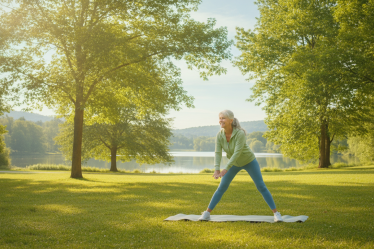
Gentle stretches, performed slowly and without forcing too much, tend to contribute to joint mobility and an overall sense of well-being. Yoga adapted for older adults is an option that combines stretching, breathing, and mindfulness — and can be found in various gyms, community centers, and even on digital platforms.
Enjoyable and Social Activities
An often-overlooked aspect: movement doesn’t have to be called “exercise”. Dancing, gardening, walking with a dog, playing with grandchildren, or participating in walking groups are forms of movement that also nurture the social and emotional side of life — which, in itself, has immense value for well-being in the third age.
The Role of Environment and Social Support
Maintaining an active routine is much easier when there is support around you. Environments that favor movement — such as safe sidewalks, accessible parks, and community spaces — make a big difference. Similarly, having company for walking, a dance group, or a water aerobics class tends to increase adherence and make movement something enjoyable, rather than mandatory.
Family members and caregivers also have an important role: encouraging without pressure, respecting the older person’s limits, and celebrating small achievements are attitudes that make all the difference. The autonomy and protagonism of the older person should always be respected.
For those who struggle with motivation and procrastination in general — not just regarding movement — it may be interesting to better understand this pattern: Procrastination: understanding the pattern can be the first step.
Movement and Mental Health: A Connection That Deserves Attention
The impact of movement on the emotional well-being of older adults is a growing field of research. Studies suggest that regular physical activity can be associated with reduced symptoms of depression and anxiety, as well as contributing to a sense of purpose and belonging — especially when done in groups.
Loneliness and social isolation are real challenges for many older adults, and physical activity can be a bridge to human connection. But it’s important to recognize that when feelings of sadness, apathy, or distress are intense and persistent, movement alone is not enough. In these cases, seeking support from a psychologist, psychiatrist, or trusted doctor is essential. Intense emotional suffering deserves specialized attention — and asking for help is always an act of courage.
In cases of emotional crisis, remember: the CVV (Center for the Valorization of Life) serves for free by phone 188, 24 hours a day.
A good night’s sleep is also deeply linked to physical and emotional well-being. If this is a challenge, it’s worth checking out: How to sleep better: practical tips for peaceful nights.
When to Seek a Health Professional
Before starting or intensifying any physical activity routine, it is essential to talk to a doctor, especially if there are health conditions such as heart disease, osteoporosis, diabetes, arthritis, history of falls, or any mobility limitation. A physical education professional with experience working with older adults can also be a valuable ally in guiding safe and individualized exercises.
See a health professional if:
- There is intense pain during or after physical activity
- Dizziness, severe shortness of breath, or palpitations occur
- There is a fall or increased risk of falls
- The older adult shows resistance or fear of movement (which may indicate unreported pain or another health issue)
- There are doubts about which activities are safe for the specific health condition
Keeping up with routine check-ups is also an essential part of comprehensive care. To learn more about this, see: Routine exams by age: why they matter.
Conclusion: Movement as a Celebration of Life
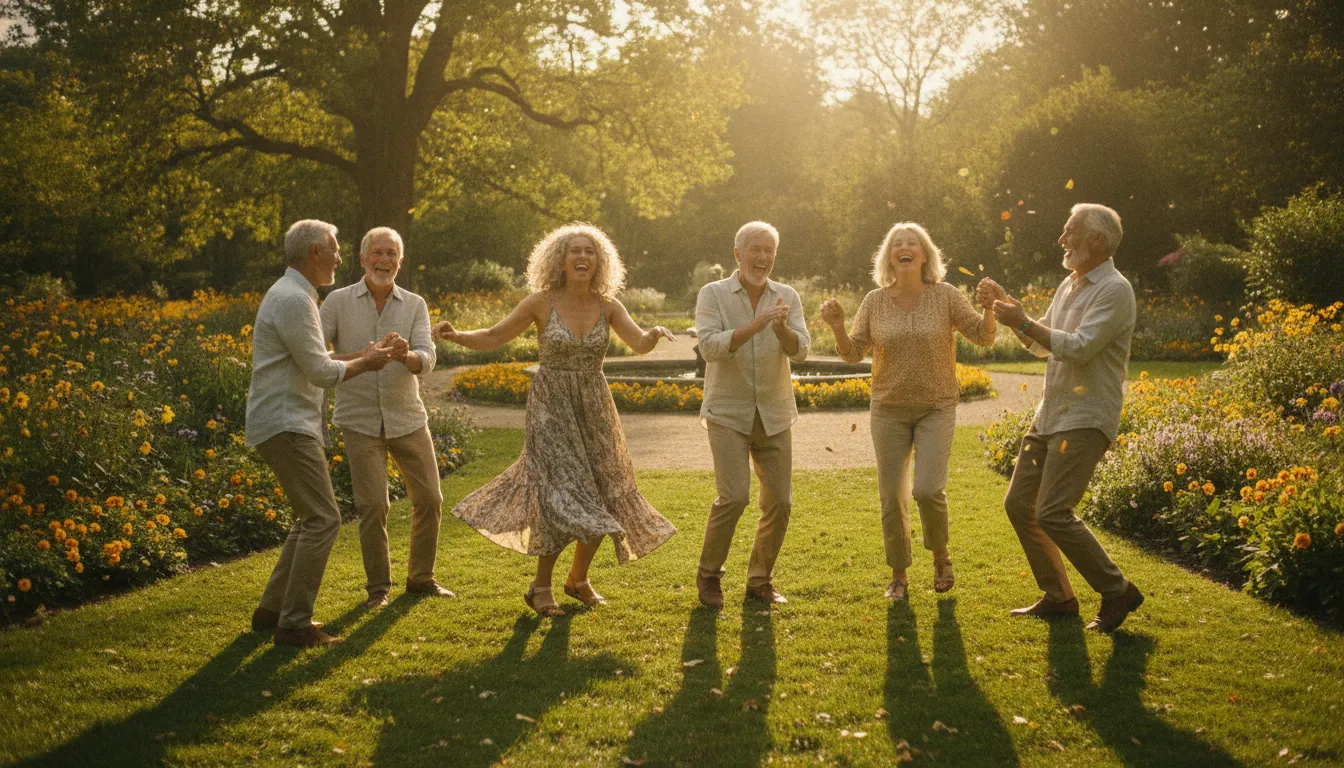
Aging actively doesn’t mean denying the passage of time or reaching physical standards from another phase of life. It means finding ways to move that respect the body of today, that bring pleasure, and that contribute to quality of life in the present.
Every step taken, every stretch, every improvised dance in the living room — it all counts. Movement, in whatever format fits into each person’s life, is a way of caring for yourself and celebrating the ability to be in the world.
If you care for an older adult or are an older adult seeking new ways to stay active, know that the most important path is the one that fits your reality. With patience, consistency, and proper professional support, it’s possible to build a movement routine that makes sense — and feels good — for you.
This content is informative and educational and does not replace the evaluation, diagnosis, or guidance of a health professional. Each person has individual needs, and any change in physical activity routine should be discussed with a doctor or qualified professional.