
Introduction
There is something almost poetic in the simplicity of water. It has no striking color, no exotic taste, it doesn’t come wrapped in colorful promises. And yet, it is one of the most essential elements for our body to function well every day. In 2026, we live surrounded by functional beverages, liquid supplements, and hydration trends that emerge on social media at an impressive speed. But amid all this noise, water remains the starting point.
Science is clear in affirming that the human body is composed largely of water — widely accepted estimates indicate that this percentage is around 60% in adults, varying according to age, sex, and body composition. It participates in virtually all physiological processes: from digestion to circulation, from temperature regulation to kidney function. It is no exaggeration to say that adequate hydration is a foundation of well-being.
This article does not aim to dictate rigid rules or make promises. It exists to offer information based on evidence, in an accessible way, so you can better understand the role of water in your daily life. For specific guidance on your health, always consult a healthcare professional.
Why does the body need so much water?
Water is not just a transport vehicle within the organism — it is the protagonist in processes that happen silently all the time. See some of its main functions:
- Regulation of body temperature: sweat is the way the body uses to dissipate heat. Without enough water, this mechanism is compromised.
- Transport of nutrients and oxygen: blood, largely composed of water, carries essential substances to cells.
- Elimination of waste: the kidneys depend on water to filter blood and produce urine, removing substances the body doesn’t need.
- Lubrication of joints: synovial fluid, present in joints, has water as a central component.
- Digestion: saliva, gastric juices, and intestinal movements depend on adequate hydration to function well.
- Cognitive functions: studies suggest that even mild levels of dehydration can affect attention, concentration, and mood.
The World Health Organization (WHO) and the Ministry of Health of Brazil recognize hydration as a fundamental part of a healthy lifestyle. It is not a detail — it is structure.
How much water does each person need?
Here it’s worth being honest: there is no single recommendation that works for everyone. Water needs vary greatly according to factors such as:
- Age and body weight
- Level of physical activity
- Climate and ambient temperature
- Health conditions (such as kidney disease, heart disease, or diabetes)
- Diet (those who consume more fruits and vegetables, for example, get part of their water through these foods)
- Pregnancy and breastfeeding
The reference of “eight glasses a day” is widely circulated, but scholars in nutrition and health emphasize that it is an oversimplification. Some people need more; others need less. What scientific literature usually points out is that urine color can be a practical indicator: clear or pale yellow urine generally suggests good hydration; dark urine may indicate a need to drink more.
Again: to know what is adequate for your specific case, the ideal is to talk to a doctor or nutritionist.
Signs that you might be drinking too little water
The body sends signals when hydration is not adequate. Some of them are quite well known; others are less obvious:
- Thirst — yes, it is a signal, but it is not always the first to appear, especially in elderly people
- Dark urine or reduced urine volume
- Fatigue and sense of exhaustion without apparent cause
- Frequent headaches
- Difficulty concentrating or “heavy head”
- Dry skin or reduced elasticity
- Constipation
- Dizziness, especially when standing up
It is important to note that these symptoms have many possible causes. They should not be interpreted as a diagnosis of dehydration — but they can be an invitation to observe your hydration habits more carefully.
Practical tips for drinking more water every day
Knowing that water does you good is one thing. Incorporating the habit of drinking water regularly is another. For many people, the challenge is not the information — it is the practice. See some strategies that usually help:
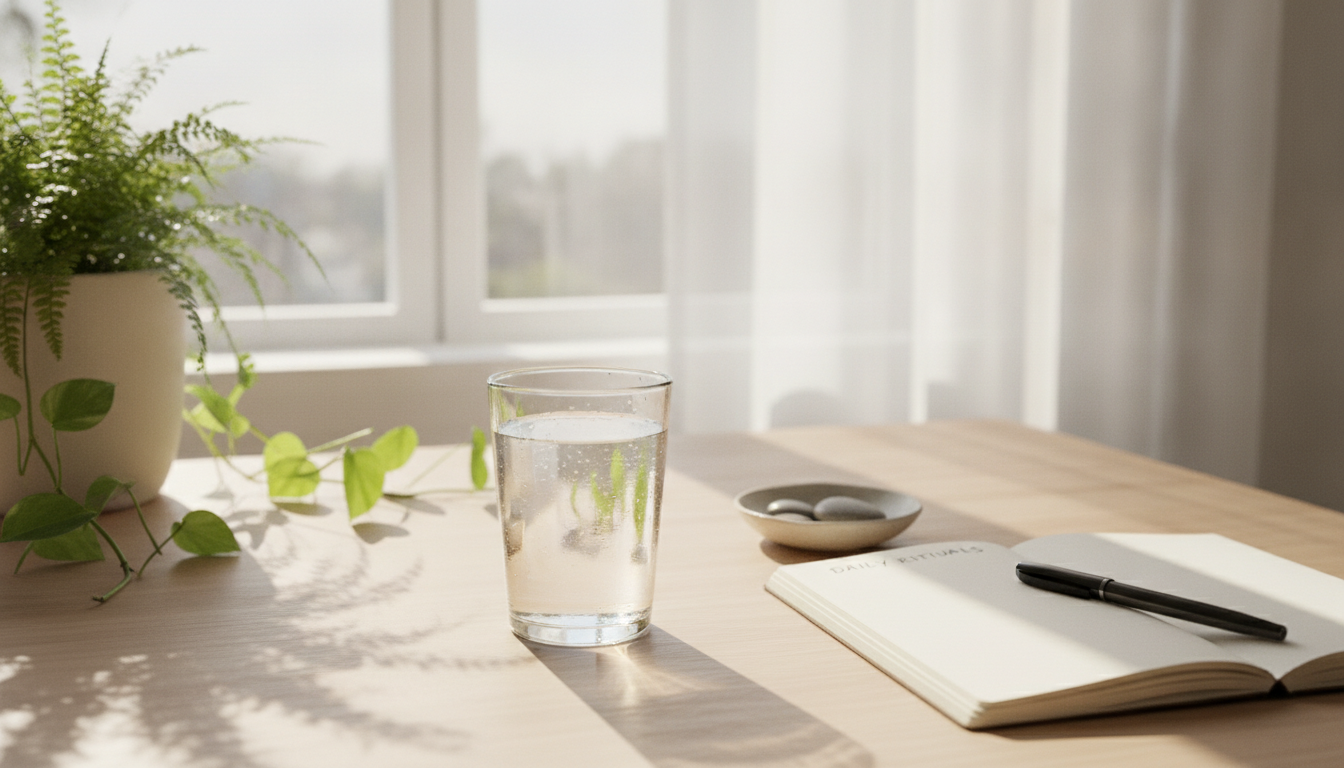
- Start your day with a glass of water. Before coffee, before your phone. It is a simple ritual that already begins hydration after hours without drinking anything.
- Make water visible. A water bottle on your work desk, a pitcher on the kitchen counter — what is in sight tends to be used.
- Associate water with moments that already exist in your routine. Before meals, after using the bathroom, when waking from a nap. By anchoring the habit to something that already happens, it becomes easier to remember.
- Use apps or alarms, if that works for you. There are free apps that send reminders throughout the day. For some people, this type of support makes a difference.
- Try varying it. Water with lemon slices, mint leaves, or ginger can make the experience more pleasant without adding sugar.
- Include water-rich foods. Watermelon, cucumber, lettuce, tomato, orange — they all contribute to total hydration. A balanced diet supports hydration. Learn more about healthy food choices here.
- Observe how you feel. Pay attention to your body before and after improving your water intake. This personal feedback can be an important motivator.
Hydration in special life phases
Some phases of life require extra attention to hydration:
Children and adolescents
Children have a higher proportion of body water and can dehydrate more quickly, especially on hot days or during physical activity. Since they don’t always communicate thirst clearly, adults around them need to be attentive.
Elderly people
With aging, the sensation of thirst tends to decrease, which increases the risk of dehydration even without the person noticing. Additionally, some common medications in this age group can influence liquid needs. Those who care for elderly people should include hydration as part of care routines. If you want to know more about health in this life stage, this article on physical activity in the elderly may complement your reading.
Pregnant women and people who are breastfeeding
Fluid needs increase during pregnancy and, especially, during breastfeeding. Individual guidance from a healthcare professional is essential during this period.
Physical activity practitioners
Sweating increases the loss of water and electrolytes. Replacement should happen before, during, and after exercise. In very intense or prolonged activities, hydration deserves special attention.
Can excess water also be a problem?
Yes, although it is a rare situation in the context of daily life. Excessive water consumption in a short period — a condition called dilutional hyponatremia — can overload the kidneys and alter the balance of electrolytes in the blood, with serious consequences. This usually occurs in specific situations, such as marathons, extreme endurance tests, or, in some cases, in people with medical conditions that affect the sensation of thirst.
For most healthy people who drink water throughout the day according to thirst and routine, the risk is very low. But the message here is: balance matters, and professional guidance is always welcome.
When to seek a healthcare professional
Although hydration is an everyday habit, there are situations where it is important to seek medical guidance:
- Persistent signs of dehydration, such as very dry mouth, intense dizziness, mental confusion, or absence of urine for many hours
- Excessive and constant thirst, which may be associated with conditions like diabetes
- Fluid retention, swelling in limbs, or difficulty urinating
- Preexisting health conditions, such as kidney, heart, or liver disease, which directly influence the amount of fluid recommended
- Use of medications that affect fluid balance
- Prolonged nausea, vomiting, or diarrhea, which can cause dehydration quickly
In these cases, don’t wait for symptoms to worsen. A doctor is the most qualified person to evaluate your situation safely.
Conclusion
Drinking water is one of the simplest and most powerful habits that exist. It requires no equipment, doesn’t cost much, doesn’t require elaborate planning. And yet, it is surprisingly easy to neglect in the fast pace of modern life.
The good news is that small changes in your daily life can make a difference. It’s not about perfection, but about awareness. Observing your own body, creating gentle routines, and remembering that taking care of yourself often begins with the simplest gestures — like getting up and drinking a glass of water.
Take care of yourself with love and, whenever you have doubts about your health, seek out a healthcare professional you trust. That is the safest and most respectful way toward your body.
> This content is informative and educational, and does not replace assessment, diagnosis, or treatment by a healthcare professional. Always consult a doctor, nutritionist, or other qualified professional for guidance specific to your case.