
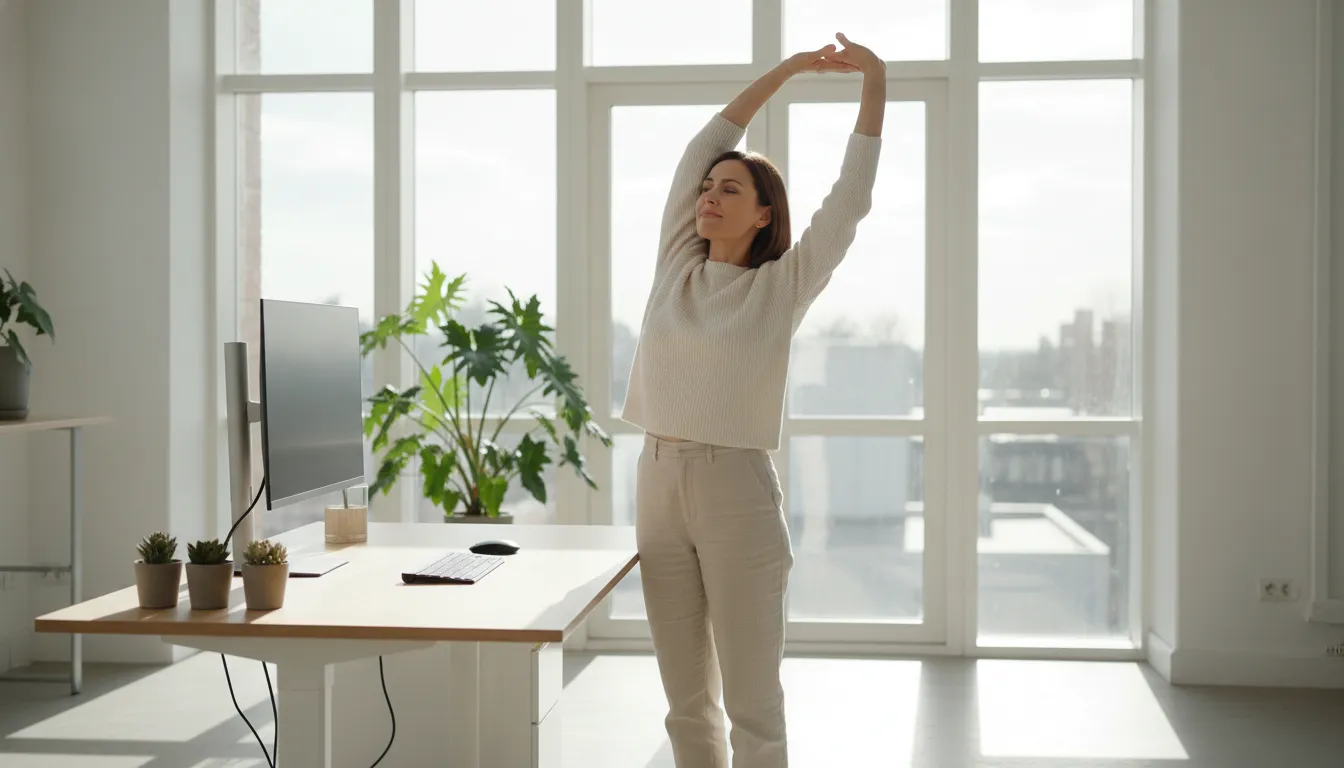
Why Workplace Posture Deserves Your Attention
If you spend a significant part of your day sitting in front of a screen, you might have felt that familiar tension in your shoulders, persistent neck pain, or discomfort that appears at the end of the workday and simply won’t go away. This experience is more common than it seems — and for good reason. The human body was designed for movement, and long periods in static positions, especially when the work environment is not suited to our anatomy, often lead to real consequences for musculoskeletal health.
In 2026, with hybrid and remote work solidified in many sectors, the challenge of posture has gained new layers. People have started setting up their “offices” at dining tables, sofas, and even beds — environments that rarely offer the necessary ergonomic support. At the same time, the digital workday has expanded: video meetings, constant notifications, and hours in front of multiple screens have become routine for millions of Brazilians.
The good news is that there are evidence-based strategies that can help reduce discomfort and better care for the body during work. This article gathers educational information on ergonomics, movement habits, and postural self-care — without miraculous promises, but with practical and honest guidance. As always, the tips presented here are general: each body is unique, and a healthcare professional can guide what works best for you.
What is Ergonomics and Why It Matters
Ergonomics is the science that studies the relationship between people, environments, and the tools they use — with the aim of adapting work to humans, not the other way around. In the context of office work (in-person or remote), this means considering how chairs, desks, monitors, keyboards, and even lighting influence the posture and well-being of those who work.
International occupational health organizations and studies published in specialized journals indicate that poorly adapted work environments are associated with frequent musculoskeletal complaints, such as lower back, neck, and upper limb pain. This does not mean that ergonomics is a magic solution — but it often contributes significantly when applied consistently.
It’s worth noting: ergonomics is not just about expensive equipment. Many adjustments are simple and accessible, and make a difference in daily life.
How to Organize Your Workspace
Before thinking about exercises or breaks, the first step is to look at the environment where you work. Some basic adjustments can help reduce postural strain throughout the day:
The Chair
- Height: your feet should be flat on the floor (or on a footrest), with knees at approximately 90 degrees.
- Backrest: should support the lumbar region (lower back). If your chair lacks adequate lumbar support, a small cushion behind your back can help.
- Seat depth: try to leave a small space between the end of the seat and the back of the knees to avoid compressing circulation.
The Desk and Monitor
- The desk surface should be at elbow height when arms are relaxed at the side of the body.
- The computer screen should be approximately at eye level or slightly below, at a distance of about 50 to 70 cm from the face — this prevents constant neck tilting up or down.
- If you use a laptop as your main device, consider a laptop stand (along with an external keyboard and mouse) can help keep the neck in a more neutral position.
Keyboard and Mouse
- They should be positioned so that elbows are close to the body and wrists are not bent during typing.
Posture: What “Sitting Correctly” Really Means
There is a popular myth that there is one perfect posture and that maintaining it all day solves the problem. Science today suggests a slightly different view: the best posture is the one that changes. In other words, remaining static for hours in any position — even if seemingly “correct” — can cause muscle strain.
Some principles often advised by ergonomics and physiotherapy professionals:
- Keep the spine in a neutral position: this does not mean completely straight and rigid backs, but respecting the natural curves of the cervical, thoracic, and lumbar spine.
- Avoid crossing legs for long periods: this habit can unbalance the pelvis and strain the hip muscles.
- Support the forearms: when typing, try not to keep shoulders raised or tense. Relaxed shoulders make a difference.
- Check chin position: the chin projected forward (the so-called “turtle position”) is one of the most common patterns in those working with screens and is associated with neck pain.
- Change positions regularly: alternating between sitting and standing (if you have access to an adjustable desk) or simply adjusting position every hour can help better distribute the load on muscles.
The Importance of Movement Throughout the Day
No ergonomic adjustment can replace movement. Studies suggest that prolonged sedentary behavior is associated with a range of health consequences — not only musculoskeletal but also cardiovascular and metabolic. The World Health Organization (WHO) recommends reducing sedentary time and interspersing it with physical activity throughout the day.
In practice, this can mean:
- Taking regular breaks: getting up from the chair every 30 to 60 minutes, even if just for a few minutes, often contributes to relieving accumulated muscle tension.
- Using alarms or reminder apps: there are digital tools that notify when it’s time to take a break — they can be useful for those who get lost in work and forget to move.
- Using breaks to move: a short walk, light stretches, or simply standing for a few minutes already makes a difference.
If you want to learn more about how to include physical activity in your routine in a balanced way, check out the article How Much Exercise Per Week is Recommended for Health? — it provides information based on current health guidelines.
Stretches and Exercises That Can Help
Simple movements, done during or at the end of the workday, can help alleviate accumulated tension. Below are some examples of common stretches — but remember, if you already feel intense pain or have a specific health condition, it’s essential to consult a physiotherapist or doctor before starting any exercise.
- Gentle neck rotation: slowly tilt your head to one side, holding for a few seconds, and then to the other. Avoid abrupt movements.
- Chin retraction (“chin tuck”): gently push the chin back, as if trying to create a “double chin”. This movement can help work the cervical muscles in opposition to the turtle position.
- Shoulder opening: interlace fingers behind the back and, carefully, expand the chest by opening the shoulders backward.
- Wrist stretch: extend the arm forward, bend the wrist up with the help of the other hand and then down, holding for a few seconds.
- Thoracic spine mobilization: sitting, place hands on the nape and gently extend the trunk backward, moving the area between the shoulder blades.
Practices like yoga have also been studied for their potential benefits to musculoskeletal health and overall well-being. If you’re curious, you can explore the topic in more depth.
The Impact of Posture on Mental Health
There is a relationship, still under study, between body posture and emotional states. Researchers in the field of embodied cognition suggest that the way we position ourselves can subtly influence how we feel. More open and upright positions are often associated with feelings of greater vitality, while slouched positions can reinforce states of fatigue or low mood.
This does not mean that “sitting up straight” will solve complex emotional issues — it won’t. But taking care of the body as a whole, including posture, can contribute to an overall sense of well-being. Additionally, chronic pain — often associated with postural problems — has a real impact on mental health, potentially increasing anxiety symptoms and affecting sleep quality. If you notice that pain is influencing your mood or routine, it’s important to talk to a healthcare professional.
Speaking of sleep, it also plays an important role in muscle recovery and readiness for the next day. If you want to explore this topic, check out the article Healthy Sleep Routine: Where to Start.
When to Seek a Healthcare Professional
General tips have their value, but there are situations where the guidance of a specialized professional is indispensable. Seek a doctor, physiotherapist, or other healthcare professional if you notice:
- Persistent pain in the neck, shoulders, back, or limbs that does not improve with postural adjustments or rest.
- Tingling, numbness, or weakness in the arms, hands, legs, or feet — these symptoms may indicate nerve compression and deserve evaluation.
- Pain that progressively worsens or interferes with your daily activities.
- Frequent headaches associated with neck tension.
- Any doubt about which posture or exercise is suitable for your specific case.
A physiotherapist, for example, can conduct an individualized assessment and suggest exercises and strategies more suited to your history. In work contexts, an ergonomics professional can help analyze the environment more thoroughly.
Conclusion
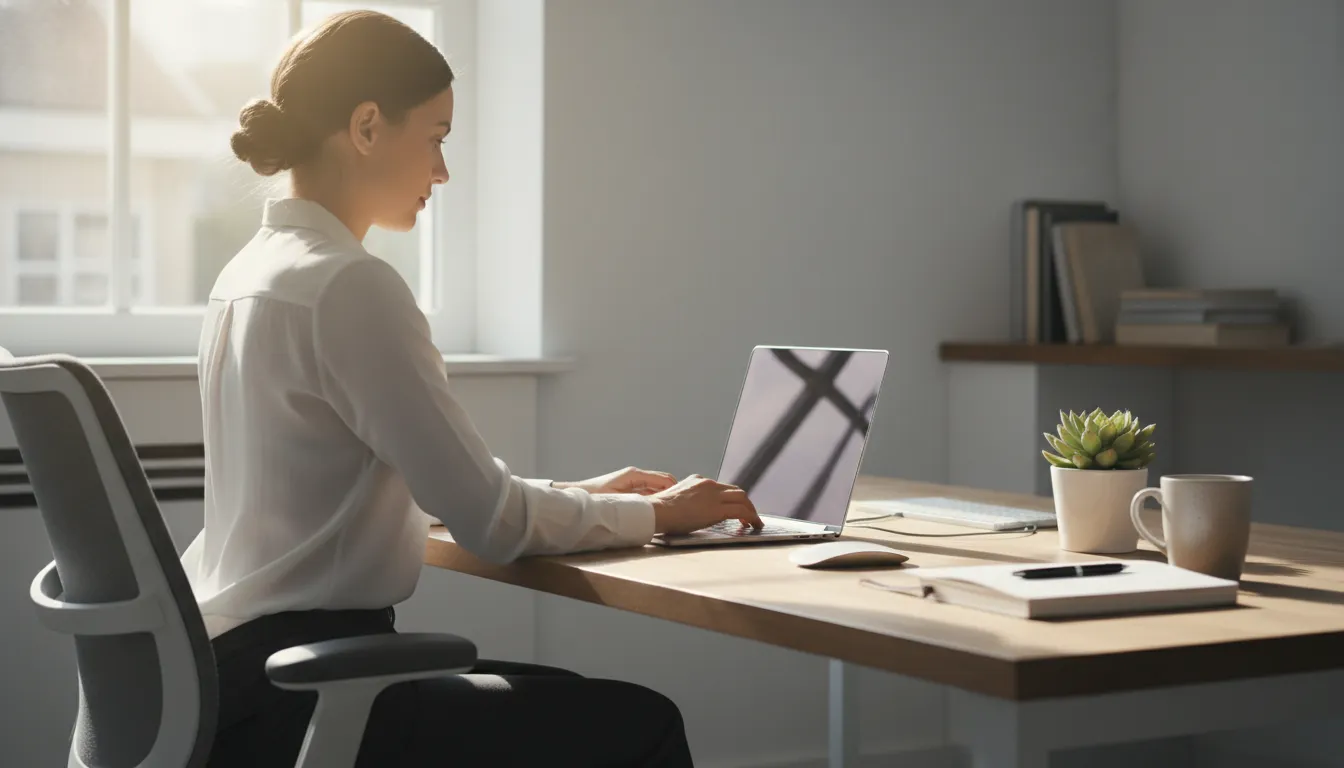
Caring for posture at work is not about achieving a perfect and immutable position — it’s about cultivating more conscious habits regarding your own body, creating an environment more suited to your needs, and, above all, not ignoring the signals your body sends. Small changes in daily life, sustained over time, often contribute to much greater well-being.
Remember: you don’t have to do everything at once. Start with what is most accessible — perhaps adjusting the monitor height, setting an alarm to stand up every hour, or taking five minutes to stretch your neck at the end of the day. Every step counts.
And when doubts arise — or when the pain doesn’t go away — don’t hesitate to seek a healthcare professional. Taking care of yourself is always the best decision.
This content is informative and educational, and does not replace evaluation, diagnosis, or treatment by a qualified healthcare professional. Always consult a doctor, physiotherapist, or other specialist for individualized health guidance.