
The Real Benefits of Aromatherapy: What Does the Evidence Say?
Have you ever walked into a room with a pleasant aroma and felt an almost instant sense of calm? Or noticed that the smell of coffee in the morning seems to awaken something beyond your taste buds? The connection between smell and well-being is ancient and deeply human. This is precisely where aromatherapy finds its starting point: the idea that certain aromas, extracted from plants through essential oils, can influence how we feel physically and emotionally.
In recent years, aromatherapy has gained considerable traction, both in spas and wellness practices and in discussions about integrative health. With this, exaggerated promises have emerged—alongside total skepticism. The truth, as often happens in science, lies somewhere in the middle. There are interesting studies, promising results in some areas, and at the same time, real limitations that need to be acknowledged honestly.
In this article, we will explore what the available scientific evidence really says about aromatherapy: where it can help, where more solid data is still needed, and how to use this practice safely and consciously—without abandoning conventional medical care and without falling into unrealistic expectations.
What is Aromatherapy, Anyway?
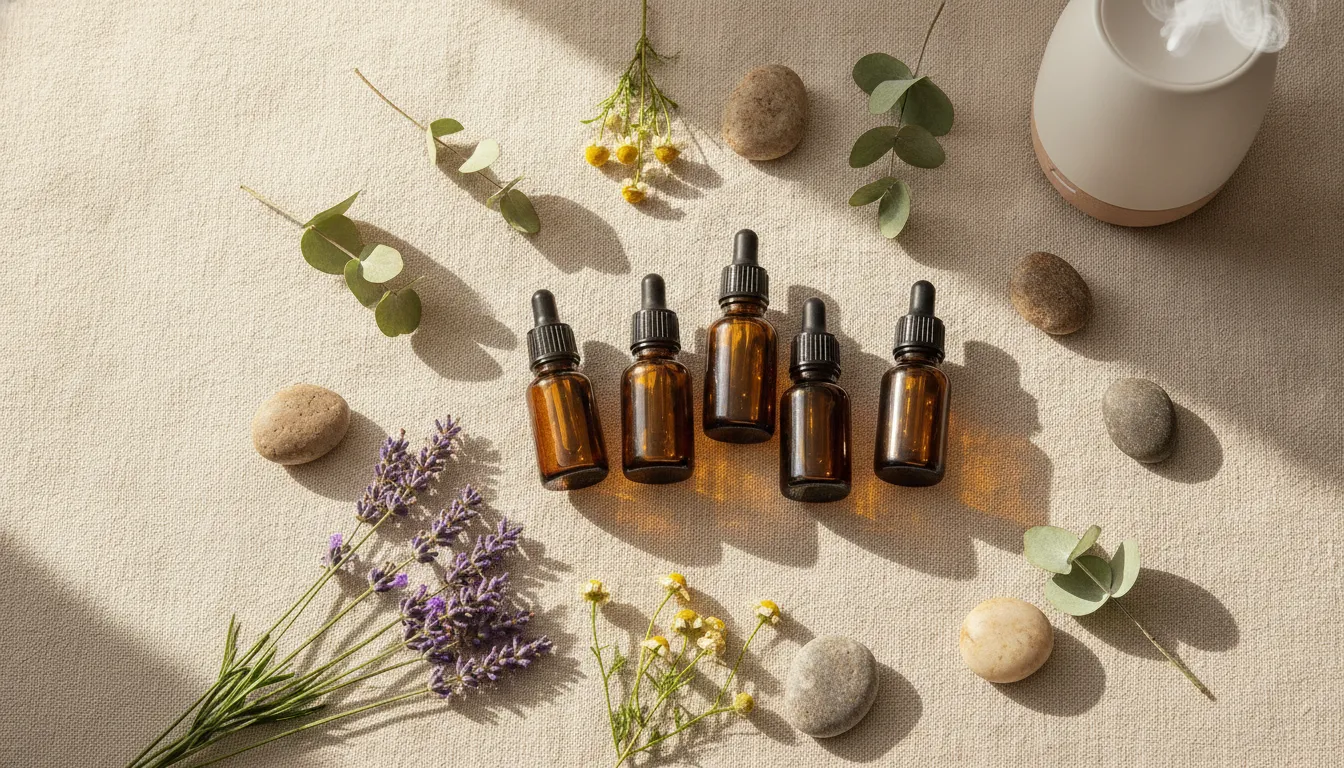
Aromatherapy is a complementary therapeutic practice that uses essential oils—substances extracted from flowers, leaves, bark, roots, and seeds of plants—with the aim of promoting physical and emotional well-being.
These oils can be used in different ways:
- Inhalation: through diffusers, vaporizers, or simply inhaling from the bottle
- Topical application: diluted in carrier oils (such as coconut or almond oil) and applied to the skin
- Aromatic baths: added to bathwater, always diluted
- Aromatherapy massage: combining therapeutic touch with aromas
It is important to highlight right away: essential oils are not synonymous with safety just because they are natural. Many are contraindicated for pregnant women, young children, people with specific allergies, or those taking certain medications. Therefore, any more systematic use should be guided by a qualified professional.
What Science Investigates—and What It Has Found
Research on aromatherapy has advanced consistently over the past decades, although it still faces significant methodological challenges, such as small samples, difficulty in “blinding” participants (after all, the smell is perceptible), and variation in the protocols used.
That said, some areas present findings that deserve attention:
Anxiety and Stress
This is possibly the most studied area. Literature reviews published in specialized journals suggest that inhalation of lavender essential oil may be associated with reduced anxiety indicators in specific contexts, such as before medical procedures, in hospital settings, and in situations of acute stress. Studies have also investigated potential effects on physiological parameters such as heart rate and blood pressure, with variable results.
The proposed mechanism involves the action of smell on the limbic system—a region of the brain associated with emotions—via the olfactory nerve. This pathway is more direct than many others and may explain why smells have such an immediate effect on mood.
Sleep Quality
Some studies suggest that aromas like lavender and chamomile may contribute to better sleep quality in certain populations, including the elderly and people with mild insomnia. The results are encouraging but still insufficient for definitive claims. Aromatherapy can be an interesting complementary resource within a healthy sleep routine—not an isolated treatment for sleep disorders.
Pain and Discomfort
There is research exploring the use of essential oils as a complement in managing certain types of pain, including tension headaches and mild muscle pain. Peppermint oil, for example, has been studied in topical applications (always diluted) for headaches. The results are preliminary, and this approach does not replace proper medical evaluation and treatment.
Nausea
Studies in contexts of nausea related to chemotherapy and post-operative care have investigated the use of ginger and peppermint inhalation. Some findings are promising, and certain healthcare institutions already incorporate aromatherapy as supportive care—always alongside, never in place of, the main treatment.
What Is Not Yet Proven
Honesty is essential when we talk about health. There are many claims circulating about aromatherapy that do not have solid scientific backing, such as:
- Curing chronic or infectious diseases
- Eliminating tumors or “detoxifying” the body
- Replacing prescribed medications
- Treating severe mental disorders like major depression, bipolar disorder, or schizophrenia
Aromatherapy is a complementary practice, not a substitute. Using it as a replacement for proven medical treatments can be dangerous. If you live with a health condition, always talk to your doctor before incorporating any alternative therapy into your routine.
How to Use Aromatherapy Safely
If you are interested in trying aromatherapy as part of a more balanced lifestyle, some general guidelines can help make this experience safer:
- Research the oil you will use. Not all essential oils have the same safety profile. Some are contraindicated for certain groups, such as pregnant women, nursing mothers, infants, and people with epilepsy.
- Never use pure essential oils directly on the skin. They should be diluted in carrier oils. Inadequate concentration can cause irritation, burns, and allergic reactions.
- Do a sensitivity test. Before applying to larger areas, apply a small amount (already diluted) on the forearm and wait a few hours to check for a reaction.
- Avoid ingestion. Essential oils are not food. Ingestion without specialized professional guidance can be toxic.
- Keep the environment ventilated. Prolonged use of diffusers in closed environments can cause headaches and discomfort, especially in sensitive individuals.
- Pay attention to pets. Many essential oils are toxic to dogs and cats. Consult a veterinarian before diffusing oils in spaces shared with pets.
- Seek a qualified aromatherapist. If you want to go beyond casual use, look for professionals with recognized training who can guide the use in a personalized and safe way.
Aromatherapy, Well-being, and the Broader Context
One point that science increasingly reinforces is that well-being rarely depends on a single factor. Aromatherapy, when used consciously, can fit within a broader set of healthy habits—such as taking care of sleep, maintaining a balanced diet, engaging in physical activity, and setting aside time for genuine rest.
In fact, if you are interested in how small adjustments in daily life can contribute to a healthier life, it’s worth reading Small Changes That Improve Your Quality of Life, where we explore this idea of gradual and sustainable transformation.
The sense of smell, of all senses, has a particularly rapid connection with our memories and emotions. Using this intentionally—creating a welcoming environment, establishing a relaxing routine, signaling to the body that it’s time to rest—can be a genuine form of self-care, as long as it’s done with realistic expectations.
When to Seek a Health Professional
Aromatherapy is not a substitute for medical care. Seek a healthcare professional if you:
- Have a diagnosed health condition, whether physical or mental
- Are pregnant, breastfeeding, or have young children and want to use essential oils
- Regularly use medications (there may be interactions)
- Have experienced an allergic reaction or irritation after using an oil
- Are seeking aromatherapy to deal with intense anxiety, persistent insomnia, chronic pain, or any symptom that significantly interferes with your quality of life
In these cases, the safest route is to talk to a doctor, psychologist, or other qualified professional before starting any complementary practice.
If you are going through a time of intense emotional distress, know that you don’t have to face it alone. The CVV (Centro de Valorização da Vida) is available at 188, free of charge and 24 hours a day. In emergencies, seek immediate assistance.
Conclusion
Aromatherapy is not magic—but it’s also not just a placebo. The available evidence suggests that it can be a useful complementary resource for promoting well-being, reducing stress perception, and supporting sleep quality in specific situations. At the same time, it’s essential to recognize its limits and use it responsibly.
Incorporating pleasant aromas into the environment, taking care of your routine, and creating moments of conscious rest are actions that, together, usually contribute to a more balanced life. You can explore more about this in Rest and Productivity: Why Taking Breaks Helps You Achieve More.
Take care of yourself—with kindness and information.
This content is informative and educational, and does not replace the evaluation of a healthcare professional. Each person has individual needs, and health-related decisions should always be made with the support of qualified professionals.
- Seek a qualified aromatherapist. If you want to go beyond casual use, look for professionals with recognized training who can guide the use in a personalized and safe way.
- Pay attention to pets. Many essential oils are toxic to dogs and cats. Consult a veterinarian before diffusing oils in spaces shared with pets.
- Keep the environment ventilated. Prolonged use of diffusers in closed environments can cause headaches and discomfort, especially in sensitive individuals.
- Avoid ingestion. Essential oils are not food. Ingestion without specialized professional guidance can be toxic.
- Do a sensitivity test. Before applying to larger areas, apply a small amount (already diluted) on the forearm and wait a few hours to check for a reaction.
- Never use pure essential oils directly on the skin. They should be diluted in carrier oils. Inadequate concentration can cause irritation, burns, and allergic reactions.
- Research the oil you will use. Not all essential oils have the same safety profile. Some are contraindicated for certain groups, such as pregnant women, nursing mothers, infants, and people with epilepsy.
- Topical application: diluted in carrier oils (such as coconut or almond oil) and applied to the skin