
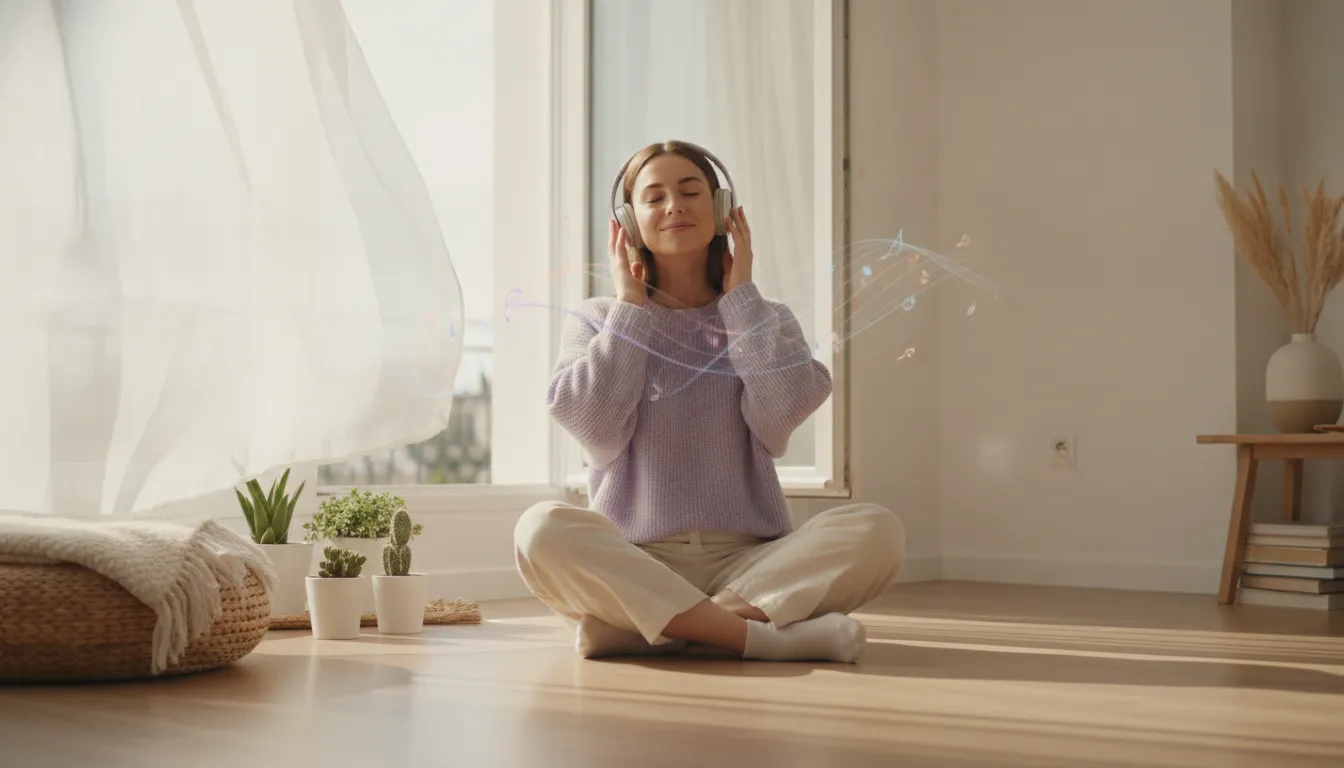
Think about the last time a favorite song played unexpectedly — that spine-tingling sensation, the sudden uplift in mood, or even a sweet nostalgia that tugged at your heart. It wasn’t a coincidence, nor was it “just in your head” in the sense of being unimportant. Music has a deep connection with human emotions, and science is increasingly exploring how the sounds we choose to listen to can influence our mood, stress levels, and even our perception of well-being throughout the day.
In 2026, we live in a world where playlists are prescribed by wellness apps, rehabilitation clinics integrate music therapy sessions into their programs, and researchers continue to investigate the neurological mechanisms behind the emotional response to music. But beyond the trends, it’s worth understanding what the scientific evidence really says — with honesty about what we already know and what still needs further investigation.
This article is not intended to replace any form of professional guidance. It is an invitation for you to better understand how music interacts with your mind and body, and how it can be a simple and accessible ally in everyday well-being care.
What Happens in the Brain When We Listen to Music
The musical experience is one of the most complex phenomena that the human brain processes. When listening to a melody, various brain regions are activated simultaneously: areas related to memory, emotion, movement, and even the reward system.
Neuroimaging studies suggest that pleasurable music can stimulate the release of dopamine, a neurotransmitter associated with the sensation of reward and motivation — the same involved in other pleasurable experiences, such as eating something tasty or seeing a loved one. This response is neither universal nor predictable for all types of music: it greatly depends on personal history, individual preferences, and emotional context.
Additionally, the auditory-limbic system — which connects sound processing with emotions — seems to be especially responsive to music. This helps explain why certain songs can evoke memories so vividly or quickly change our mood state.
Music and Stress Reduction: What Research Suggests
The relationship between music and stress is one of the most studied in this area. Research published in psychology and neuroscience journals suggests that listening to music may be associated with a reduction in physiological stress markers, such as heart rate and cortisol levels — the hormone related to the stress response.
Some studies indicate that music with a slow tempo, simple melodies, and no lyrics is often more associated with relaxation. However, it’s important to emphasize that personal preference plays a huge role: listening to music you love, even if it’s lively, can have more positive effects on mood than listening to something “relaxing” that you dislike.
The World Health Organization (WHO) recognizes the potential of the arts — including music — as a resource for promoting health and well-being. This doesn’t mean that music replaces treatments for anxiety disorders, depression, or other mental health conditions, but it points to a complementary role that deserves attention.
Music Therapy: A Recognized Approach
Music therapy is a clinical and therapeutic practice that uses music in a structured way by specialized professionals. It is different from simply listening to your favorite songs: it involves defined therapeutic goals, patient assessment, and guidance by a certified music therapist.
This approach is used in various contexts, such as:
- Neurological rehabilitation after strokes or brain injuries
- Palliative care, to improve the quality of life of patients with chronic illnesses
- Support for people with autism spectrum disorders
- Mental health programs in hospitals and clinics
The Brazilian Union of Music Therapy Associations (UBAM) recognizes music therapy as a health profession in Brazil. If you are interested in this modality as part of a treatment, it is ideal to talk to your doctor or psychologist to understand if it makes sense in your case and to seek a qualified professional.
> Important: clinical music therapy is different from “therapeutic playlists” or binaural sounds sold in apps. These tools may have some value in self-care, but they are not equivalent to a therapeutic process conducted by a professional.
How to Use Music Daily to Support Your Well-being
You don’t need expensive equipment or a perfect playlist to start exploring music as an ally for your well-being. Here are some practical ways to incorporate this practice into your routine:
- Create playlists for different times of the day. A more lively selection for the morning can help create energy, while calmer music at night can signal to the body that it’s time to slow down.
- Use music intentionally, not just as background. Set aside a few minutes to really listen — close your eyes, pay attention to the melody, rhythm, lyrics. This practice of active listening can have a different effect than music playing in the background while you work.
- Play an instrument if you have access. Even if it’s amateur, playing an instrument involves attention, coordination, and creativity — skills that often contribute to mental well-being.
- Dance. Combining music with physical movement enhances the effects of both. Studies suggest that dancing can contribute to positive mood and reduce social isolation.
- Use music to create rituals. A specific song before sleeping, during a walk, or while preparing a meal can help create positive emotional anchors in your routine.
Incorporating small changes like these may seem simple, but the accumulated impact on well-being is often significant. If you want to explore other self-care strategies in your daily life, check out the article Small Changes That Improve Your Quality of Life.
Sounds, Noise, and Well-being: Not All Sounds Are Equal
It’s important to make a distinction: not all sounds contribute to well-being. Noise pollution — constant traffic noise, construction, very busy environments — is associated in research with increased stress and sleep difficulties.
This means that the sound environment we live in matters as much as the music we choose to listen to. Some practical considerations:
- Nature sounds (rain, birds, wind) are often associated with relaxation in environmental psychology studies.
- White noise and pink noise are used by some people to improve focus and sleep, although the evidence is still mixed and the response is quite individual.
- Noise-canceling headphones can be useful in very noisy environments, but excessive use at high volume can be harmful to hearing health — an important warning that WHO regularly reinforces.
Music, Memory, and Emotional Health
One of the most fascinating properties of music is its ability to trigger memories with great emotional intensity. Research in cognitive neuroscience suggests that memories associated with music — especially those formed in adolescence and early adulthood — have a particularly strong emotional “footprint.”
This can be both positive and challenging. Music linked to happy moments can bring genuine well-being. But music associated with losses or traumas can evoke intense emotions that, at times, may be difficult to process.
If you find that certain music triggers very heavy or difficult-to-manage emotions, this is not a weakness — it is a completely understandable human response. In such cases, it may be helpful to talk to a psychologist about these experiences.
When to Seek a Health Professional
Music can be a valuable self-care tool, but it does not replace professional guidance when there is more intense suffering involved. Consider seeking support from a psychologist, psychiatrist, or trusted doctor if:
- You notice that your mood is persistently low, even with self-care strategies
- Feelings of sadness, anxiety, or emptiness are interfering with work, relationships, or sleep for weeks
- You feel emotionally overwhelmed and unable to identify the reason
- The music or other resources that used to help no longer seem to make a difference
Important Reminder: if you are going through a time of intense emotional crisis or thoughts of self-harm, know that help is available. In Brazil, the CVV (Centro de Valorização da Vida) offers 24-hour support at the number 188 (free call). In emergencies, seek the nearest emergency room or call SAMU (192).
Conclusion

Music is one of the oldest and most universal forms of human expression — and also one of the most accessible. Studies suggest that it can contribute to mood, help manage everyday stress, and even be part of structured therapeutic processes. But, like any well-being tool, it works best when integrated into a broad view of health: quality sleep, emotional bonds, physical movement, and mental health care.
Exploring your relationship with music — which sounds make you feel good, what memories they evoke, how you feel after a good listening session — is a simple and beautiful exercise in self-knowledge. And it can be the starting point for more intentional self-care.
If you want to expand this perspective to other complementary well-being practices, consider reading about Does Aromatherapy Have Real Benefits? What the Evidence Says — another topic surrounded by curiosity and deserving an honest look at what science says.
This content is informative and educational, and does not replace evaluation, diagnosis, or treatment by a qualified health professional. Each person is unique, and health decisions should always be made in conjunction with qualified professionals.
- White noise and pink noise are used by some people to improve focus and sleep, although the evidence is still mixed and the response is quite individual.
- Nature sounds (rain, birds, wind) are often associated with relaxation in environmental psychology studies.
- Use music to create rituals. A specific song before sleeping, during a walk, or while preparing a meal can help create positive emotional anchors in your routine.
- Dance. Combining music with physical movement enhances the effects of both. Studies suggest that dancing can contribute to positive mood and reduce social isolation.
- Play an instrument if you have access. Even if it’s amateur, playing an instrument involves attention, coordination, and creativity — skills that often contribute to mental well-being.
- Use music intentionally, not just as background. Set aside a few minutes to really listen — close your eyes, pay attention to the melody, rhythm, lyrics. This practice of active listening can have a different effect than music playing in the background while you work.
- Create playlists for different times of the day. A more lively selection for the morning can help create energy, while calmer music at night can signal to the body that it’s time to slow down.