
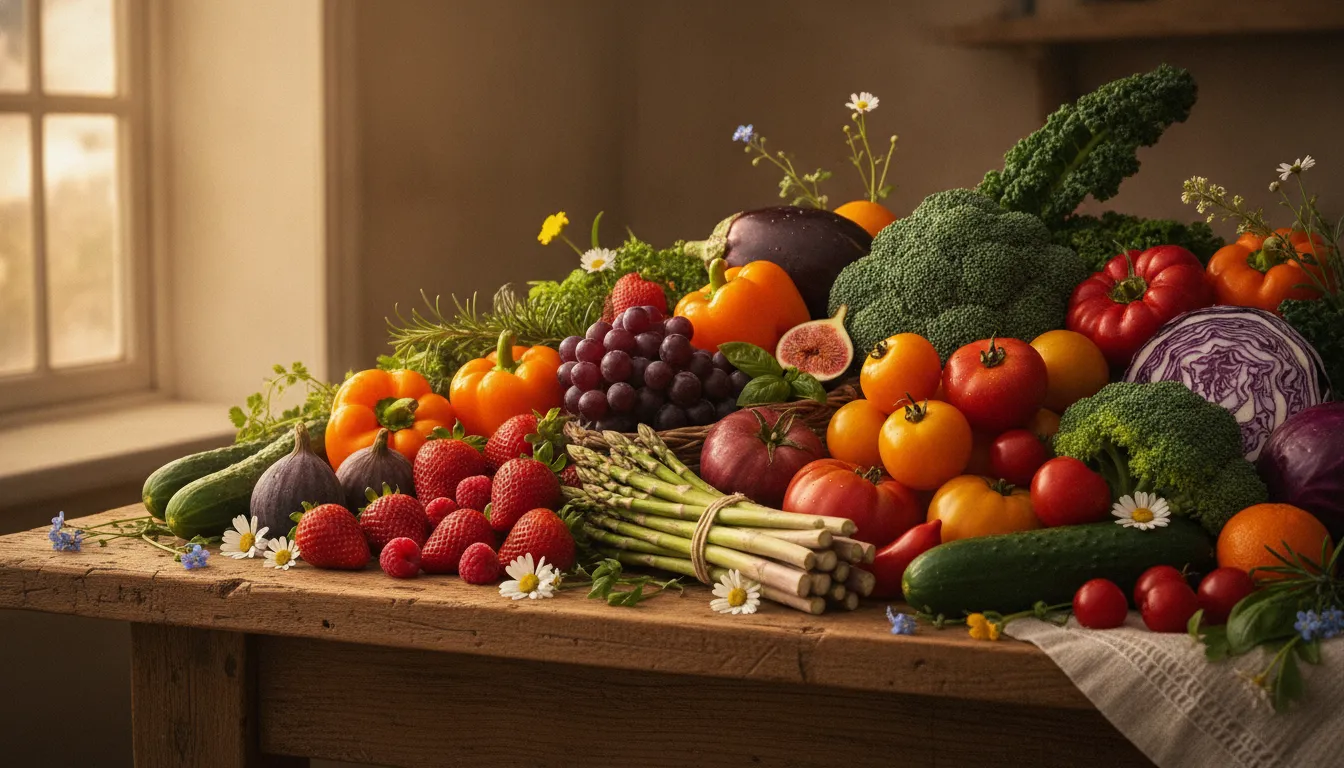
Imagine opening the refrigerator and encountering a colorful variety of tomatoes, green leaves, oranges, and strawberries. For a moment, it might seem like just food — but behind each color, texture, and aroma lies a fascinating story of compounds interacting with our bodies in ways that science continues to uncover. Fruits and vegetables are a cornerstone of virtually every recognized dietary guide worldwide, and it’s not by chance: decades of accumulated research consistently point to the benefits of regularly consuming these foods.
What many people don’t know, however, is why they are beneficial — what mechanisms are involved, what the nutrients in these foods actually do inside the body, and how to make this habit a pleasurable and sustainable part of your routine. This article does not aim to prescribe diets or promise results: the goal is educational, based on what available science tells us up to 2026, so you can make more informed decisions about your own diet.
It’s important to remember from the start: each person has different needs, health conditions, and life contexts. The information here is general, and any significant dietary adjustments deserve a conversation with a nutritionist or doctor. With that said, let’s explore this colorful and nutritious world together.
What’s Inside a Fruit or Vegetable?
When we talk about fruits and vegetables, we’re talking about foods that concentrate an enormous variety of beneficial substances in proportions rarely found in other food groups.
Essential Vitamins and Minerals
These foods are important sources of micronutrients that the human body cannot produce on its own (or produces in insufficient quantities), such as:
- Vitamin C, found in foods like acerola, guava, kiwi, and bell pepper, which typically contributes to immune function and iron absorption.
- Folate (Vitamin B9), found in dark green leaves like spinach and kale, especially important during pregnancy.
- Potassium, abundant in bananas, avocados, and sweet potatoes, associated with cardiovascular health.
- Magnesium, present in leafy greens and legumes, involved in hundreds of biochemical reactions in the body.
- Vitamin A (in the form of beta-carotene), which gives carrots and pumpkins their orange color and plays a role in eye and immune health.
Dietary Fibers
Fibers are perhaps one of the most studied aspects of fruits and vegetables. They are not digested by the small intestine and reach the large intestine, where they feed the gut microbiota — the set of microorganisms that inhabit our intestines and influence everything from digestion to aspects of immunity. Studies suggest that a diverse and healthy microbiota is associated with better overall well-being, although this area of science is still rapidly developing.
Phytochemicals: What Science is Discovering
In addition to vitamins, minerals, and fibers, fruits and vegetables contain thousands of compounds called phytochemicals — substances produced by plants that, when consumed, can interact positively with the human body. Flavonoids, carotenoids, polyphenols, and glucosinolates are some examples. Research on these compounds is intense, and while many mechanisms are still being studied, there is evidence that their regular consumption through a varied diet is often associated with favorable health outcomes.
What Population Studies Suggest
The World Health Organization (WHO) recommends consuming at least 400 grams of fruits and vegetables per day as part of a healthy diet — a number that serves as a general reference, not a rigid target for each individual. This recommendation is anchored in a vast epidemiological literature that has followed populations over years and decades.
In general, these studies suggest that populations that consume more fruits and vegetables tend to have lower rates of certain non-communicable chronic diseases, such as cardiovascular problems, type 2 diabetes, and some types of cancer. It’s important to understand, however, that correlation is not causation — people who eat more vegetables often adopt other healthy habits simultaneously, making it difficult to isolate the effect of a single factor.
What science can more confidently state is that dietary patterns rich in fruits, vegetables, legumes, whole grains, and quality proteins are consistently associated with better health, as shown by dietary guides from countries like Brazil (with the Dietary Guide for the Brazilian Population as a reference) and international recommendations.
Benefits Science Often Associates with Regular Consumption
Without promises of cure or guaranteed results, here’s what studies and scientific reviews often point out:
- Cardiovascular health: Diets rich in vegetables are often associated with better blood pressure and cholesterol profiles, although the complete picture involves many factors.
- Glycemic control: The high fiber content in many fruits and vegetables can help moderate blood sugar absorption.
- Digestive health: Fibers contribute to regular intestinal transit and microbiota nutrition.
- Body weight: Foods rich in water and fibers tend to promote satiety with lower caloric density, which may help — without guarantees — in maintaining a healthy weight.
- Mental well-being: Recent research suggests an association between a diet rich in vegetables and a lower incidence of depressive and anxious symptoms, possibly mediated by the gut-brain axis, but this is an area that still needs more studies.
- Longevity: Dietary patterns like the Mediterranean diet, rich in vegetables, have been associated in observational studies with greater longevity and quality of life.
Diversity Matters: The Rainbow on Your Plate
A point often emphasized by nutritionists and reinforced by research is that varying colors means varying nutrients. Each natural pigment in vegetables usually corresponds to different phytochemicals:
Color Examples Associated Compounds Red Tomato, watermelon, strawberry Lycopene, anthocyanins Orange/Yellow Carrot, pumpkin, mango Beta-carotene, lutein Green Spinach, broccoli, kale Chlorophyll, glucosinolates, folate Purple/Blue Beet, blackberry, grape Anthocyanins, resveratrol White/Beige Garlic, onion, mushroom Allicin, quercetin This means that a diet with little variety — even if it includes vegetables — can leave nutritional gaps. Ideally, according to dietary guides, is to seek diversity throughout the week.
How to Include More Fruits and Vegetables in Your Routine
Knowing they are beneficial is one thing; finding practical and enjoyable ways to include them in daily life is another. Here are some suggestions:
- Start with breakfast: Adding a fruit to breakfast is one of the simplest ways to increase consumption.
- Swap ultra-processed snacks for natural options: A serving of fruits, carrot sticks, or cherry tomatoes can be satisfying alternatives.
- Take advantage of seasonal fruits and vegetables: Besides being tastier, they are often more financially accessible.
- Try different preparation methods: Roasted, sautéed, raw, or in soups, vegetables have very distinct flavors — what doesn’t please raw may please cooked.
- Include vegetables in preparations you already enjoy: Adding spinach to a pasta sauce or kale to a fruit smoothie is a discreet way to increase consumption.
- Plan your shopping: Having fruits and vegetables available at home is the first step to consuming them more frequently.
- Involve the family: Cooking together and introducing vegetables to children early on often creates more lasting habits.
Some Common Questions
Do fruits make you gain weight?
Fruits contain natural sugars, but also fibers, water, and micronutrients. The consumption of whole fruits — not juices, which lose part of the fibers — is widely recommended in dietary guides. The issue of weight impact depends on many individual factors; talk to a nutritionist if you have specific questions about your case.
Do frozen or canned fruits and vegetables count?
Yes. Research suggests that fruits and vegetables frozen at peak maturity can preserve much of the nutrients. Canned ones require attention to sodium content — opt for those without added salt or rinse before consuming.
Do supplements replace vegetables?
Generally, no. The benefits associated with the consumption of fruits and vegetables seem to come from the complex combination of nutrients and phytochemicals that act in synergy — something difficult to replicate in a capsule. Supplementation may be indicated in specific cases, always by professional guidance.
When to Consult a Health Professional
Although the information in this article is general and educational, there are situations where seeking specialized guidance is essential:
- If you have health conditions like diabetes, kidney diseases, gastrointestinal disorders, or food allergies, the choice of fruits and vegetables may need specific adjustments.
- If you are pregnant, breastfeeding, or caring for the diet of young children.
- If you notice symptoms like persistent bloating, intestinal changes, or reactions after consuming certain foods.
- If you want to create a personalized meal plan — that’s a nutritionist’s job.
For routine exams and general health monitoring, check what this content says about preventive exams by age group.
Conclusion
Fruits and vegetables are not a miracle, and no single food can guarantee full health. But they are part of a dietary pattern that, combined with other healthy habits — like regular movement, quality sleep, and stress management — tends to contribute to a life with more vitality and well-being.
The good news is that small changes, made consistently and without pressure, can make a difference over time. Start with what is possible today: one more fruit, a portion of vegetables at lunch, a different color on the plate. The path to a more nutritious diet doesn’t need to be perfect to be valuable.
Take care of yourself with affection and, whenever you need personalized guidance, seek a trusted health professional. You deserve care that respects your history and needs.
This content is informative and educational and does not replace the evaluation of a health professional. Consult a doctor, nutritionist, or other qualified professional for individualized guidance.
Recommended Articles
- Swap ultra-processed snacks for natural options: A serving of fruits, carrot sticks, or cherry tomatoes can be satisfying alternatives.
- Glycemic control: The high fiber content in many fruits and vegetables can help moderate blood sugar absorption.
- Folate (Vitamin B9), found in dark green leaves like spinach and kale, especially important during pregnancy.