Meditation and Mental Health: What the Practice Offers
Have you ever stopped to notice how many thoughts cross your mind in a single day? Worries about work, to-do lists, memories from the past, plans for the future — the human mind rarely rests. In an increasingly fast-paced world where notifications arrive nonstop and demands pile up, many people have sought ways to find some internal balance. Meditation emerges in this context as an ancient practice that has returned to the center of attention — and this time with a growing number of scientific studies investigating its effects.
But what does meditation really offer for mental health? Far from being a mysterious resource or exclusive to spiritual groups, it is today studied by universities, analyzed by health professionals, and recommended as a complementary practice in different clinical contexts around the world. This does not mean it is a universal solution nor that it replaces professional care — but understanding what science already knows about it can help you make more informed decisions about your own well-being.
This article brings together what current research suggests about meditation and mental health, explains different types of practice, and points the way for those who want to start — always with honesty about the limits of available knowledge and with the care to remember that each journey is unique.
What is meditation, anyway?
The word “meditation” encompasses quite a broad set of practices. Generally speaking, meditating involves directing attention intentionally, whether to the breath, to bodily sensations, to a visual object, or to thoughts and emotions that arise in the mind.
There are different traditions and approaches, but some of the most studied scientifically include:
- Mindfulness (full attention): consists of observing the thoughts, sensations, and emotions of the present moment without judgment. It is the basis of structured programs such as MBSR (Mindfulness-Based Stress Reduction), developed by researcher Jon Kabat-Zinn in the 1970s.
- Loving-kindness meditation: focuses on cultivating feelings of compassion and affection, first for yourself and then for other people.
- Breath-focused meditation: uses the respiratory cycle as an anchor for attention, helping to reduce mental distraction.
- Body scan: consists of mentally moving through different parts of the body, observing physical sensations.
Each approach has its own characteristics, and there is no “best” one in an absolute sense — what works varies from person to person.
What studies suggest about mental health
In recent decades, scientific interest in meditation has grown dramatically. Systematic reviews and meta-analyses published in peer-reviewed journals suggest that mindfulness-based practices can contribute to reducing symptoms of anxiety, stress, and depression in different populations.
It is important, however, to be honest about what science shows — and what is still open:
- Studies suggest that regular mindfulness practice may be associated with reductions in perceived stress levels and greater emotional well-being.
- There is evidence indicating potential benefits for people with generalized anxiety disorder and for mild to moderate depression, especially when combined with professional support.
- Mindfulness-Based Cognitive Therapy (MBCT), recognized by health organizations in different countries, is noted as an approach that can help reduce the risk of relapse in people with a history of recurrent depressive episodes — but always as part of a treatment plan guided by a professional.
- The effects on more serious or complex conditions are still being investigated, and meditation should not be used as a substitute for established medical or psychological treatments.
The World Health Organization recognizes mental health care as an essential part of overall well-being, and complementary practices such as meditation can be part of this care — as long as they do not replace professional support when needed.
How meditation can affect body and mind
Researchers have investigated the mechanisms by which meditation can generate noticeable effects. While there is still much to be discovered, some hypotheses and preliminary findings are noteworthy:
- Nervous system regulation: conscious breathing and mindfulness practices seem to activate the parasympathetic nervous system, associated with a state of calm and body recovery.
- Mental rumination: meditation is often described by those who practice it as a resource that helps observe thoughts without “getting lost” in them — which can interrupt cycles of rumination, common in anxiety and depression.
- Self-awareness: by training attention, a person tends to perceive their own emotional patterns and automatic reactions more easily, which can encourage more conscious choices in daily life.
It is worth emphasizing: these mechanisms are studied, but science still does not have all the answers about how, how much, and for whom meditation offers consistent benefits.
How to start: a simple starting point
If you are curious about meditation but don’t know where to begin, the good news is that no special equipment, hours of practice, or specific training is necessary. See some general guidance to take the first steps:
- Choose a time of day when you can have a few minutes of relative tranquility — in the morning, before bed, or during a work break.
- Start with just a few minutes. Sessions of 5 to 10 minutes are already a valid starting point for beginners.
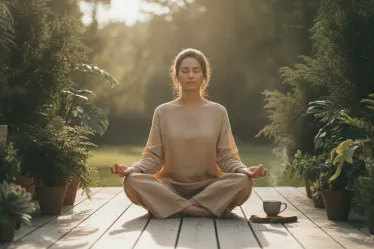
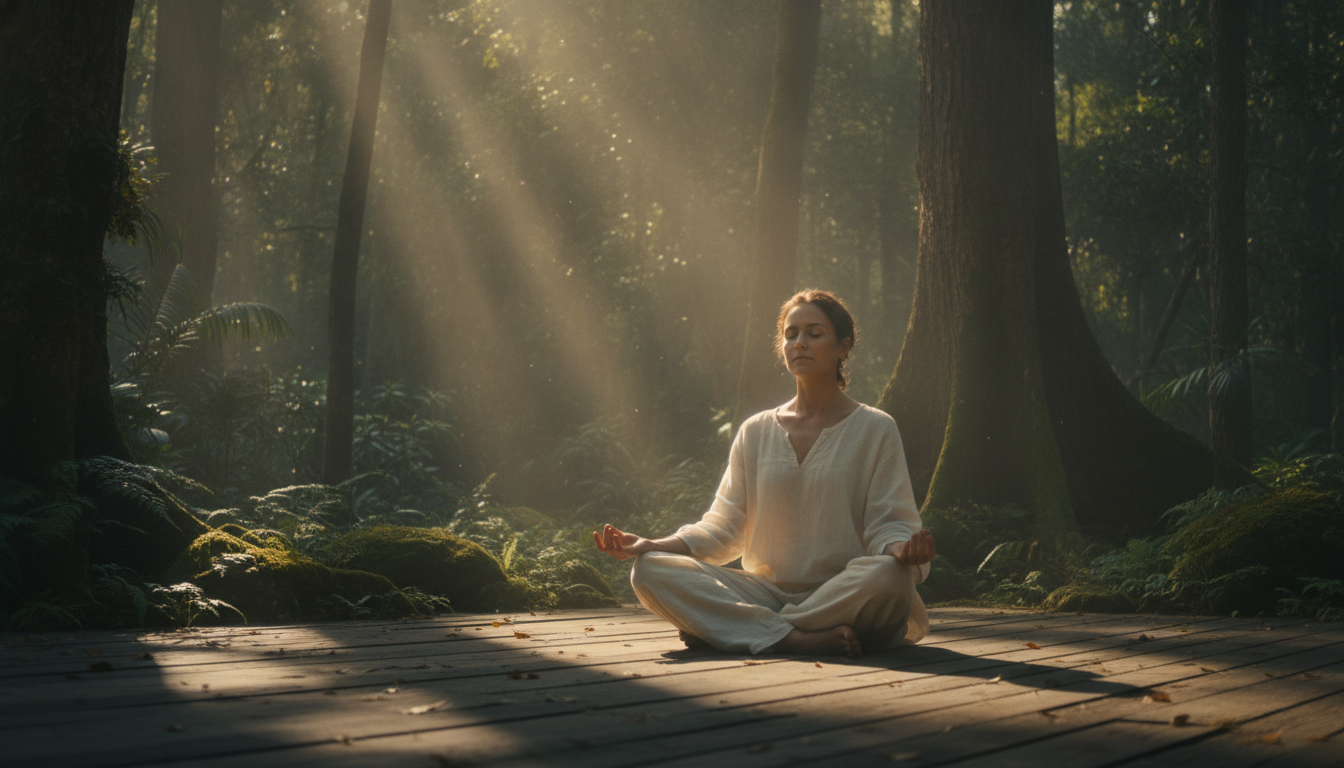
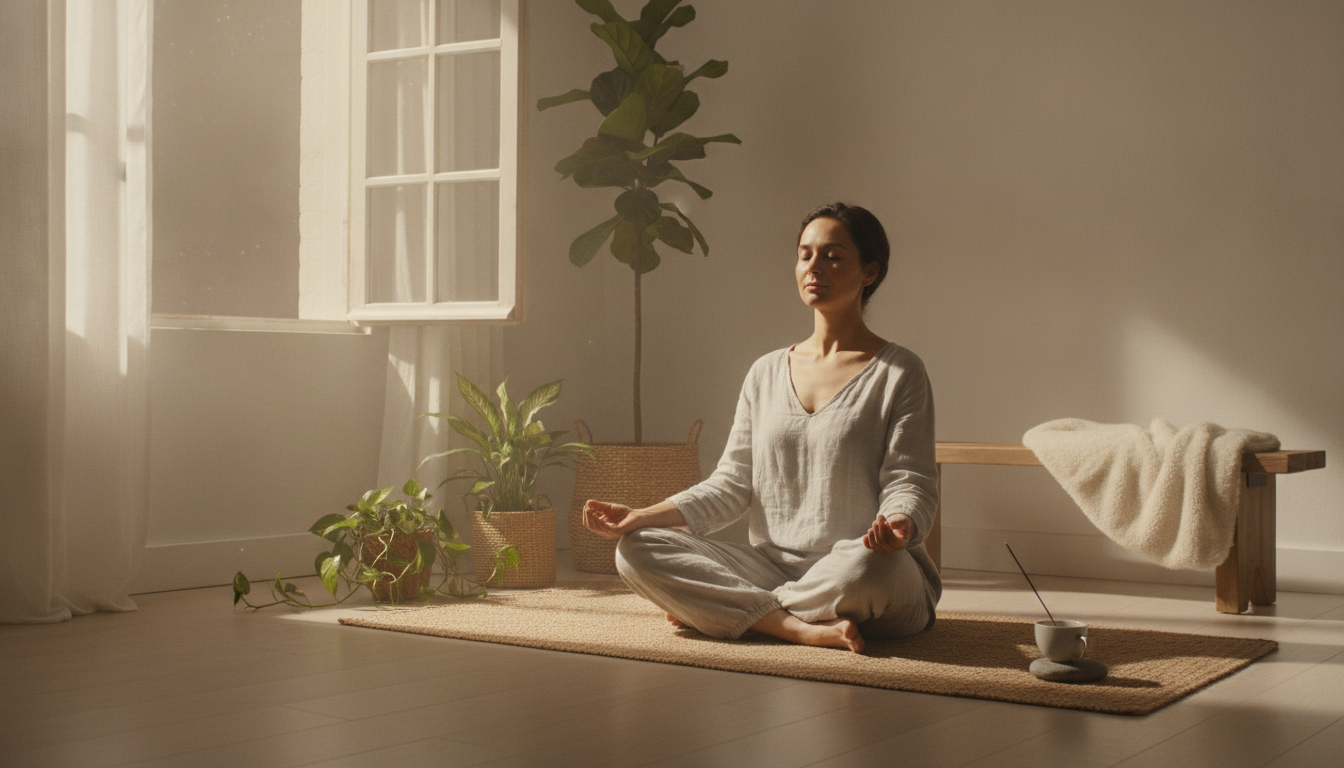
- Find a comfortable position. You can sit in a chair with your feet on the floor, sit on the floor with legs crossed, or even lie down — the important thing is to be comfortable without falling asleep.
- Direct your attention to your breath. Observe the air coming in and going out. When your mind wanders (and it will wander — that is completely normal), simply notice this and bring your attention back, without criticizing yourself.
- Be kind to yourself. Meditation is not about “emptying your mind” or achieving a perfect state of silence. It is about practicing attention and kindness with what arises.
- Consider using an app or audio guide. There are free resources in Portuguese that can help at the beginning, offering guided meditations of different lengths.
- Maintain regularity. Like other healthy habits, consistency usually matters more than the duration of each session.
Meditation and other self-care practices
Meditation rarely works in isolation. It tends to be more effective when integrated into a lifestyle that includes other mental and physical health care. Some practices that can complement meditation include:
- Regular physical movement, such as walking, yoga, or any activity you enjoy
- Quality sleep and regular rest routines
- Meaningful social connections
- Balanced and varied food intake
- Emotional expression — whether through conversations, art, or resources such as keeping a personal diary
None of these practices is an isolated “cure,” but together they can contribute to a greater sense of well-being and balance.
Meditation as complement — not substitute — for treatment
It is fundamental to be clear: meditation is considered a complementary practice, not a treatment in itself. For diagnosed mental health conditions, such as anxiety disorders, depression, bipolar disorder, PTSD, among others, follow-up by a psychologist and/or psychiatrist is essential.
Meditation can be part of the care plan — and many mental health professionals already integrate mindfulness techniques into clinical work. But this integration should happen with professional guidance, especially in more complex cases.
When to seek a mental health professional
Some situations indicate that professional support is necessary and urgent. Seek specialized help if you notice:
- Deep sadness or emotional emptiness that persist for weeks and affect daily functioning
- Intense anxiety that makes simple activities, sleep, or relationships difficult
- Disturbing or intrusive thoughts that cause significant suffering
- Progressive isolation and loss of interest in things that were once pleasurable
- Difficulty coping with everyday situations, even using resources that previously worked
If you or someone close to you is experiencing intense suffering or crisis, remember: help exists. In Brazil, the CVV (Center for the Appreciation of Life) operates 24 hours a day, free of charge, at the phone number 188. In emergency situations, seek the nearest emergency room or call SAMU (192).
Conclusion
Meditation is not a magic promise, but rather a tool — simple, accessible, and with a growing body of evidence in its favor — that can help many people cultivate more emotional balance, attention, and well-being. Like any tool, its use makes more sense when integrated into broader health care, which includes good habits, human connection, and, when necessary, professional support.
If you are curious to experiment, the best step is simply to start — with kindness, without pressure for immediate results, and with the awareness that each person has their own pace. The journey of caring for the mind often is, itself, a valuable learning experience.
This content is for informational and educational purposes only and does not replace the evaluation, diagnosis, or care of a health professional. If you have questions about your mental or physical health, consult a doctor, psychologist, or other qualified professional.