Mindfulness in Daily Life: A Beginner’s Guide to Getting Started
Have you ever reached the end of a full day without really remembering what you ate for lunch, what you felt during an important conversation, or how your commute went? That sensation of living on “autopilot” is increasingly common in 2026, in a world that constantly accelerates and demands attention in multiple directions at once. The human mind has a natural tendency to wander to the past or future, and this has a real cost to well-being.
Mindfulness — a translation of the English term mindfulness — is a practice that invites the exact opposite: paying attention to the present moment, intentionally and without judgment. It’s not about emptying the mind or achieving a state of perfect peace, but rather observing what is happening now — thoughts, sensations, emotions — with a stance of curiosity and openness. It sounds simple, but for many people it is a genuine learning experience.
The good news is that you don’t need hours of meditation per day, a spiritual retreat, or any special equipment to get started. This article brings together evidence-based information and practical guidance for those who want to take their first steps with mindfulness in daily life. If you’re looking for more balance, less reactivity, and a somewhat gentler relationship with yourself, keep reading.
What Science Says About Mindfulness
In recent decades, mindfulness has moved from the realm of Eastern contemplative traditions to the laboratories of neuroscience and clinical psychology. Today, there is a considerable volume of peer-reviewed research exploring its effects on mental and physical health.
Studies suggest that regular mindfulness practices can contribute to reducing symptoms of stress, anxiety, and depression in some contexts. The World Health Organization recognizes mindfulness-based interventions as part of a broader arsenal of strategies for promoting mental health. Structured programs, such as MBSR (Mindfulness-Based Stress Reduction), developed by Dr. Jon Kabat-Zinn at the University of Massachusetts, have been studied in different populations and are typically applied as a complement to conventional treatments.
It’s important to be honest about what the evidence shows: mindfulness is not a universal solution, and results vary from person to person. Most studies have methodological limitations, and the practice alone does not replace psychological, psychiatric, or medical follow-up when these are necessary. What can be said with reasonable certainty is that, for many people, cultivating the habit of being present tends to bring noticeable benefits over time — especially when combined with other health care practices.
Demystifying the Practice: What Mindfulness Is Not
Before you start, it’s worth clearing up some common misunderstandings that often discourage people from practicing before they even try it.
- It’s not about emptying the mind. Thoughts will appear — always. The practice consists of noticing that the mind has wandered and gently bringing it back, without criticizing yourself for it.
- It’s not a mandatory religious practice. Although it has roots in Buddhism, mindfulness as practiced in clinical and health contexts is a secular tool, accessible to anyone.
- It doesn’t require long periods of time. Even short practices of five to ten minutes can be a valid starting point.
- It’s not forced relaxation. Sometimes, paying attention to the present reveals discomfort — and that’s part of it too. The proposal is not to escape sensations, but to learn to be with them.
- It’s not a passing fad. The practice has existed for millennia and continues to be investigated and refined by researchers around the world.
How to Get Started: Simple Practices for Daily Life
Mindfulness can be cultivated in very concrete ways, without having to transform your entire routine at once. Below are some practical ways to begin.
1. Conscious Breathing
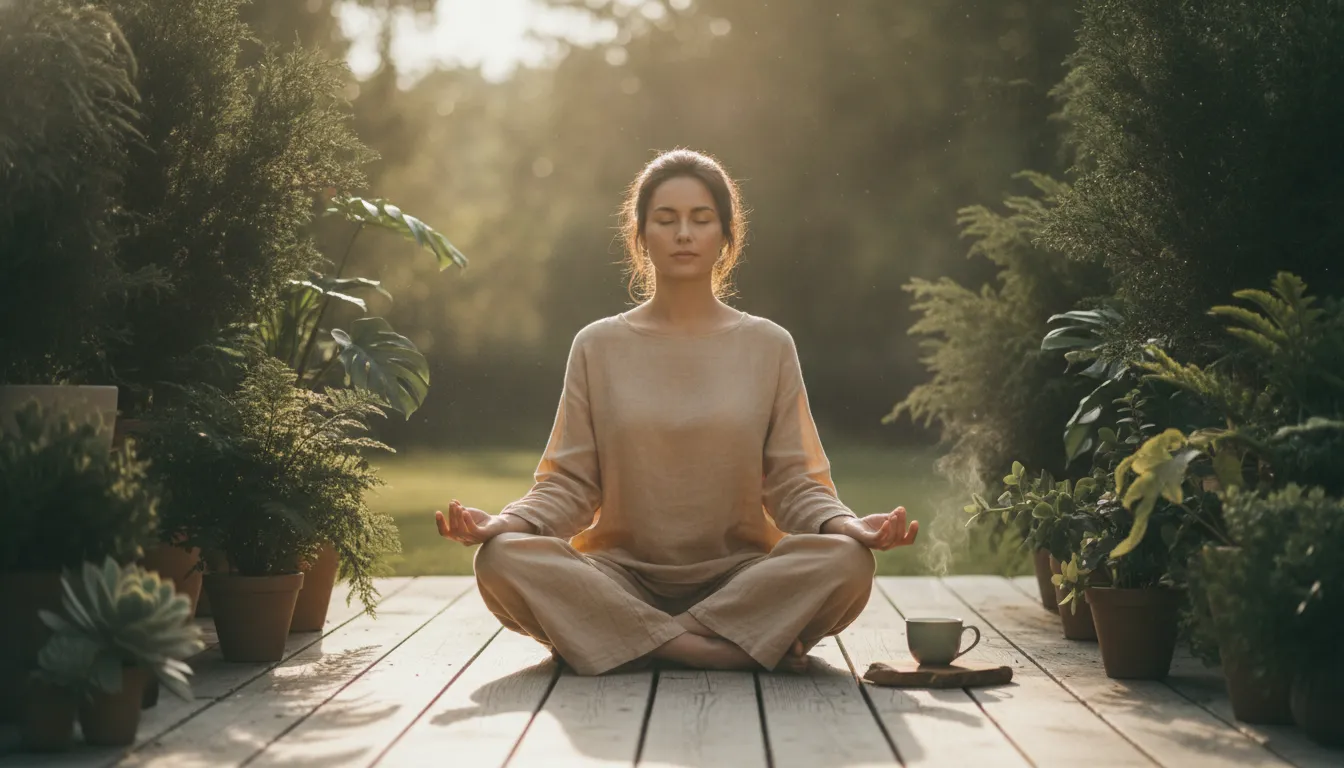
- Find a comfortable position — sitting in a chair, on the floor, or lying down.
- Close your eyes or gently lower your gaze.
- Direct your attention to your breathing: feel the air entering through your nostrils, your chest or abdomen expanding, and the air leaving.
- When you notice that your mind has wandered (and it will!), simply acknowledge it and return to your breathing, without judgment.
- Start with three to five minutes and gradually increase as you feel comfortable.
2. Mindfulness During Routine Activities
You don’t need a separate time to practice. Wash dishes while feeling the water temperature and the texture of objects. Eat a meal while paying attention to flavors, smells, and textures — instead of scrolling on your phone. Walk while noticing your body’s movements, the sounds around you, the contact of your feet with the ground.
Reducing digital distractions during these activities can help a lot. If you want to reflect on your relationship with screens, this article about screen time on your phone: signs that it’s worth reducing can offer useful perspectives.
3. Body Scan
- Lie on your back in a comfortable place.
- Close your eyes and take a few slow breaths.
- Slowly direct your attention to different parts of your body, starting with your feet and moving up to your head.
- Observe sensations — tension, warmth, tingling, lightness — without trying to change them.
- If your mind wanders, gently return to where you were.
This practice is often particularly useful before sleep, helping with the transition to rest. It pairs well with the habits discussed in sleep routine: habits that can make a difference.
4. Presence Journal
At the end of the day, take a few minutes to write: What did I really notice today? What feeling stuck with me? What took me out of the present moment? It doesn’t need to be long — a few lines are enough. This exercise helps develop the muscle of self-observation over time.
Mindfulness and Emotional Health
One of the fields in which mindfulness practice is most studied is mental health. Being present can help create a small distance between a stimulus and the automatic reaction to it — which, over time, tends to contribute to more balanced emotional responses.
It’s important to say clearly: mindfulness is not a treatment for mental disorders. If you live with intense anxiety, depression, trauma, or any other condition that causes significant suffering, the practice can be a valuable complementary support, but follow-up with a mental health professional is essential. Psychologists and psychiatrists are prepared to individually assess each situation and indicate the most appropriate path.
The practice can also align well with the development of emotional intelligence — the ability to recognize, understand, and deal with one’s own emotions and those of others. If this topic interests you, it’s worth exploring further in emotional intelligence: what it is and how to cultivate it.
Integrating Mindfulness with Other Health Care Practices
Mindfulness doesn’t exist in a vacuum. It tends to work better when combined with other habits that support overall well-being. Sleeping well, staying hydrated, moving your body regularly, and eating a balanced diet are pillars that influence each other.
When the body is well cared for, it’s easier to sustain attention. And when the mind is more present, daily choices tend to become more conscious. It’s a two-way street.
When to Seek Professional Help
Mindfulness is, in general, a safe practice for most people. However, there are situations in which seeking professional support is the most important step — and the practice alone is not sufficient.
Consider seeing a psychologist, psychiatrist, or doctor if you:
- Feel that anxiety, sadness, or stress are significantly interfering with your life, work, or relationships.
- Have persistent difficulty sleeping, eating, or performing everyday activities.
- Notice that practicing mindfulness is bringing up memories or emotions that are too intense and difficult to manage alone.
- Are going through a moment of emotional crisis or intense suffering.
Remember: asking for help is an act of courage, not weakness. If you are suffering intensely or in crisis, the CVV (Center for the Valorization of Life) offers free service at the number 188, 24 hours a day, every day. In emergencies, immediately seek a health service or call SAMU (192).
Conclusion
Starting to practice mindfulness doesn’t require perfection, expensive equipment, or hours of availability. It mainly requires a gentle willingness to return to the present — once, and once again, as many times as necessary. Like any skill, it develops with time and consistent practice.
Each moment when you notice the taste of the coffee you’re drinking, perceive tension in your shoulders before a meeting, or take a deep breath before responding to a difficult message is, in itself, an exercise in mindfulness. These small daily choices, when added up, often make a difference in how we feel and relate to life.
Take care of yourself with patience and kindness. You deserve this attention.
This content is informative and educational and does not substitute for the evaluation, diagnosis, or treatment of a healthcare professional. Each person has a unique story and needs — whenever you feel the need, seek guidance from a doctor, psychologist, or other qualified professional.