
Beginner’s Guide to Mindfulness: First Steps to Mindful Living
Have you ever stopped in the middle of a busy day and realized that your mind was completely elsewhere? Maybe you were at lunch but thinking about the afternoon meeting. Or trying to sleep while replaying a conversation from hours ago. This feeling of being physically present but mentally absent is increasingly common—and increasingly studied. In 2026, with fast-paced routines, constant notifications, and a blurring line between personal and professional life, many people are seeking ways to reconnect mind and body. Mindfulness emerges in this context as an accessible practice with growing support in scientific literature.
Mindfulness, often translated as full attention, is the ability to focus attention on the present moment intentionally and without judgment. It’s not about emptying the mind—which is a common myth—but about observing what happens inside and outside of you without being automatically swept away by every thought or emotion. The practice has roots in ancient contemplative traditions but was adapted for clinical and everyday contexts, especially through the work of Dr. Jon Kabat-Zinn, who developed the MBSR (Mindfulness-Based Stress Reduction) program at the University of Massachusetts in the 1970s and 1980s.
If you’ve never practiced mindfulness and are curious about how to start, this guide is written for you. Here, you’ll find a clear explanation of what the practice is, what studies suggest about its benefits, how to take the first steps realistically, and when to seek professional support. There are no promises of miraculous results—just honest and welcoming information so you can experiment with awareness.
What Research Says About Mindfulness
It’s natural to want to know if something really works before investing time in it. In the case of mindfulness, the amount of research has grown significantly in recent decades. Studies published in peer-reviewed journals suggest that regular mindfulness practice can contribute to reducing symptoms associated with stress, anxiety, and mild to moderate depressive episodes.
The World Health Organization (WHO) recognizes mindfulness-based interventions as relevant complementary tools for mental well-being, especially in health promotion programs. Neuroscience research also suggests that continued practice may be associated with changes in how the brain processes emotions and attention—although this field is still developing and many questions remain open.
It’s important to be honest: mindfulness is not a universal solution and its effects vary from person to person. For diagnosed mental health conditions, it is often used as part of a broader treatment, supervised by professionals—never as a substitute for medical or psychological follow-up. We’ll discuss this further.
Debunking Myths: What Mindfulness Is Not
Before starting, it’s worth dispelling some myths that often deter people from the practice:
- “I need to empty my mind” — No. The mind will continue to produce thoughts; the goal is to observe them without getting lost in them.
- “It’s for gurus or religious people” — Although it has spiritual origins, clinical mindfulness is a secular practice, adapted for anyone.
- “I need a lot of time daily” — Studies suggest that even a few minutes of consistent daily practice can bring some benefit.
- “If my mind wandered, I failed” — Noticing that the mind wandered and gently bringing it back is the practice. It’s not a failure; it’s the exercise itself.
- “Mindfulness solves any problem” — It’s not a cure and shouldn’t be presented as such. It’s a tool that, combined with other care, can help.
How to Start: A Step-by-Step Guide for Beginners
The good news is that you don’t need special equipment, paid apps, or free hours to start. Here’s a simple and accessible sequence:
- Choose a time of day — Morning, before bed, or even during lunch. Regularity is more important than duration.
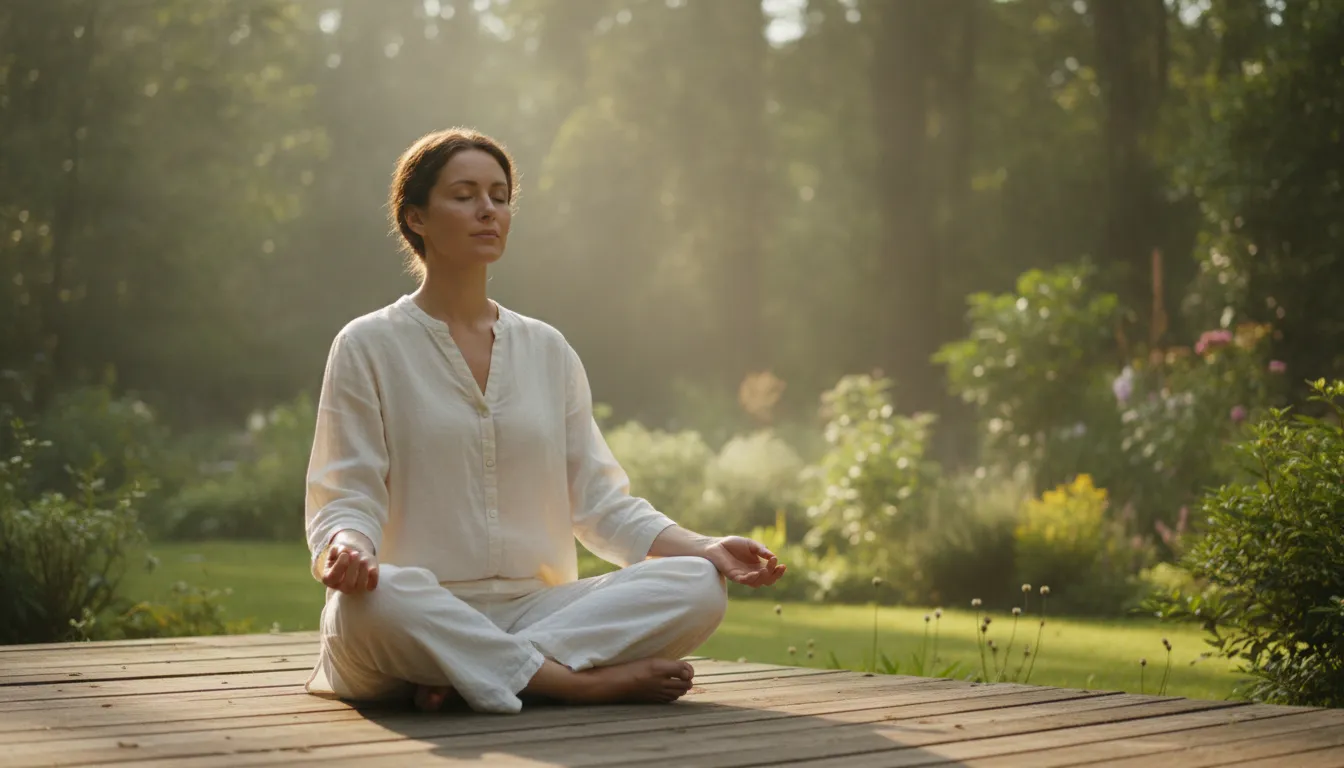
- Start with 5 minutes — Sit in a comfortable position, with your spine relatively straight but without tension. It can be on a chair, on the floor, or even lying down if it helps maintain attention.
- Choose an anchor for attention — Breathing is the most used as it’s always accessible. Observe the air entering and exiting, the sensation in the nose or chest. Don’t try to control the breath, just observe.
- Notice when the mind wanders — At some point (probably in seconds), a thought will arise. Without criticizing yourself, gently redirect attention to the breath. This redirection is the heart of the practice.
- Gradually increase the time — After a few days with 5 minutes, try 10, then 15. There’s no rush.
- Try different formats — Guided meditation (there are free options in Portuguese on audio and video platforms), mindful walking, or simply paying full attention to a meal.
- Be kind to yourself — Consistency matters more than perfection. Days when sitting and meditating seems impossible are also part of the process.
Mindfulness in Daily Life: Beyond Formal Meditation
One of the most interesting things about mindfulness is that it doesn’t have to be limited to a yoga mat. It’s possible to practice throughout the day in simple activities:
- While showering, notice the sensations of water, temperature, and smell, instead of mentally planning the day.
- While eating, do so without screens, paying attention to flavors, textures, and the pace of the meal.
- In conversations, practice active listening—be present with the speaker instead of already formulating a response.
- In moments of waiting (line, elevator), observe the breath instead of automatically grabbing the phone.
This type of informal mindfulness complements formal practice and can be especially useful for those who have difficulty maintaining focus throughout the day. If that’s your case, it’s worth reading Why is it so hard to stay focused daily? — a text that explores the mechanisms behind modern distraction.
Mindfulness and Movement: A Combination That Often Works Well
Mindfulness and physical activity often reinforce each other. Practices like yoga, tai chi, and mindful walking already integrate elements of mindfulness into movement. But even conventional exercises can become more mindful when practiced with attention to the body, breath, and physical sensations—instead of external distractions.
Research suggests that both mindfulness practice and regular physical activity can contribute to emotional well-being and stress regulation. If you want to better understand how physical exercise can influence mood, check out the article Can Physical Exercise Improve Your Mood?, which addresses the science behind this relationship in an accessible way.
Common Challenges and How to Deal with Them
Starting any new practice has its obstacles. Some of the most frequent in mindfulness are:
- Impatience — Many people expect to feel immediate results. The practice usually requires time and consistency.
- Falling asleep during meditation — It’s common, especially if you’re tired. Trying a more upright position or practicing at times of higher energy can help.
- Emotional discomfort — Sometimes, paying attention to the present moment brings difficult feelings to the surface. This is normal, but if it’s very intense, it’s a sign that professional support may be valuable.
- Lack of time — Even 3 to 5 minutes count. Daily consistency matters more than long, sporadic sessions.
When to Seek a Health Professional
Mindfulness is a complementary self-care practice—but there are situations where professional support is fundamental and irreplaceable. Seek a psychologist, psychiatrist, or trusted doctor if:
- You’re experiencing intense anxiety, persistent sadness, difficulty functioning daily, or other symptoms affecting your quality of life.
- Meditation practice brings up traumatic memories or emotions that seem difficult to manage alone.
- You use medication for mental health conditions—in this case, mindfulness can be complementary but should be discussed with your doctor or the professional responsible for your treatment.
- You feel something is wrong and aren’t sure what it is—this is also a valid reason to seek specialized listening.
If you or someone close is in intense distress or crisis, help is available. In Brazil, the CVV (Centro de Valorização da Vida) can be reached at 188, free of charge, 24 hours a day. In emergencies, seek the UPA, CAPS in your city, or the nearest emergency room.
Conclusion: Small Moments, Big Possible Transformations
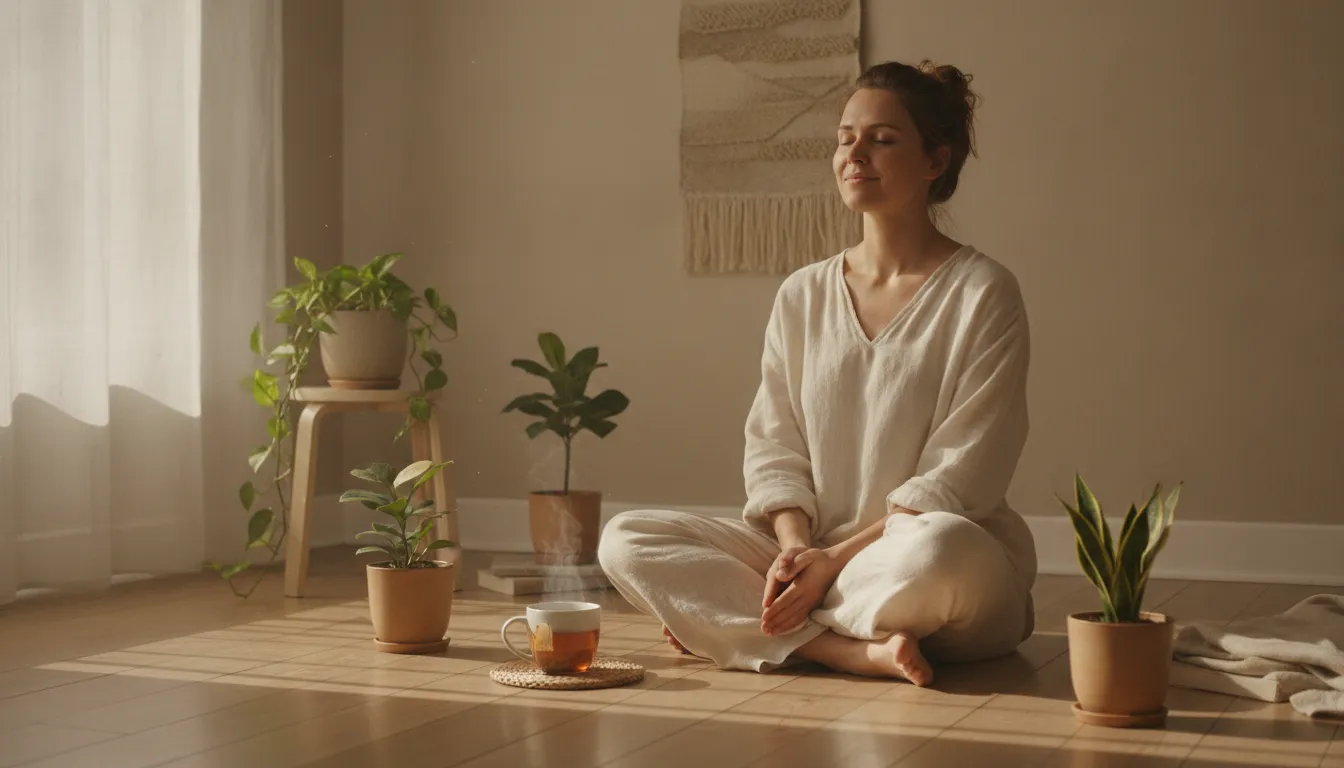
Starting to practice mindfulness doesn’t require perfection, spirituality, or available hours. It primarily requires intention and kindness to oneself. The idea that it’s possible to train attention—just like training a muscle—is both simple and powerful.
Of course, a few minutes of practice won’t solve complex health, relationship, or work problems. But cultivating the ability to be present, to observe without automatically reacting, and to treat oneself with less judgment can, over time, contribute to a healthier relationship with oneself and the world.
If you’ve made it this far, you’ve already taken an important step: seeking information with curiosity. The next step could be sitting for five minutes, closing your eyes, and simply observing your breath. No rush. No pressure. Just present.
This content is for informational and educational purposes only and does not replace the evaluation, diagnosis, or treatment of a qualified health professional. Each person has individual needs, and only a professional can provide appropriate guidance for your case.