Home Workouts Without Equipment: A Beginner’s Guide
It’s not always easy to fit physical activity into your schedule. Between work, household commitments, and daily surprises, going to a gym can seem like a huge barrier — and for many people, it truly is. The good news is that moving your body doesn’t require sophisticated equipment, memberships, or much space: an area the size of a yoga mat can be enough to get started.
Science has long recognized that bodyweight exercises, also known as calisthenics, offer real health benefits. The World Health Organization (WHO) recommends that adults engage in at least 150 to 300 minutes of moderate-intensity aerobic activity per week, along with muscle-strengthening activities on two or more days. This may seem like a lot, but when spread out over the days, it tends to fit better than we imagine.
This guide is designed for those starting from scratch or looking to resume the habit of exercising without leaving home. Here you’ll find general guidance, examples of accessible movements, and tips for making the practice more consistent. Remember: every body is different, and it’s ideal to consult a health professional before starting any exercise program — especially if you have pre-existing health conditions.
Why Exercising at Home Can Work
For a long time, the idea of “real exercise” was associated with gyms, equipment, and instructors. This scenario has changed significantly. Studies published in journals like the British Journal of Sports Medicine suggest that bodyweight workouts, when performed regularly and with proper progression, often contribute to strength gains, improved cardiovascular endurance, and overall well-being.
Moreover, convenience matters. When physical activity requires less travel and logistical preparation, the chances of maintaining it as a habit tend to increase. You can train early in the morning before work, during lunch breaks, or in the evening — whenever makes the most sense for your life.
Another relevant point is the emotional impact. Regular exercise is associated, in various studies, with reduced symptoms of anxiety and stress. If you want to better understand the relationship between movement and mental health, it’s worth reading about strategies for dealing with daily stress.
Before You Start: Preparation and Safety
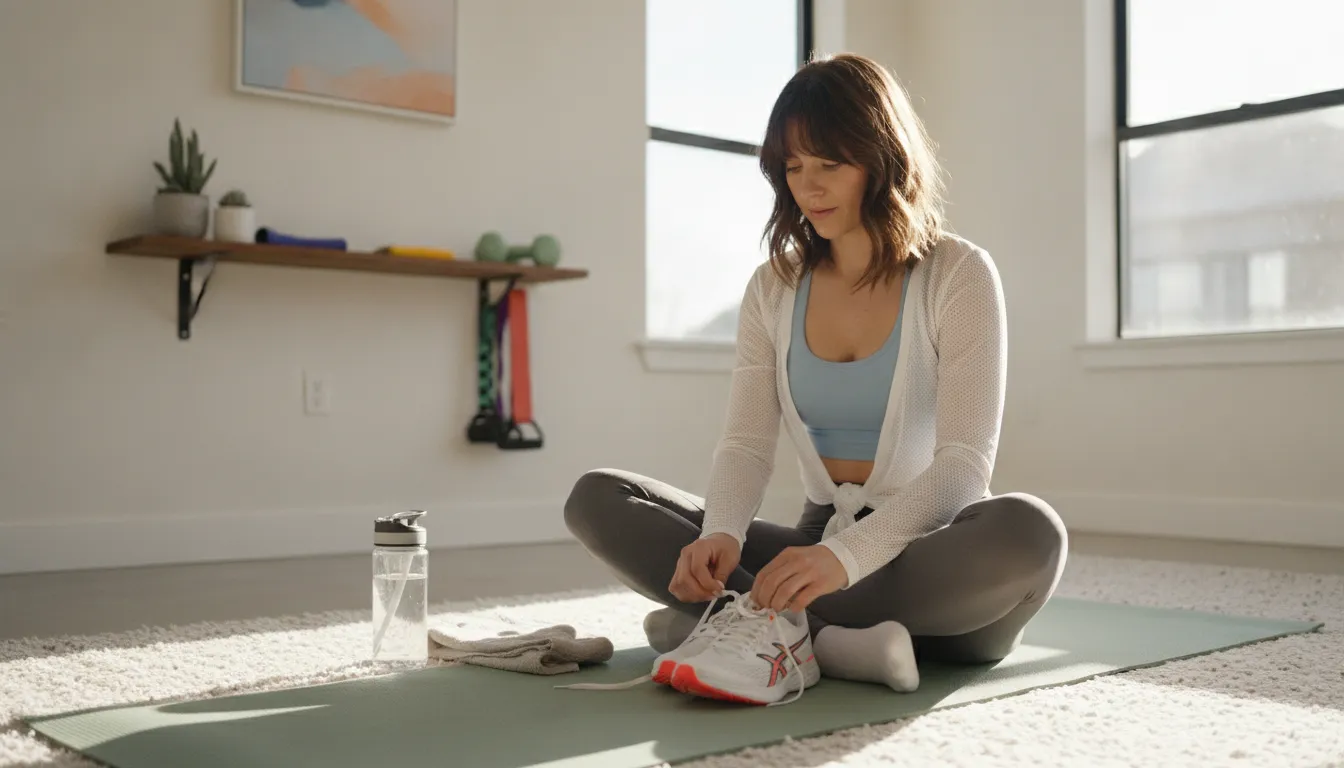
Before putting on your sneakers and doing your first squat, some precautions make all the difference for a safe and sustainable experience.
Assess Your Starting Point
Ask yourself honestly: do you have any chronic pain, recent injuries, heart problems, high blood pressure, or any other condition that might be affected by exercise? If the answer is yes to any item, consult a doctor or physiotherapist before starting. This step isn’t bureaucracy — it’s taking care of yourself.
Prepare the Space
Choose a place with a firm, non-slip floor
Ensure there’s enough space to extend your arms without hitting furniture
Wear comfortable clothes and shoes with good grip (or train barefoot on safe surfaces)
Have water nearby
Always Warm Up
Warming up prepares the joints and muscles for exertion, reducing the risk of injury. Set aside 5 to 10 minutes for light movements before any workout.
Examples of Warm-Up:
March in place for 2 minutes
Shoulder and ankle circles
Gentle trunk rotation
Slow partial squats (without going all the way down)
Basic Movements for Beginners
The exercises below require no equipment and can be adapted for different fitness levels. The idea is not to do everything at once but to choose a few and gradually progress.
Lower Body
Basic Squat: one of the most complete movements for legs and glutes. Keep feet hip-width apart, lower as if sitting in a chair, and rise while controlling the movement.
Lunge: step forward and lower the back knee toward the floor. Activates glutes, quadriceps, and balance.
Calf Raise: stand on your toes and lower slowly. Simple and effective.
Upper Body and Core
Push-Up (floor or wall support): beginners can support their knees on the floor or perform the movement against a wall to reduce the load. Works chest, shoulders, and triceps.
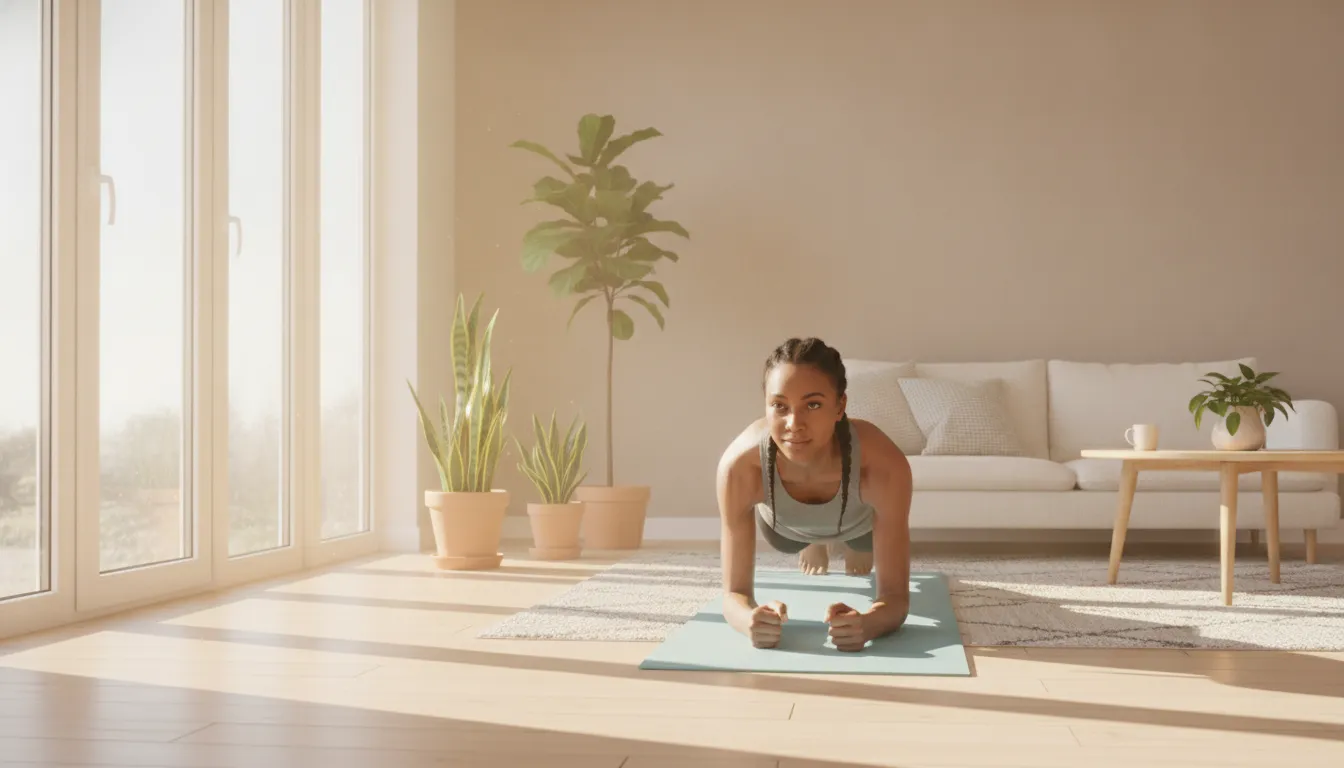
Plank: support yourself on forearms and feet (or knees), keep the body straight like a board, and hold the position. Strengthens the core and overall stability.
Superman: lying face down, lift arms and legs simultaneously. Activates back muscles.
Cardiovascular
Jumping Jack: classic and efficient for raising heart rate.
Stationary Running: run in place, lifting knees high.
Squat Jump: for those with basic conditioning, adds intensity to the workout.
How to Create a Simple Routine
You don’t need an elaborate plan to start. Consistency is more valuable than perfection.
Set the Frequency: for beginners, 3 times a week with a day of rest between sessions is a good starting point.
Determine the Duration: sessions of 20 to 30 minutes are sufficient initially.
Choose 4 to 6 Exercises: include at least one for the lower body, one for the upper body, one for the core, and one cardiovascular.
Define Sets and Repetitions: start with 2 sets of 10 to 12 repetitions for each exercise (or 20 to 30 seconds for static ones like the plank).
Rest Between Sets: 30 to 60 seconds of rest is adequate for beginners.
Finish with Stretching: allocate 5 to 10 minutes to stretch the worked muscle groups. This often aids recovery and flexibility over time.
Example of a 25-Minute Session:
Phase
Exercise
Duration/Repetitions
Warm-Up
March + Joint Circles
5 min
Workout
Squat
2×12
Workout
Push-Up (adapted version)
2×10
Workout
Plank
2×20 sec
Workout
Jumping Jack
2×30 sec
Workout
Lunge
2×10 per leg
Cool Down
General Stretching
5 min
The Importance of Gradual Progression
A common mistake for beginners is trying to do too much in the first few days. Enthusiasm is great, but the body needs time to adapt. Gradual progression — slowly increasing the number of repetitions, sets, or exercise difficulty — is what usually yields results over time without overloading muscles and joints.
A good reference is the 10% rule: avoid increasing the volume or intensity of the workout by more than 10% per week. This is a general guideline, not a prescription — always listen to your body, and if you feel pain (different from normal exertion discomfort), stop and evaluate.
Exercise, Nutrition, and Sleep: The Complementary Trio
Exercise alone rarely produces the best health results. Movement works best when combined with balanced nutrition and quality sleep.
Regarding nutrition, general guidelines suggest prioritizing whole and minimally processed foods, such as fruits, vegetables, legumes, and quality proteins. If you want to understand better why these foods are good for the body, check out the article Why Fruits and Vegetables Are Good for Your Body.
As for sleep, the WHO and various medical societies highlight that adults typically need 7 to 9 hours per night for good recovery. Quality sleep is also associated with better workout performance and a lower risk of injuries.
When to Seek a Health Professional
Exercising at home can be very safe, but there are situations where professional guidance is essential:
Persistent joint or muscle pain that doesn’t improve with rest
History of injuries (ankle, knee, spine, shoulder)
Cardiovascular conditions, high blood pressure, or diabetes
Pregnancy or postpartum
Prolonged sedentary lifestyle for more than a year without regular physical activity
Dizziness, disproportionate shortness of breath, or chest pain during exercise — in this case, stop immediately and seek medical attention
A physical educator can create a personalized and safe program for your profile. A physiotherapist is essential if there are pains or rehabilitation involved. And a doctor should be consulted before starting exercises in cases of chronic diseases or concerning symptoms.
Conclusion: The First Step Is the Most Important
Starting is almost always the hardest part. But the good news is that you don’t need perfect conditions, a trained body, or an hour free every day. Twenty minutes, three times a week, in your bedroom or living room, can be the beginning of a real change in how you feel in your own body.
Be kind to yourself in this process. There will be days when motivation fails — and that’s okay. What sets apart those who maintain the habit is not unshakable willpower, but the ability to restart without guilt when it happens.
Move at your own pace, respect your limits, and celebrate each small achievement.
This content is informative and educational and does not replace the evaluation, diagnosis, or recommendation of a health professional. Before starting any exercise program, especially if you have pre-existing health conditions, consult a licensed doctor, physiotherapist, or physical educator.