
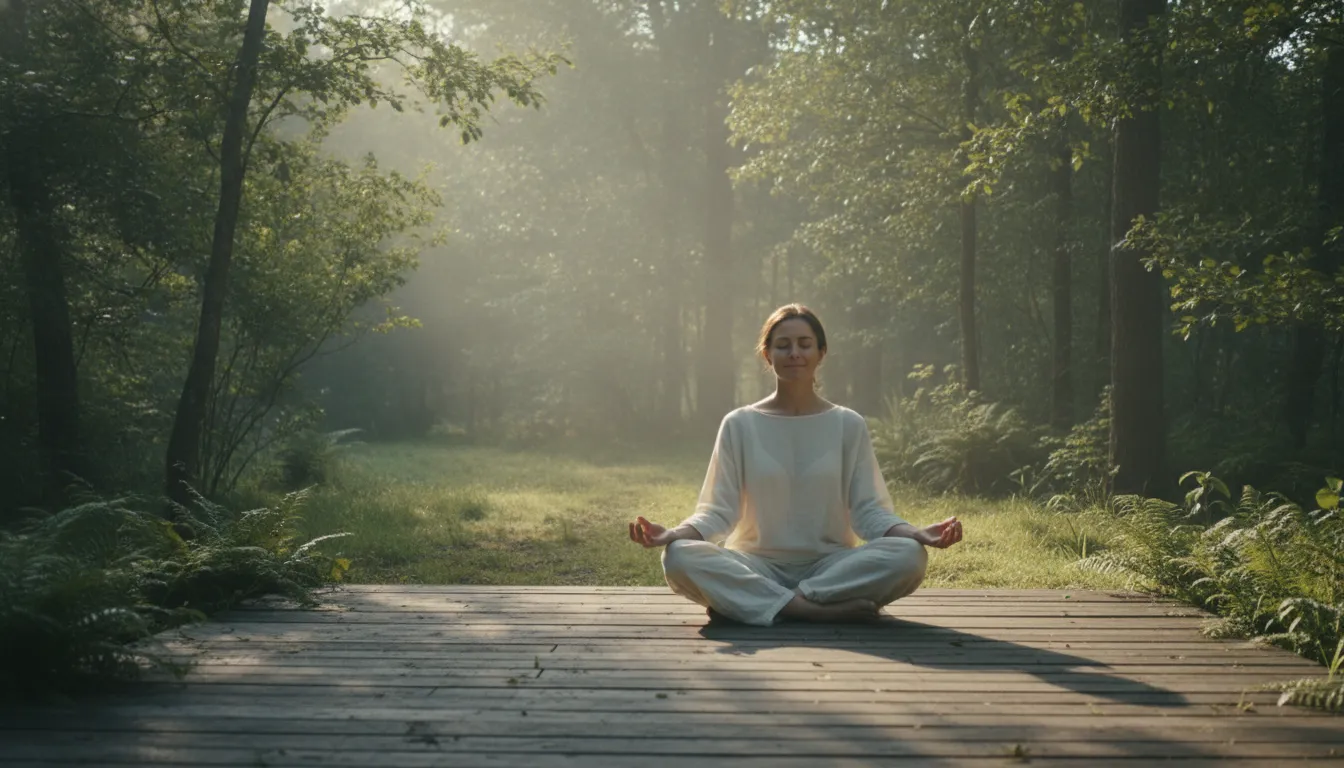
How Meditation Can Support Your Mental Health
We live in a time where the speed of information, professional demands, and daily uncertainties highlight mental health like never before. By 2026, discussing psychological well-being has shifted from being taboo to a recognized necessity by health organizations worldwide, including the World Health Organization (WHO), which has long warned about the global impact of mental disorders. In this context, practices like meditation have gained increasing attention—not as a magical solution, but as a tool that, when used consistently, can contribute to emotional balance and quality of life.
Meditation is an ancient practice present in various cultures and traditions, which in recent years has been studied under the lens of science. Researchers from universities and health centers around the world have been investigating its effects on the nervous system, stress, anxiety, and other dimensions of mental health. The results, although still expanding, suggest that regular meditation can be a valuable support—especially when integrated with other health care measures.
If you’ve ever been curious about meditation but didn’t know where to start, or if you want to better understand how it can (or cannot) help in your daily life, this article is written for you. We’ll explore what science suggests, what types of meditation exist, how to take the first steps, and, above all, when it’s important to seek professional support.
What Science Says About Meditation and Mental Health
It’s important to be honest: research on meditation has advanced significantly, but still has limitations. Peer-reviewed studies, including systematic reviews published in journals like JAMA Internal Medicine, suggest that mindfulness-based programs—one of the most studied forms of meditation—may be associated with reductions in symptoms of anxiety, depression, and stress in some populations.
Meditation seems to act, among other mechanisms, on regulating the stress response. When we practice mindfulness, for example, we are training the nervous system to respond less reactively to challenging situations. Neuroimaging studies suggest that regular practice may be associated with changes in brain regions involved in emotional regulation, such as the prefrontal cortex and the amygdala—although researchers are still mapping what this means in clinical practice.
What science does not claim: meditation is not a cure for mental disorders and does not replace medical or psychological treatments recommended by professionals. It is best understood as a complementary practice—something that can walk alongside other care measures, not replace them.
Main Types of Meditation and Their Focuses
There are many forms of meditation, each with distinct characteristics. Knowing the differences can help find the one that makes the most sense for your profile:
- Mindfulness: Involves paying attention to the present moment without judgment. It is the most studied modality in the context of mental health and is often taught in structured programs like MBSR (Mindfulness-Based Stress Reduction).
- Compassion Meditation (Loving-kindness): Focused on cultivating feelings of kindness and compassion for oneself and others. Studies suggest it may help reduce excessive self-criticism.
- Guided Meditation: Conducted by audio or instructors, it’s a good option for beginners who prefer having a “voice” of support.
- Transcendental Meditation: Uses mantras repeated mentally. It is quite popular, although access to certified instructors may have costs.
- Body Scan Meditation: Involves progressively directing attention to different parts of the body, promoting relaxation and body awareness.
There is no universally superior modality—the best type is the one you can practice with some regularity and that fits your routine and needs.
Benefits Suggested by Studies for Mental Health
Based on what scientific literature indicates so far, regular meditation practice may be associated with:
- Reduction in stress perception: By training attention, the practice can help create more space between a stressful stimulus and the reaction to it.
- Support in managing anxiety: Mindfulness-based programs have been studied as a complementary intervention in people with anxious symptoms, with promising—though variable—results.
- Improved sleep quality: Some studies suggest that meditation can contribute to more restorative sleep, especially in people with frequent nighttime rumination.
- Greater emotional awareness: Regular meditation can help identify and name emotions more clearly, which often facilitates communication and self-regulation.
- Support for overall well-being: People who meditate frequently report a greater sense of presence and satisfaction in daily life.
It’s crucial to remember that these benefits vary from person to person and depend on factors such as practice frequency, life context, and the presence of mental health conditions that may require specific treatment.
How to Start Meditating: A Practical Guide for Beginners
The good news is you don’t need expensive equipment, free hours, or years of experience to start. Here’s a possible path:
- Choose a time of day: Many people find it easier to meditate right after waking up or before sleeping, when interruptions are fewer.
- Start with a few minutes: Sessions of 5 to 10 minutes can already be a valid starting point. Quantity is not synonymous with quality here.
- Find a comfortable position: Sitting in a chair, on the floor, or lying down—the important thing is to be comfortable without falling asleep (unless the goal is precisely to relax to sleep).
- Focus on breathing: Observe the air entering and leaving. When the mind gets distracted—and it will get distracted, this is completely normal—gently bring attention back.
- Use support resources: Free apps and YouTube videos offer guided meditations in Portuguese, which can greatly facilitate the start of the practice.
- Be kind to yourself: There is no “wrong” in meditation. Distraction is part of the process; noticing it is already the practice.
- Build consistency gradually: More than duration, regularity over time tends to make a difference.
If you want to deepen your repertoire, our article on breathing techniques that help relieve anxiety can be an interesting complement, as conscious breathing and meditation often intertwine.
Meditation as Part of a Healthy Lifestyle
Meditation tends to work best when integrated with other self-care habits. Some practices that often go well together with it:
- Regular movement: Walking, yoga, dancing, or any physical activity you enjoy can enhance the benefits of meditation practice.
- Quality sleep: Creating a predictable nighttime routine with regular hours supports the rest the mind needs.
- Social connections: Trusting relationships are one of the pillars of emotional well-being recognized by science.
- Balanced diet: A varied diet based on natural foods nourishes not only the body but also influences mood and energy.
- Screen time limits: Conscious breaks from the digital world create space for meditation and presence.
For those in different life stages, it’s worth checking out our content on an active mind in old age: habits that make a difference, which addresses how practices like meditation can be adapted and beneficial over the years.
When to Seek a Mental Health Professional
Meditation is a self-care practice—not a treatment. There are situations where seeking professional support is not only advisable but necessary:
- If you are experiencing persistent sadness, intense anxiety, or symptoms that interfere with work, relationships, or sleep for several weeks.
- If you find difficulty in performing daily tasks for emotional reasons.
- If you are experiencing thoughts that scare you or involve self-harm.
- If you already have a mental health diagnosis and wish to include meditation as a complement—in this case, talk to your psychologist or psychiatrist about how to integrate it safely into your treatment.
Remember: seeking help is an act of courage and care, not weakness. Psychologists and psychiatrists are prepared to offer specialized support that no self-care practice can replace.
If you are in intense distress or crisis, know that help is available. The CVV (Centro de Valorização da Vida) is available 24 hours a day, every day, at the number 188—free call from any phone in Brazil. In emergency situations, seek the UPA, the CAPS in your city, or the nearest emergency room.
Conclusion
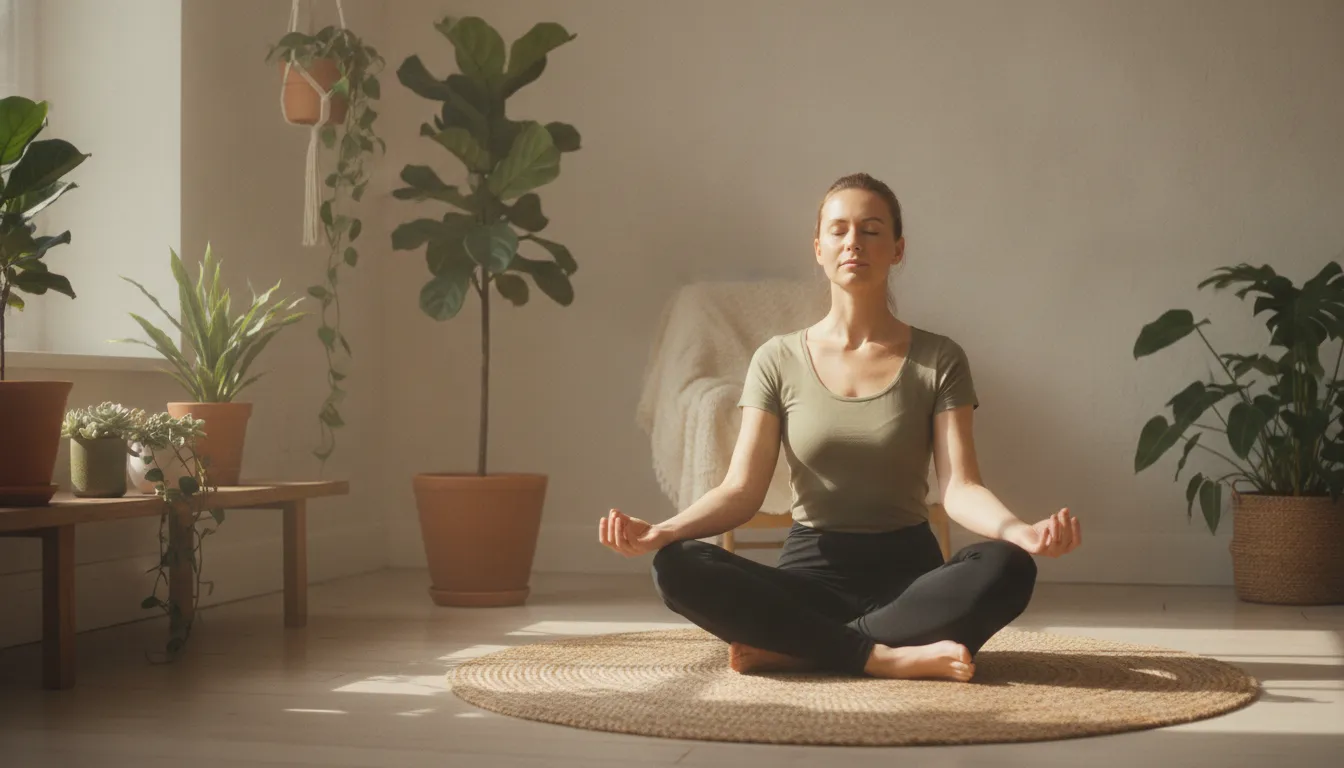
Meditation is not an answer for everything—and no honest person would say it is. But as a self-care tool based on regular practice and attention to the present moment, it can be a genuine ally in the journey of taking care of mental health. For many people, the simple act of stopping, breathing, and observing their own mind for a few minutes a day already represents a significant change in their relationship with themselves.
If you’re just starting, go with calmness and curiosity. If you’ve been meditating for some time, it might be worth deepening your repertoire or exploring new modalities. And if you’re going through a difficult time, remember that meditating and seeking professional support are not opposing paths—they can, and often should, coexist.
Take care of yourself with kindness. You deserve it.
This content is for informational and educational purposes only and does not replace evaluation, diagnosis, or treatment by a qualified health professional. If you have questions about your mental or physical health, consult a doctor, psychologist, or other qualified professional.