
Mental Health at Work: Creating Space for Self-Care
Have you ever reached the end of a workweek feeling like you were on autopilot—responding to emails, attending meetings, completing tasks—but barely remember how the days passed? If this experience sounds familiar, know that you are not alone. By 2026, the work landscape has changed significantly: the boundaries between professional and personal life have become more porous, hybrid and remote models have brought new freedoms and challenges, and mental overload has become one of the most frequent complaints among workers in different sectors.
The World Health Organization (WHO) recognizes mental health as an inseparable part of overall health and highlights the workplace as one of the contexts that most influence people’s psychological well-being. Chronic stress, a sense of lack of control, isolation, and performance pressure are factors that, over time, can significantly affect quality of life—not only at work but in all areas of life.
This article does not aim to solve what is structural and complex. Its goal is to offer accessible and evidence-based information so you can better understand what happens to your mind in the work environment, recognize warning signs, and find concrete ways to create more space for self-care—even within a demanding routine.
Why Does Work Affect Mental Health So Much?
Work occupies a huge part of our waking life. Besides time, it carries deep meanings: identity, belonging, purpose, livelihood. When this environment becomes a source of continuous suffering, the impact goes beyond fatigue—it can manifest in irritability, difficulty concentrating, insomnia, physical symptoms, and a persistent feeling of burnout.
Burnout, recognized by the WHO as an occupational phenomenon since 2019 and included in the International Classification of Diseases (ICD-11), is characterized by three main dimensions:
- Emotional exhaustion: a feeling of depletion that does not improve with regular rest
- Mental distancing from work: cynicism or indifference towards professional activities
- Reduced professional efficacy: perception of no longer being able to perform or contribute as before
It is important to note that burnout is not a weakness or lack of commitment. It is a response of the organism to work conditions that exceed a person’s capacity to adapt. Its assessment and management need to involve a health professional.
Signs That Something May Need Attention
Suffering does not always arrive in an obvious way. Often, it settles in gradually—and that is why it is important to pay attention to subtle changes. Some signs that commonly appear when mental health at work is under pressure include:
- Difficulty disconnecting from work outside of office hours
- Feeling that it is never enough, regardless of what is delivered
- Irritability or impatience with colleagues, clients, or family members
- Recurring headaches, muscle tension, or sleep disturbances
- Loss of interest in activities that were previously enjoyable
- Feeling of emptiness, lack of motivation, or dread when thinking about the next workday
These signs are not a diagnosis—and each person experiences them differently. But they are invitations to stop and ask yourself: how am I, really?
Practical Strategies to Create Space for Self-Care at Work
The good news is that studies suggest that small behavioral changes, maintained over time, can contribute to a healthier relationship with work. None of these are magical solutions or substitutes for professional support, but they can make a difference in daily life.
1. Set Boundaries with Intentionality
Boundaries are not walls—they are communications about what you need to function well. This can include:
- Setting an end-of-day time and communicating it to the team
- Turning off work notifications outside agreed hours
- Not responding to professional messages during meals or rest moments
- Learning to say “no”—or “I can, but not now”—when the load is already at its limit
This is not a matter of lack of commitment. Rest and recovery are part of a sustainable work cycle.
2. Create Real Breaks During the Day
Research in the field of work psychology suggests that small breaks throughout the day—even five to ten minutes—can help preserve attention and reduce the feeling of burnout. The key point is that the break is real: look away from the screen, stand up, drink water, breathe.
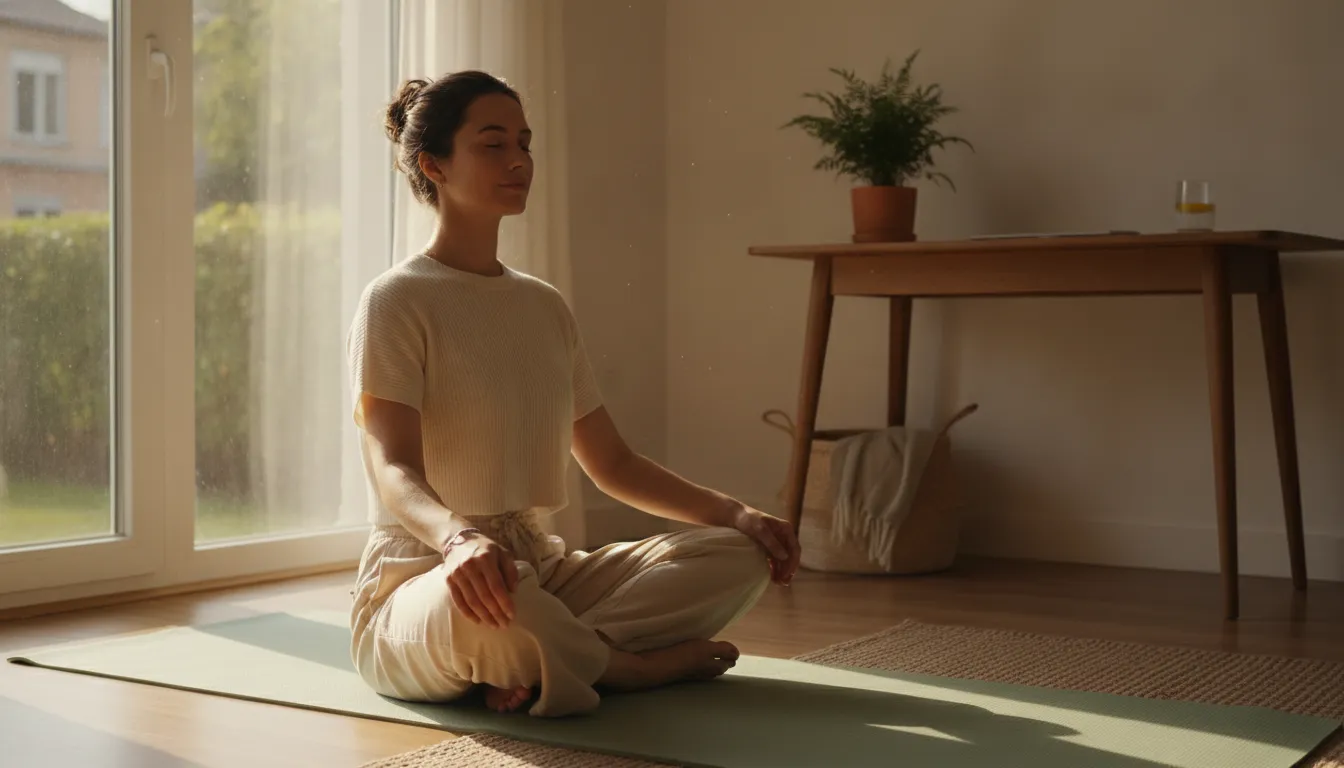
Simple conscious breathing techniques, such as slowly inhaling through the nose for a few seconds and exhaling in a controlled manner, often help activate the relaxation response of the nervous system. It is not necessary to practice advanced meditation to benefit from this type of break.
3. Care for the Transition Between Work and Personal Life
For those working from home, this transition can be especially difficult. Creating a closure ritual—turning off the computer, taking a short walk, changing clothes—can help the brain signal that “work” mode is over. The physical environment also matters: if possible, have a dedicated space for work and another for rest within the home.
4. Maintain Human Connections
Isolation is one of the factors that most often aggravates emotional suffering. Maintaining genuine conversations with colleagues—not just about tasks—cultivating friendships outside of work, and having trusted people with whom to share feelings are practices that evidence associates with greater emotional resilience.
5. Pay Attention to the Body: Sleep, Movement, and Nutrition
Mental health and physical health mutually influence each other. Sleep is one of the most important pillars: sleep deprivation impairs emotional regulation, memory, and decision-making ability. Regular physical activity—even light walks—is often associated with lower levels of anxiety and depression symptoms, as pointed out by scientific reviews in the field.
In terms of nutrition, general health guidelines indicate that a varied and balanced diet, with natural and minimally processed foods, can contribute to overall well-being—including mood and energy. If you want to explore more about habits that strengthen the body, you can read about healthy habits that help strengthen immunity on our blog.
The Role of Organizations: It’s Not Just Individual Responsibility
It is essential to recognize that mental health at work is not just an individual issue. Environments with excessive overload, toxic leadership, lack of clarity in roles, or absence of recognition cause illness regardless of how much the worker strives for self-care.
Organizations that invest in a mental health culture—with respected rest policies, open communication, access to psychological support, and humane management—tend to have more engaged teams and fewer absences. This is not just an ethical issue: it is strategic.
If you are in a leadership position, it is worth reflecting: what kind of environment am I helping to create for the people around me?
When to Seek a Health Professional
Some situations indicate that individual self-care is not enough and that it is important to seek specialized support. Consider seeing a psychologist, psychiatrist, or trusted doctor if:
- Symptoms of burnout or suffering persist even after rest periods
- You notice that your ability to work, relate, or perform daily activities is impaired
- There are thoughts of hopelessness, worthlessness, or lack of meaning
- The use of alcohol, medication, or other substances has increased as a way to cope with stress
- You feel you cannot consistently control anxiety or mood
Seeking help is an act of self-care—not weakness.
If you are going through a moment of intense suffering or crisis, know that help is available. The CVV (Centro de Valorização da Vida) can be reached at 188, with free calls, 24 hours a day, every day. In emergency situations, seek the nearest health service or SAMU (192).
Small Steps, Real Changes

Caring for mental health at work does not require a radical transformation overnight. It starts with an honest look at yourself: how are you? What is weighing on you? What is missing?
Sometimes, the first step is simply naming what you feel—without judgment. Other times, it is talking to someone you trust, reorganizing a routine, or seeking professional support. There is no single path, and each person needs to find what works for them, ideally with guidance from someone qualified to help.
If you also want to think about health more broadly, including habits that care for the heart and body, we recommend reading about caring for the heart: simple habits for daily life. Body and mind go hand in hand.
You deserve a work—and life—space where you can function, grow, and, when necessary, simply breathe. This care starts now, with the attention you are giving yourself by reading this article.
This content is informative and educational and does not replace evaluation, diagnosis, or treatment by a qualified health professional. Each person has a unique story and needs—always consult a doctor, psychologist, or other health professional for individual guidance.