

Introduction
Reaching old age with vitality, curiosity, and mental presence is a desire shared by people of all generations. The good news is that, according to recent scientific research, the human brain retains a remarkable capacity for adaptation and learning throughout life—a phenomenon known as neuroplasticity. This doesn’t mean that aging doesn’t bring real cognitive changes, but rather that there are daily practices that often contribute to keeping the mind active, engaged, and healthy.
By 2026, Brazil will have over 30 million people aged 60 or older, according to IBGE projections, and this number continues to grow. As such, caring for mental and cognitive health in old age has become a public health priority, as well as a necessary conversation at home, in communities, and in clinics. Discussing an active mind is not about perfection or high performance: it’s about quality of life, autonomy, and daily well-being.
This article gathers evidence-based information to help you—or a loved one—understand where to start in caring for cognitive health in old age. Every body and life story is unique, so any habit change should be discussed with a trusted healthcare professional.
What Happens to the Brain as We Age?
Before discussing strategies, it’s worth understanding what actually changes. Over the years, some cognitive functions may undergo gradual changes, such as information processing speed, working memory (used for short-term recall), and the ability to multitask. This is different from dementia—these are changes that are part of typical aging.
On the other hand, neuroscience studies suggest that skills such as vocabulary, accumulated wisdom, pattern recognition, and emotional intelligence tend to remain stable or even improve with age. Cognitive aging, therefore, is not a one-way street.
What scientific research consistently shows is that lifestyle factors—such as physical activity, social engagement, quality sleep, and mental stimulation—can help preserve cognitive function and quality of life as we age. It’s not about miraculous promises, but a set of habits that, together, make a real difference.
Movement Is Medicine for the Brain Too
Regular physical activity is one of the strategies with the strongest scientific backing when it comes to cognitive health in old age. Organizations like the World Health Organization (WHO) recommend that adults aged 65 and older engage in varied physical activity throughout the week, combining aerobic exercises, muscle-strengthening, and balance exercises—always respecting individual health conditions.
From the brain’s perspective, studies suggest that aerobic exercise can contribute to the health of memory-related regions, such as the hippocampus, and to cerebral blood circulation. Activities like walking, water aerobics, dancing, and tai chi are generally well-tolerated by older adults and have been associated with both physical and cognitive benefits.
Important point: Before starting any exercise program, it’s essential to consult a doctor. The intensity and type of activity should be chosen according to each person’s medical history.
Mental Stimulation: Challenge the Brain with Pleasure
Keeping the brain active doesn’t have to be a tedious task. Cognitive stimulation can occur in enjoyable ways integrated into daily life. The secret, according to researchers, is to seek activities that offer some degree of novelty and challenge—that is, activities that aren’t completely automatic.
Some activities commonly associated with cognitive engagement include:
- Regular reading, whether books, newspapers, or magazines
- Crosswords, sudoku, and puzzles, which exercise logical reasoning and language
- Learning something new, such as a language, musical instrument, or craft skill
- Board and card games, which combine strategy and social interaction
- Writing, whether a diary, letters, or personal memoirs
It’s worth noting that balanced use of technology can also be an ally. Cognitive training apps, video calls with family, and even online classes are accessible resources. If you want to better understand how to balance screen time healthily, check out Less Screen Time: Strategies for Conscious Use.
Social Connection: The Power of Human Relationships
Social isolation is one of the most studied risk factors for cognitive decline in the elderly. The opposite also seems to be true: maintaining active and meaningful social relationships often contributes to emotional well-being and brain health.
This doesn’t mean you need to be extroverted or participate in dozens of activities. What matters is the quality of connections. Some ways to cultivate this include:
- Maintaining regular contact with family and friends, even through video calls
- Participating in community, faith, volunteer, or shared hobby groups
- Attending senior centers that offer diverse activities
- Engaging in stimulating conversations on topics of interest
If feelings of loneliness or isolation are intense, it’s important to seek support. A psychologist can help address these issues with care and professionalism.
Sleep, Nutrition, and General Health: The Foundation of Everything
No cognitive strategy works well on a fragile foundation. Quality sleep, for example, is considered essential for memory consolidation—it’s during sleep that the brain organizes and stores information learned throughout the day. Persistent sleep difficulties deserve medical attention, as they may have treatable causes.
Regarding nutrition, studies suggest that varied dietary patterns rich in fruits, vegetables, legumes, whole grains, nuts, and fish may be associated with brain health benefits. The famous Mediterranean diet is one of the most studied in this context. However, individual nutritional guidance should always come from a nutritionist or doctor, as each person has specific needs and conditions.
Other pillars that should not be neglected include:
- Managing chronic conditions like hypertension, diabetes, and high cholesterol, which can affect cerebral circulation
- Avoiding smoking and excessive alcohol consumption, both associated with cognitive health risks
- Adequate hydration, often underestimated in old age
- Energizing the body with simple habits, as described in Simple Habits That Help Boost Daily Energy
Emotional Health: Caring for the Mind Also Means Caring for the Brain
Mental health and cognitive health are inseparable. Conditions like depression and anxiety are common in old age and often underdiagnosed—and both can significantly impact memory, concentration, and overall well-being.
Deep sadness, loss of interest in previously enjoyable activities, excessive worry, or a feeling that “something isn’t right” deserve attention, not silence. Seeking support from a psychologist or psychiatrist is an act of care, not weakness.
If you or someone close is experiencing intense suffering or crisis, know that help is available. In Brazil, the CVV (Centro de Valorização da Vida) offers free emotional support at 188, available 24 hours a day. In emergencies, seek the nearest health service or call SAMU (192).
When to Seek a Healthcare Professional?
Some situations require prompt medical evaluation. Pay attention to signs that go beyond typical age-related forgetfulness:
- Frequently forgetting recent events, especially those that would have been easily remembered before
- Difficulty finding common words or getting lost in familiar places
- Unexplained changes in personality, behavior, or mood
- Difficulty performing everyday tasks that were once automatic
- Confusion about dates, people, or places
- Any symptom that causes concern, even if it seems “small”
These signs don’t necessarily mean dementia—there are many treatable causes that can affect cognition, such as nutritional deficiencies, thyroid problems, medication effects, or sleep disorders. Therefore, evaluation by a doctor is irreplaceable.
Conclusion
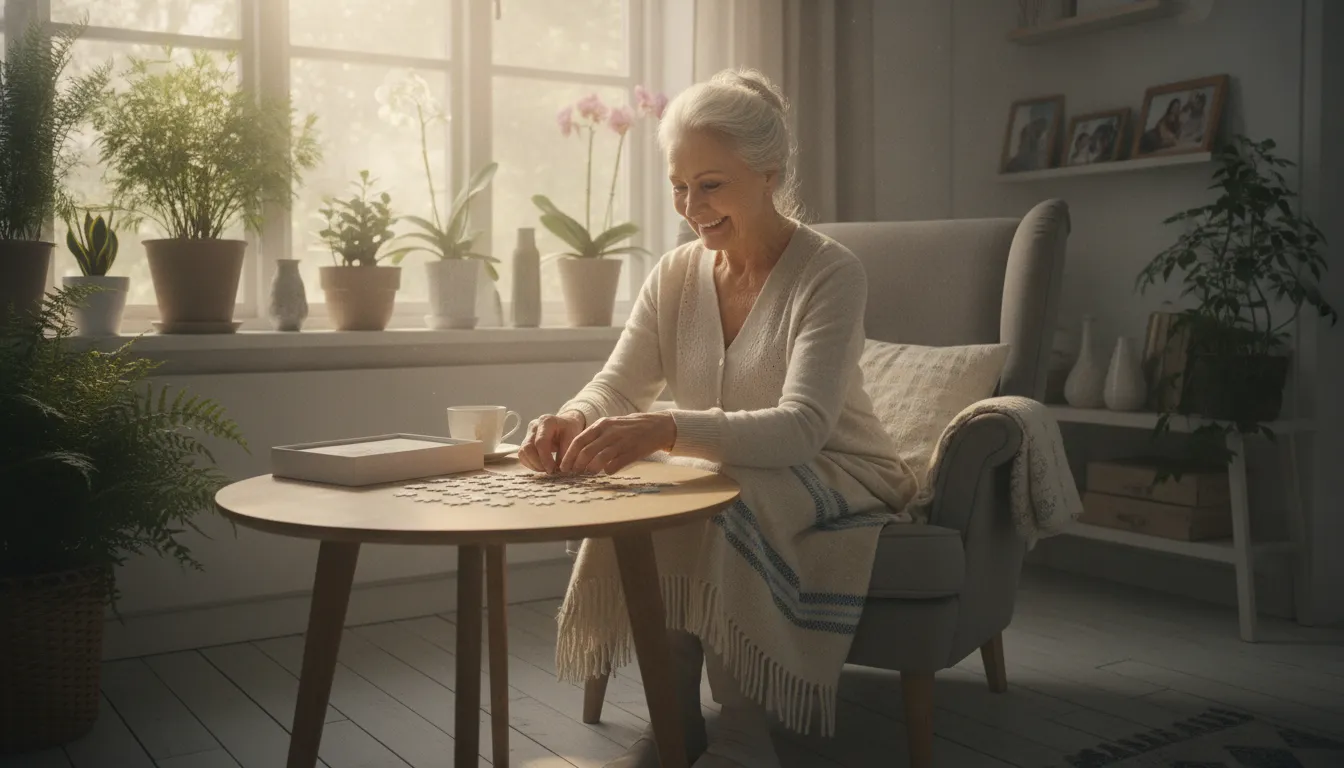
Caring for the mind in old age is a journey made of small daily steps—a walk around the neighborhood, a conversation with a friend, an open book, a new recipe, a good night’s sleep. There is no single formula or guaranteed result, but there is a direction pointed out by science: healthy habits, human connections, and attention to body and mind make a difference.
If you’re starting now, you don’t need to change everything at once. Choose a small step and start with it. And remember: having the support of healthcare professionals—doctor, nutritionist, psychologist, physiotherapist, physical educator—is a fundamental part of this journey, not a sign of limitation.
Take care of yourself with kindness and science.
This content is for informational and educational purposes only. It does not replace the evaluation, diagnosis, or guidance of a healthcare professional. Each person has a unique medical history, and health decisions should always be made in collaboration with qualified professionals.