
Introduction
Have you ever picked up your phone in the morning before even getting out of bed? Or found yourself scrolling through feeds without knowing why, while the afternoon slipped away? If the answer is yes, you’re in good company — and that’s nothing to be ashamed of. By 2026, smartphones have become such natural extensions of everyday life that distinguishing between functional use and what begins to weigh on health has become a real challenge for many.
Average screen time worldwide has grown significantly in recent years, driven by remote work, increasingly immersive social media, and apps designed to capture attention. Public health research and digital behavior studies have investigated how this pattern affects sleep, mood, concentration, and even how people perceive themselves. This isn’t about demonizing technology — it also connects people, informs, and offers valuable resources. The question is recognizing when balance begins to shift.
This article brings an evidence-based conversation about signs that may indicate it’s worth reconsidering your relationship with your phone. There’s no magic number of hours that works for everyone, and no suggestion here replaces evaluation by a healthcare professional. The goal is to offer accessible information so you can observe your own patterns with greater awareness — and, if necessary, seek support.
What science has observed about excessive screen use
Research on digital health is still evolving, and it’s important to be honest about that: many studies in the field are observational, meaning they identify associations but don’t prove definitive causes. That said, organizations like the World Health Organization (WHO) and various psychiatry societies around the world have drawn attention to patterns of problematic technology use, especially in children, adolescents, and young adults.
What peer-reviewed studies typically suggest is that intense and unintentional smartphone use — the kind where someone picks up the device on impulse, without a clear purpose — may be associated with worsening sleep quality, increased anxiety symptoms, and difficulty concentrating. The central point isn’t the number of hours itself, but the quality of the relationship with the device: whether use is conscious or automatic, whether it brings something of value or leaves a sense of emptiness.
Physical signs worth paying attention to
The body usually gives clues before the mind notices. Some physical discomfort may be related to your phone use pattern, although other health issues can cause them too — so if something persists, the way forward is to see a doctor.
- Neck and shoulder pain: Spending long periods with your head bent down looking at the screen can overload the cervical muscles. This recurring postural pattern is increasingly discussed in occupational medicine and physical therapy.
- Eye fatigue: Burning, blurred vision, or difficulty focusing after prolonged screen time are common complaints, grouped under the term “digital eye strain.” The American Academy of Ophthalmology recognizes this set of symptoms as real, though usually reversible with breaks and habit adjustments.
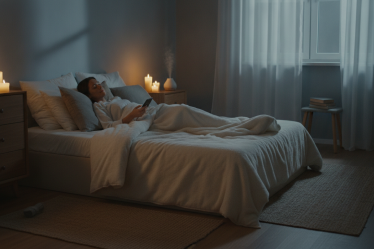
- Difficulty falling asleep: Light emitted by screens, especially at night, can interfere with melatonin production — the hormone linked to sleep cycles. Studies suggest that using your phone close to bedtime can delay sleep onset. If you want to understand more about protecting your rest, it’s worth exploring tips on sleep routine: habits that can make a difference.
- Frequent headaches: Though they have multiple possible causes, headaches that recur in relation to screen use are frequently reported and may be linked to muscle tension and visual strain.
Emotional and behavioral signs
Beyond the physical, the emotional and behavioral dimension offers important clues about your relationship with your phone.
- Anxiety when without the device: Feeling discomfort, restlessness, or irritation when your phone is away, out of battery, or without signal is something researchers call “nomophobia” — and while the term is still being formally studied, the experience is widely reported.
- Checking your phone automatically and repetitively: Picking up the device without clear reason, multiple times over minutes, can signal that the behavior has become an automatic habit, disconnected from real need.
- Constant comparison and drop in self-esteem: Scrolling through social media feeds and feeling worse afterward — about your own life, body, or achievements — is a pattern studies have associated with more negative moods, especially in young people.
- Difficulty being present: Being physically in a conversation, meal, or activity but mentally “stuck” on your phone or thinking about checking notifications is usually noticed by those around you — and sometimes by yourself.
- Procrastination and drop in productivity: Using your phone to escape important tasks, on a recurring basis, can impact your professional and academic life.
Signs in sleep and daily energy
Sleep and energy throughout the day form a sensitive thermometer of overall well-being. When screen use begins to interfere with these two pillars, the impact usually spreads to other areas of life.
Waking up tired even after hours in bed, feeling excessive daytime sleepiness, or noticing that energy has consistently dropped can have various origins — but it’s worth asking yourself whether your phone has taken up time that should be reserved for rest. Late-night app browsing, notifications that wake you at night, or simply the difficulty of “turning off your mind” because of content seen before bed are concrete situations that deserve reflection. For more on how to maintain energy throughout the day, check out the article on small habits that help maintain energy during the day.
Practical tips to start adjusting the balance
If you’ve identified some of the signs above and want to try making changes, here are strategies commonly mentioned by digital health and behavior experts. Remember that what works varies from person to person — what matters is observing what makes sense for your routine.
- Observe before changing: Before any adjustment, use the screen time monitoring tools that most smartphones already offer natively. Seeing the numbers clearly can be eye-opening — and it’s not to blame yourself, but to be aware.
- Set phone-free times: Choose at least one moment of the day — meals, the first 30 minutes after waking up, or 30 minutes before bed — to put the device aside.
- Disable non-essential notifications: Each notification is an invitation to interrupt. Reducing the volume of alerts can decrease the impulse to constantly check your phone.
- Create conscious friction: Putting your phone in another room during certain activities, or using gray cases (which make the screen less visually appealing) are simple strategies that often help.
- Substitute, don’t just suppress: Rather than simply taking the phone out of your hands, think about what you want to put in its place — a walk, a conversation, reading a physical book. Conscious substitution usually works better than pure prohibition.
- Involve those around you: When screen use affects family or friend time, having an open conversation about it can be the first step toward shared changes.
- Be kind to yourself: Habit changes take time and don’t follow a straight line. Setbacks are part of the process — what matters is returning to your intention, without excessive self-criticism.
When it’s worth seeing a healthcare professional
Not every discomfort related to your phone requires immediate specialized attention, but some signs indicate that talking with a professional is the more careful path:
- Intense emotional suffering associated with use — such as anxiety attacks, frequent crying episodes, or persistent feelings of emptiness.
- Significant interference in life — when screen use begins to clearly and continuously harm work, studies, relationships, or physical health.
- Frustrated attempts at change — if you’ve tried reducing use multiple times and feel you can’t, even though you want to, it can be helpful to talk with a psychologist, who has clinical tools to work with behavioral patterns.
- Persistent physical symptoms — pain, visual changes, or sleep alterations that don’t improve with simple adjustments need medical evaluation.
If you’re going through intense emotional suffering, remember that help exists and you don’t have to face it alone. In Brazil, CVV (Center for the Valorization of Life) provides free service at 188, 24 hours a day. In emergency situations, seek medical care.
Conclusion

Rethinking your relationship with your phone isn’t about giving up technology or following rigid rules. It’s about cultivating a more conscious stance toward tools that are part of modern life — and noticing when they shift from allies to sources of depletion.
The signals your body and mind send tend to be clearer than they seem. Paying attention to them, with curiosity and without judgment, is already a significant step. And if the journey seems difficult to make alone, seeking professional support is always a smart and courageous choice.
Take care of yourself with kindness — you deserve a relationship with technology that sustains you, not depletes you.
This content is informative and educational, produced based on evidence available at the date of publication. It does not replace evaluation, diagnosis, or treatment by a qualified healthcare professional. Always consult a doctor, psychologist, or other qualified professional for individual guidance.