Why Pilates Is Good for Your Body and Mind
Have you ever stopped to think about why pilates continues to grow in popularity decades after it was created? In 2026, it remains one of the most sought-after movement practices in gyms, studios, and even home environments — and it’s no accident. Unlike many exercise trends that appear and disappear quickly, pilates has accumulated over the years a body of scientific evidence that helps explain its real benefits for physical and mental health.
Created in the early twentieth century by German Joseph Pilates, the method was designed from the start as an integrated approach — uniting body and mind through controlled movements, conscious breathing, and mindful attention to what the body is doing. It’s not a miraculous practice, but it is one with solid foundation, accessible to different profiles of people and ages, and usually fits well as part of a healthier lifestyle.
In this article, you will understand what scientific evidence says about the effects of pilates, how it acts on the body and mind, and what to consider before you start — always remembering that each person has a unique story, and that talking with a health professional before starting any physical activity is always the safest path.
What is pilates, anyway?
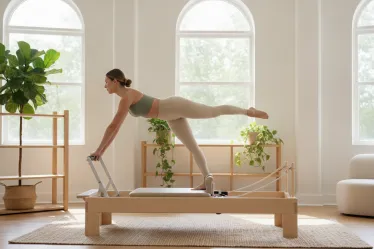
Pilates is a training method that combines strength, mobility, balance, and body awareness. It can be practiced on the ground — called solo pilates or mat pilates — or with specific equipment, such as the reformer, the cadillac, and the chair, which use springs to create resistance.
What sets pilates apart from other forms of exercise is its emphasis on some fundamental principles:
- Concentration: total attention to the movement being performed
- Control: each gesture is performed with precision, without compensation
- Center (or powerhouse): strengthening of the central region of the body — abdomen, lower back, hips, and glutes
- Flow: movements have a smooth, connected rhythm
- Precision: quality over quantity
- Breathing: an integral part of each exercise
These principles make pilates a practice that requires mental presence — which, as we will see, has effects that go beyond the physical.
Benefits for the body: what the science says
Muscle strengthening and mobility
Studies published in specialized journals on rehabilitation and sports medicine suggest that regular pilates practice can contribute to strengthening the core muscles (center of the body), improved posture, and increased flexibility and joint mobility. These effects are especially relevant in a context where many people spend long hours sitting during the day.
Lower back pain
Chronic lower back pain is one of the most common health problems in the world, according to data from the World Health Organization (WHO). Systematic reviews published in physical therapy journals indicate that pilates can help reduce the intensity of chronic lower back pain and improve function in some populations — especially when practiced in an oriented and sustained way. It’s important to reinforce, however, that these results vary from person to person, and pilates should not be seen as an isolated treatment for clinical conditions.
Balance and motor coordination
Research with older adults indicates that pilates can contribute to improved balance and coordination — important factors in fall prevention, which represent a significant health risk in this age group. The Brazilian Society of Geriatrics and Gerontology highlights guided physical activity as an essential part of promoting older adults’ health.
Posture and body awareness
The mindful and controlled nature of the exercises favors the development of body perception — the ability to feel how the body is positioned and moving in space. Over time, many people report noticing improvements in posture in everyday life, although individual results may vary.
Benefits for the mind: the dimension many people underestimate
Talking about physical health without mentioning mental health would be telling only half the story. And here pilates has something interesting to offer.
Stress and anxiety reduction
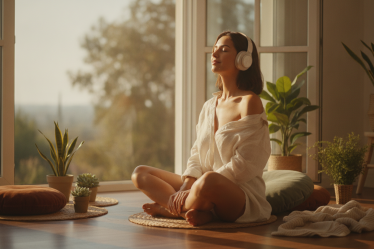
Physical exercises in general are associated with the release of substances such as endorphins and the regulation of the stress response axis. Pilates, in particular, by requiring focus and conscious breathing throughout the entire session, can produce an effect similar to that of moving meditation — which is very reminiscent of the principles of mindfulness for beginners.
Qualitative and quantitative studies suggest that regular pilates practitioners report a reduction in stress and anxiety symptoms. Science is still studying the specific mechanisms in depth, but the combination of movement, mindfulness, and breathing appears to create favorable conditions for emotional well-being.
Improved mood and self-esteem
Engaging in a practice that progressively challenges and strengthens the body usually has a positive impact on how the person perceives themselves. Feelings of competence, progress, and presence in one’s own body can contribute to more stable mood and healthier self-esteem.
Sleep quality
Regular physical activity is associated with improved sleep quality in various studies. If you’re curious about other factors that affect sleep, it’s worth reading about what using your phone before bed does to your sleep.
Who can practice pilates?
One of the most valued characteristics of pilates is its adaptability. The method can be modified for different conditions, ages, and goals. It is usually indicated — always with professional guidance — for:
- Sedentary adults who want to start a low-impact physical activity
- People in rehabilitation (with physical therapist supervision)
- Older adults seeking balance and fall prevention
- Pregnant women (with adapted exercises and supervision)
- People with chronic muscle pain (following medical evaluation)
- Athletes who want to complement training with core work and mobility
This doesn’t mean pilates is for everyone in the same way. Some conditions require specific adaptations or contraindicate certain exercises — which reinforces the importance of individual assessment.
How to get started: practical guidance
If you’re thinking about trying pilates, here are some general guidelines to take your first steps safely:
- Talk to your doctor or physical therapist before you start, especially if you have any pre-existing health condition, chronic pain, or have had recent surgery.
- Find a qualified professional — a certified pilates instructor, preferably with recognized training. The quality of guidance makes a difference, especially at the beginning.
- Start slowly — introductory or individual classes help you understand the method’s principles and learn movements correctly, reducing the risk of compensation and injury.
- Be honest about your limitations — tell the instructor about any pain, previous injuries, and any movement restrictions. This allows them to adapt exercises for you.
- Consistency matters more than intensity — regular practice over time usually brings more sustainable results than sporadic and very intense sessions.
- Combine with other healthy habits — pilates is enhanced when associated with good hydration (see what it does for your body here), balanced eating, and quality sleep.
Pilates as complementary therapy: what to expect
It’s important to be transparent: pilates is a physical activity practice with documented benefits for health and well-being — but it’s not a medical treatment and doesn’t replace clinical care. In cases of specific health conditions, it can function as a complementary practice within a therapeutic plan defined by healthcare professionals.
Similarly, while it can contribute to emotional well-being, pilates doesn’t replace psychological or psychiatric care when needed. If you find yourself facing a period of intense stress, persistent anxiety, prolonged sadness, or any other significant emotional suffering, seeking support from a psychologist or psychiatrist is an important and courageous step.
When to see a healthcare professional
Before starting pilates — or any new physical activity — consider seeking medical advice if you:
- Have a diagnosis of heart disease, osteoporosis, herniated disc, or other musculoskeletal problems
- Are in a post-operative or rehabilitation period
- Are pregnant or in the recent postpartum period
- Feel persistent pain without an identified cause
- Have a history of joint or muscle injuries
A doctor, physical therapist, or fitness educator can help determine whether pilates is appropriate for your situation and how it should be practiced safely.
Conclusion: an invitation to conscious movement
Pilates is, in its essence, an invitation to inhabit your own body with more attention, care, and respect. It’s not about perfection in movements, nor about competition — but about a practice that, when performed consistently and with proper guidance, usually contributes to a life with more mobility, less pain, more balance, and a well-being that goes beyond the physical.
If you’ve ever thought about trying it, perhaps now is a good time to take the first step — slowly, with guidance, and with curiosity. And if the path includes conversations with healthcare professionals, that’s not an obstacle: it’s exactly how body care should work.
This content is informational and educational, and does not replace the evaluation of a healthcare professional. Each person has individual needs, and the supervision of doctors, physical therapists, or fitness educators is essential for safe decisions about physical activity and health.