
Simple Habits for Maintaining Good Posture at Work
Have you ever ended a workday feeling that familiar tension in your shoulders, a persistent ache in your lower back, or the sensation that your neck is “stuck”? If so, you’re not alone. With the rise of remote and hybrid work—a trend that has solidified even more by 2026—a significant number of people spend hours daily in front of screens, often in unsuitable chairs, makeshift desks, or sofas that seem comfortable but offer no support to the spine.
The good news is that small changes in the environment and routine can make a real difference in musculoskeletal well-being. It’s not about a magic solution or a promise to eliminate any discomfort: it’s about creating sustainable habits based on what science and occupational health guidelines recommend. And yes, let’s say upfront: this article is educational and does not replace a health professional’s evaluation. If you experience frequent or intense pain, seeking medical or physiotherapeutic guidance is always the safest path.
Throughout this text, we will explore what ergonomics teaches us about posture, which habits usually contribute to a healthier workday, and when it’s time to seek specialized help. Shall we?
What is Ergonomics and Why It Matters
Ergonomics is the science that studies the adaptation of the environment and tools to the characteristics and needs of humans—not the other way around. When we talk about posture at work, it is the main ally.
According to the International Labour Organization (ILO) and widely adopted occupational health guidelines, poorly adapted work environments are associated with an increase in musculoskeletal complaints, especially among workers who spend long periods sitting or performing repetitive movements. These problems include pain in the lower back, neck, and upper limbs—and can impact quality of life and productivity.
The good news: relatively simple adjustments in the work setup often contribute to reducing these complaints. It’s not necessary to have a perfect home office or invest a fortune in equipment. The starting point is understanding the basic principles.
How to Set Up a More Ergonomic Workspace
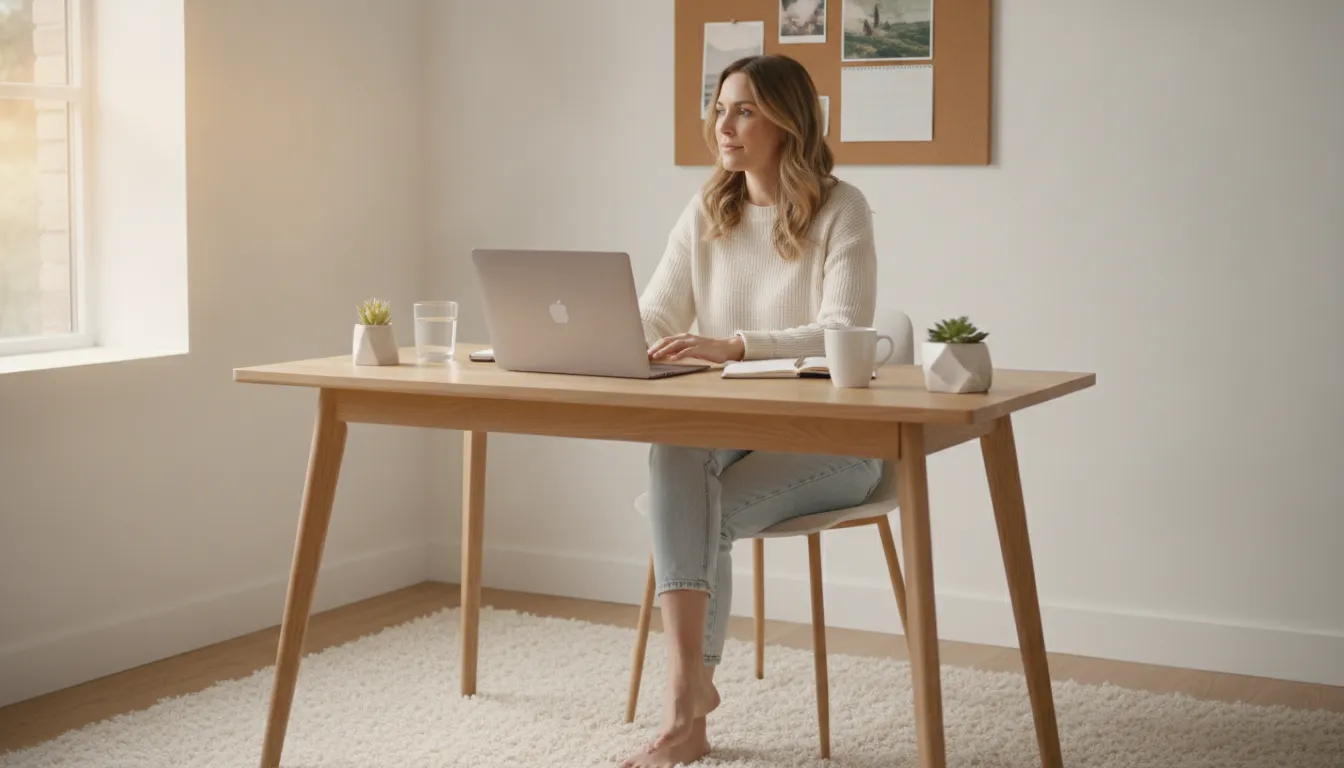
Before thinking about exercises or breaks, it’s worth looking at the environment itself. Some general occupational ergonomics guidelines include:
- Adjust the chair height so that your feet are flat on the floor (or on a footrest), forming an angle of approximately 90 degrees at the knees.
- Position the monitor at eye level or slightly below, at a distance of about 50 to 70 cm from your face, to avoid prolonged neck bending.
- Rest your forearms on the desk or chair armrests while typing, with relaxed shoulders—without raising your shoulders towards your ears.
- Use a chair with a backrest that follows the curve of your lower back. If the chair doesn’t have adequate lumbar support, a cushion or rolled towel can help temporarily.
- Avoid crossing your legs for long periods, as this can strain the pelvis and spine.
- Keep the keyboard and mouse close to your body, avoiding long reaches that strain the shoulders.
Remember: no posture, even the “ideal” one, is healthy if maintained for hours without interruption. Movement is as important as position.
The Importance of Active Breaks
Studies in occupational health suggest that interrupting prolonged periods of sedentarism with small movement breaks can contribute to physical well-being and even concentration. The concept of an active break is simple: stand up, move your body briefly, and resume the activity.
Some strategies that often help:
- 30-60 Minute Rule: stand up from your chair at least once every 30 to 60 minutes, even if just for 2 to 5 minutes.
- Light stretches: gently rotate your neck, raise and lower your shoulders, extend your arms above your head, or walk to another room.
- Reminder apps: there are free digital tools that alert you about screen time and encourage breaks—useful for those who “lose track of time” during work.
You don’t need an elaborate routine to start. Simple movements, done regularly, often make a difference. If you want to take a step further and include more physical activity in your routine, the article Exercises at Home Without Equipment: A Guide to Start can be a good starting point.
Exercises and Stretches That Can Help
Stretches and core strengthening exercises (deep muscles of the abdomen and back) are often recommended by physiotherapists as part of spine care. The reasoning is that stronger and more flexible muscles offer better support to the vertebral structure.
Some examples of movements generally considered safe for most healthy people:
- Cervical Retraction (chin tuck): gently push your chin back, as if trying to create a “double chin,” holding for a few seconds. It can help relieve neck tension caused by looking at screens.
- Shoulder Rotation: slowly rotate your shoulders forward and backward.
- Chest Stretch: interlace your hands behind your back and gently open your chest.
- Pelvic Tilt: sitting or lying down, lightly contract your abdomen and flatten your lower back for a few seconds—a basic core activation exercise.
Attention: any exercise should be done within your comfort limits, without forcing in case of pain. If you have a history of spine problems, injuries, or chronic pain, consult a physiotherapist or doctor before starting any exercise routine, as inappropriate movements can worsen the condition instead of improving it.
The Role of Stress and Mental Health in Posture
It might be surprising, but emotional stress and posture have a closer relationship than you might think. When under pressure, we tend to involuntarily tense the muscles of the shoulders, neck, and jaw—which, over time, can contribute to physical discomfort.
Managing daily stress, therefore, is also part of body care. Practices like mindful breathing, mental breaks, and task organization can contribute to this balance. Emotional intelligence skills, such as self-awareness and emotion regulation, also often help in how we deal with work pressures—you can explore more about this in Emotional Intelligence: What It Is and How to Develop It.
If stress is frequent and intense enough to affect your quality of life, consider seeking support from a psychologist or other mental health professional. Taking care of the mind is taking care of the body—and vice versa.
Everyday Habits That Make a Difference
Besides the work environment and exercises, some general habits often contribute to spine health:
- Adequate hydration: intervertebral discs need hydration to maintain their elasticity. Maintaining adequate water intake throughout the day is a basic health guideline.
- Quality sleep: during sleep, the body recovers. Mattresses and pillows suitable for your body type can help maintain spinal alignment during rest.
- Balanced diet: a varied and nutrient-rich diet supports overall bone and muscle health. There’s no magic formula or single food—the balance is the guiding principle.
- Regular physical activity: walking, swimming, practicing yoga, or any activity you enjoy and that moves the body is usually beneficial for the spine’s support muscles. Talk to a professional about which modality is most suitable for your profile.
When to Seek a Health Professional
Preventive care and healthy habits are valuable, but there are situations where it’s essential to seek professional evaluation. Consult a doctor or physiotherapist if you experience:
- Persistent pain in the back, neck, or limbs that doesn’t improve with rest or lasts more than a few weeks
- Pain radiating to the arms or legs (such as tingling, numbness, or weakness)
- Pain that worsens at night or wakes you during sleep
- Significant movement limitation or difficulty performing daily activities
- History of falls, trauma or diseases affecting bones and joints
- Any doubt about the origin or severity of your discomfort
No article, app, or video replaces the individualized evaluation of a qualified professional. A physiotherapist can identify specific postural imbalances and guide personalized exercises; a doctor can investigate underlying causes that require treatment. Don’t delay this search when your body is asking for attention.
Conclusion
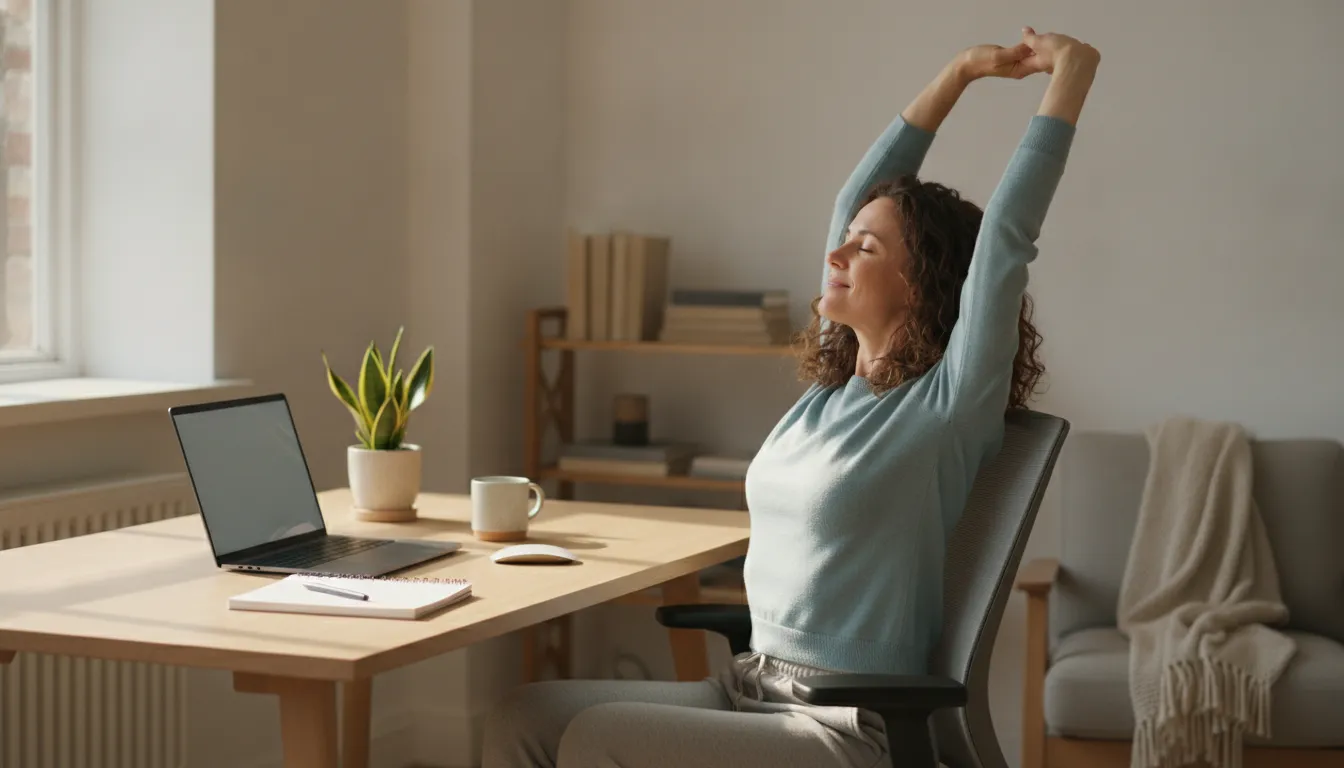
Caring for posture at work is not about perfection—it’s a practice of paying attention to your own body, built day by day. Small adjustments in the environment, regular breaks, light stretches, and attention to stress are accessible habits that, with consistency, often contribute to greater well-being over time.
Remember that each body is unique, with its history, limitations, and needs. What works well for one person may not be suitable for another. Therefore, use the information in this article as a starting point to reflect on your habits—and whenever you have doubts or experience persistent discomfort, seek a health professional.
You deserve to feel good in your own body. And this care begins with simple gestures, every day.
This content is informative and educational, and does not replace the evaluation, diagnosis, or treatment of a health professional. In case of persistent pain or symptoms, consult a doctor or physiotherapist.