

Yoga: Understanding Its Benefits for Health and Wellness
Have you ever felt that tension in your shoulders after hours staring at a screen? Or that mental agitation that keeps you awake, even when your body is exhausted? If so, you’re not alone. In an increasingly fast-paced world, many people seek practices that help reconnect body and mind — and yoga is one of the most appealing in this regard.
Originating in India thousands of years ago, yoga is much more than a series of physical postures. It is a philosophical and physical practice involving movement, breathing, mindfulness, and, depending on the tradition, elements of meditation. Over the past few decades, it has spread worldwide and has been studied by science with growing interest. Today, in 2026, there is a considerable volume of research exploring its effects on health — with promising results, but also important caveats worth knowing.
This article provides an honest, evidence-based overview of what yoga is, how it works, what benefits studies have suggested, and what to consider before starting. As always, the information here is educational and general — it does not replace the evaluation of a healthcare professional who knows your history.
What Exactly is Yoga?
The word “yoga” comes from Sanskrit and carries the meaning of “union” or “yoke” — an idea of integration between mind, body, and spirit. Its origin traces back to ancient Indian philosophical traditions, mentioned in texts like the Vedas and systematized in Patanjali’s Yoga Sutras, written about two thousand years ago.
In contemporary practice, yoga has taken many forms. The most well-known versions in the West include:
- Hatha yoga: the foundation of many modern styles; combines postures (asanas), breathing (pranayama), and relaxation.
- Vinyasa: fluid sequences of movements synchronized with breath, with a more dynamic pace.
- Yin yoga: postures held for longer periods, focusing on deep tissues and relaxation.
- Kundalini: combines postures, chants, breathing, and meditation; has a strong spiritual component.
- Restorative yoga: gentle postures with the use of props, aimed at rest and recovery.
Each style has its own characteristics and may suit different people and goals better. There is no “right yoga” — the most important thing is to find an approach that makes sense for your moment and physical condition.
What Science Says About the Benefits of Yoga
Before discussing the benefits, an important point: research on yoga has advanced significantly but still faces methodological limitations — such as small samples, lack of standardization among studies, and difficulty in creating adequate control groups. This does not mean the results are not relevant, but it means that evidence must be interpreted carefully and without exaggeration.
With that in mind, here is what studies have suggested:
Mental Health and Emotional Well-being
One of the areas with the most favorable evidence is mental health. Reviews of studies published in journals like Frontiers in Psychiatry and the Journal of Clinical Psychology suggest that regular yoga practice may contribute to reducing symptoms of anxiety and stress, possibly through the activation of the parasympathetic nervous system — the body’s “rest and digest” response.
There are also indications that yoga can help people with mild to moderate depressive symptoms, when used as a complement to other treatments. It is not a substitute for psychological or psychiatric care, but a practice that, in conjunction with professional care, can contribute to emotional well-being.
If you are experiencing intense suffering, remember: help is available. Talking to a psychologist, psychiatrist, or someone you trust is an important step. In crisis situations, the CVV (Centro de Valorização da Vida) is available at 188, free of charge, 24 hours a day.
Flexibility, Strength, and Balance
In the physical realm, studies consistently show that yoga practice tends to improve flexibility, balance, and body awareness over time. These benefits are especially relevant for older adults, where balance and muscle strength play an important role in fall prevention.
A review published in the International Journal of Yoga noted significant improvements in measures of flexibility and strength in groups that practiced yoga regularly for at least eight weeks. Results vary depending on the style practiced, frequency, and individual characteristics of each person.
Lower Back Pain and Musculoskeletal Health
Back pain is one of the most common complaints worldwide. The World Health Organization recognizes chronic lower back pain as one of the leading causes of global disability. In this context, some studies suggest that yoga can help reduce the intensity of chronic lower back pain and improve functionality — that is, the ability to perform daily activities more comfortably.
This is an area with moderate evidence. It is important to emphasize that, before starting any practice to deal with pain, evaluation by a doctor or physical therapist is essential to understand the causes and ensure that the chosen movements are safe for each case.
Quality of Sleep
The relationship between yoga and sleep has also been studied. Research suggests that practices like restorative yoga and conscious breathing techniques can help improve sleep quality in some populations, including people with mild insomnia and the elderly. Proposed mechanisms involve reducing sympathetic nervous system activation and decreasing ruminative thoughts before sleep.
Yoga as a Complementary Practice — Not a Substitute
A point worth highlighting: yoga is a complementary practice, not a medical treatment. This means it can add to health care but should not be seen as a substitute for prescribed medications, medical follow-up, psychotherapy, or other treatments indicated by professionals.
If you have any health conditions — such as heart problems, hypertension, orthopedic injuries, mental disorders, or any other — talk to your doctor or physical therapist before starting. A well-trained yoga teacher can also adapt practices to your reality.
Just as with walking every day, yoga is a practice that can fit well into a health care routine — as long as it is done with attention to one’s own limitations and with appropriate guidance when necessary.
How to Start: A Possible Path
If you are curious and want to try yoga, here is a step-by-step guide for a careful start:
- Consult a health professional if you have any physical or mental condition that could be influenced by exercises or mindfulness practices.
- Choose a style suitable for your moment. For beginners, Hatha yoga or restorative yoga are often good entry points — slower pace, attention to posture and breathing.
- Find a qualified teacher. In-person classes allow the teacher to observe and correct postures, reducing the risk of injuries. If opting for online classes, choose platforms with instructors with recognized training.
- Start with moderate frequency. Two to three times a week is a reasonable starting point to feel the effects over time.
- Respect your limits. Yoga is not a competition. Acute pain during practice is a signal to stop and assess — not to persist.
- Observe how you feel. Changes in mood, sleep quality, and disposition may appear gradually. Be patient and curious.
When to Seek a Health Professional
Yoga is generally an accessible and low-risk practice when done with proper guidance. However, there are situations where it is essential to seek evaluation before or during practice:
- Joint or muscle injuries in the acute phase
- Back pain with unknown diagnosis (herniated disc, spinal stenosis, etc.)
- Uncontrolled blood pressure or heart conditions
- Pregnancy (there are specific modalities for pregnant women, but they require specialized guidance)
- Anxiety disorders or trauma at an intensity that interferes with daily life — in these cases, mindfulness practices can be very beneficial, but also require professional follow-up
If any new or concerning symptoms arise during practice — dizziness, intense pain, shortness of breath, tingling — stop and seek medical attention.
Yoga and Holistic Health Care
More than an isolated technique, yoga can be seen as part of a lifestyle oriented towards self-care. It invites attention to one’s own body, breathing, and the present moment — skills that, when cultivated regularly, tend to reflect in other areas of life.
Combined with other healthy habits — such as a balanced diet, quality sleep, affectionate social bonds, and time in nature — yoga can be a valuable ally in caring for physical and mental health.
It’s not about seeking perfection in postures or turning the practice into another obligation. It’s about, above all, creating a space — even if small — to be with yourself with kindness.
Conclusion
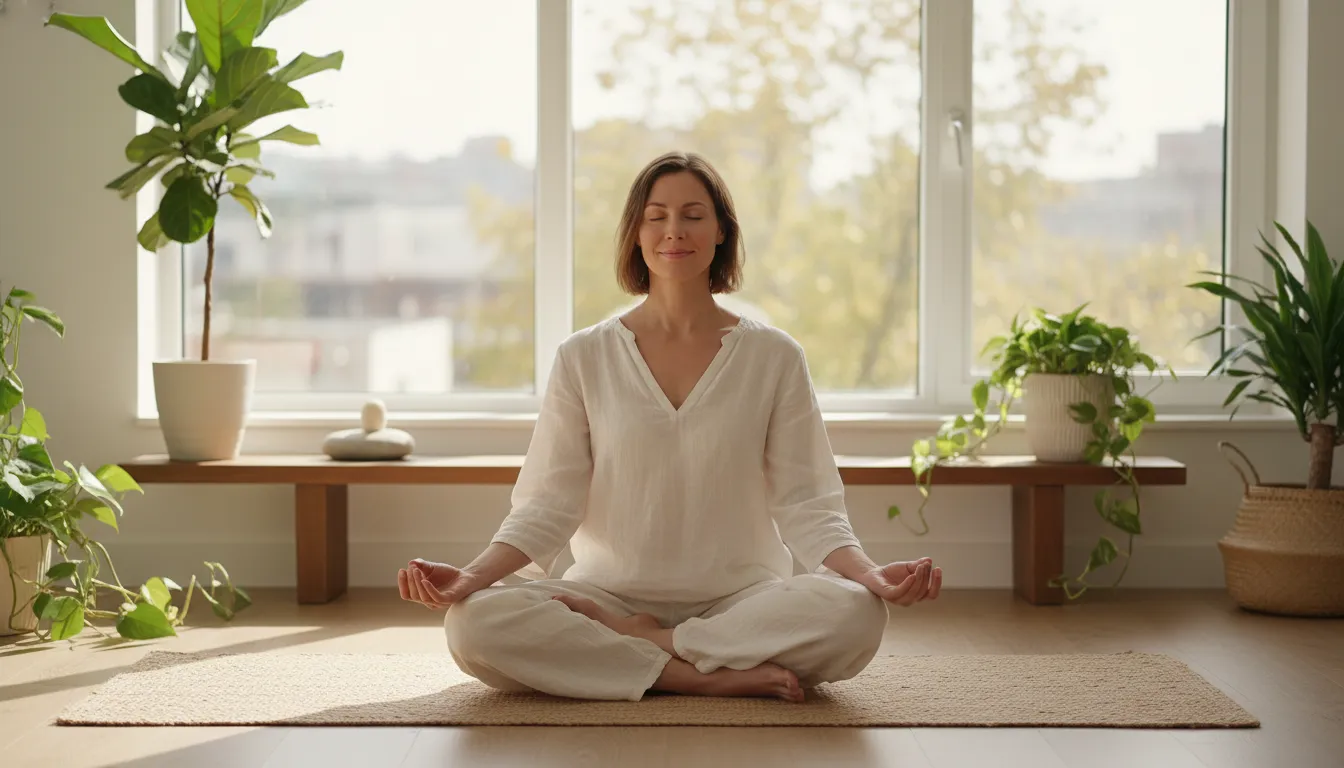
Yoga is an ancient practice that has found its place in the contemporary world for good reasons. Scientific evidence, though with limitations, points to real benefits in areas such as mental health, flexibility, sleep quality, and general well-being. At the same time, it is important to maintain realistic expectations: yoga is not miraculous, it doesn’t solve everything, and it doesn’t work the same way for everyone.
What it can offer, for many, is a starting point — an invitation to listen to your own body with more attention, breathe with more awareness, and take care of yourself more regularly. And that, in itself, already has value.
If you are considering trying it, take it slow, seek guidance, and respect your pace. And if you have doubts about whether yoga is suitable for your health condition, talk to a doctor or physical therapist. Every body has a history — and deserves care tailored to it.
This content is informative and educational, and does not replace evaluation, diagnosis, or treatment by a qualified health professional. Always consult a doctor, physical therapist, psychologist, or other qualified professional for guidance on your individual situation.