
Does Aromatherapy Work? Evidence-Based Insights
Have you ever walked into a room with a pleasant scent and felt your body relax almost instantly? This common everyday experience is, in a way, the starting point for understanding aromatherapy. The practice, which uses essential oils extracted from plants to promote physical and emotional well-being, has existed for millennia — and in recent years, it has gained increasing attention in discussions about integrative health. But is there science behind it, or are we just talking about a well-scented placebo effect?
The honest answer is: it depends on what you expect. Aromatherapy has a growing body of research exploring its effects, especially on the nervous system and mood. At the same time, many claims circulating on the internet go far beyond what the evidence actually supports. This article will help you understand what science says up to 2026, what remains uncertain, and how to use this practice safely and realistically — without false promises.
If you’ve heard that aromatherapy “cures anxiety,” “eliminates chronic pain,” or “treats insomnia in days,” it’s worth taking a closer look at these claims. The good news is that, despite its limitations, aromatherapy can play a legitimate role as a complementary health care practice — and that’s precisely what we’ll explore here.
What is Aromatherapy, Anyway?
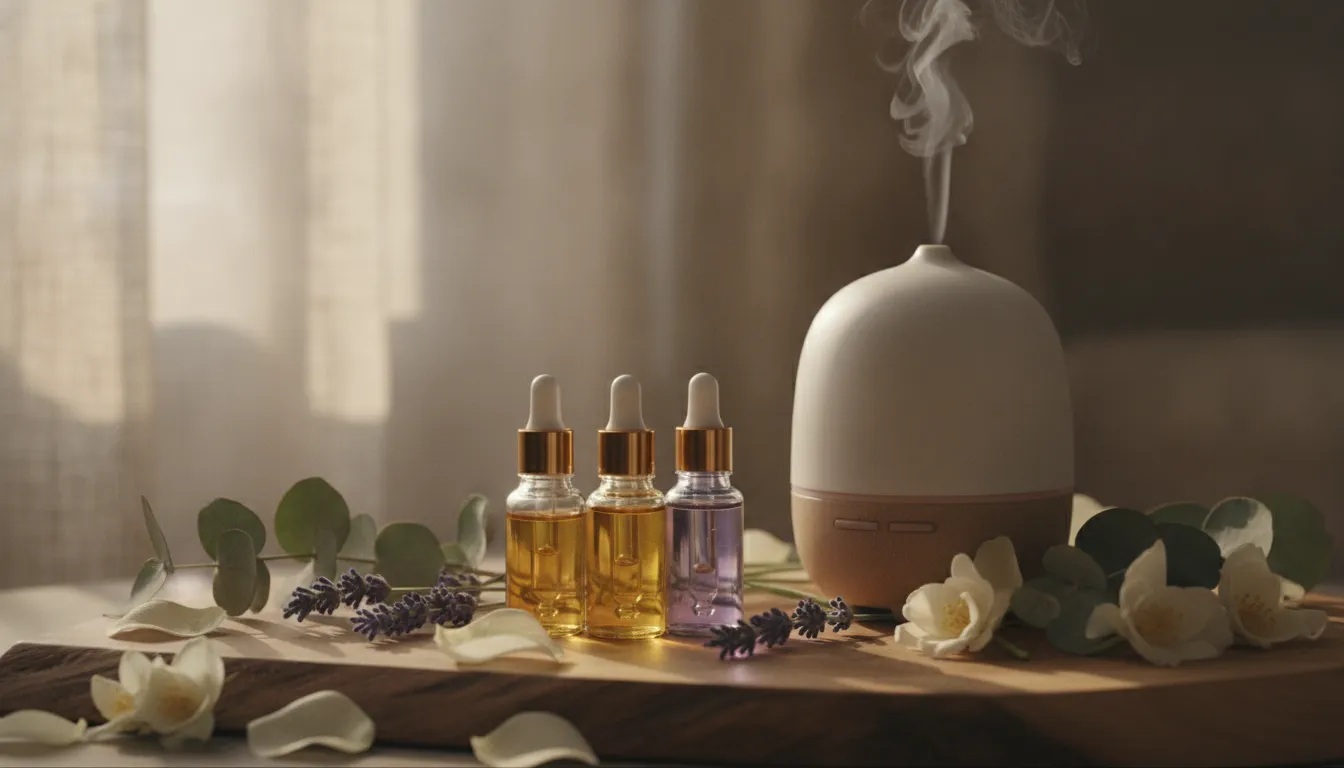
Aromatherapy is a practice that uses essential oils — volatile compounds extracted from flowers, roots, bark, and seeds of plants — to promote well-being. These oils can be used in different ways: direct inhalation, environmental diffusion, or topical application diluted on the skin (usually mixed with a carrier oil, such as coconut or almond oil).
The practice has ancient roots in civilizations like Egypt, China, and India, and was formalized as “aromatherapy” by the French chemist René-Maurice Gattefossé in the 1930s. Today, it is part of the field of complementary and integrative therapies, recognized by the World Health Organization (WHO) as part of traditional health systems that deserve serious scientific investigation.
In Brazil, the Ministry of Health included aromatherapy in the National Policy on Integrative and Complementary Practices (PNPIC), representing an institutional recognition of the practice — but not a confirmation of efficacy for all popular indications.
How Do Essential Oils Work in the Body?
To understand what science investigates, it’s useful to know the proposed mechanisms. When you inhale an essential oil, the aromatic molecules quickly reach the olfactory system — which is directly connected to the limbic system, a region of the brain associated with emotions, memories, and stress regulation.
This neurological connection is real and well-established. What is still being studied is how much this pathway can produce measurable and clinically relevant effects. Researchers are investigating, for example:
- If certain compounds (like linalool, found in lavender) have action on the central nervous system
- If there are effects on biological stress markers, such as cortisol
- If inhalation can influence heart rate and blood pressure
Some studies suggest that these effects exist, albeit modestly. But it’s important to note that much of the available research has small samples, varied methodologies, and difficulty in standardization — making it difficult to draw definitive conclusions.
What Studies Suggest (and How Cautiously We Should Read Them)
Anxiety and Stress
This is the area with the largest volume of research in aromatherapy. Studies published in peer-reviewed journals suggest that inhaling lavender oil (Lavandula angustifolia) may be associated with a subjective reduction in anxiety in specific contexts, such as before medical procedures or in hospital settings. An oral medication derived from lavender (Silexan) has also been studied for mild to moderate anxiety, with promising results in some clinical trials — but this is a regulated pharmaceutical product, different from the common domestic use of essential oil.
The honest conclusion: studies suggest that scents like lavender, bergamot, and chamomile may contribute to a subjective sense of relaxation. This is no small thing — but it also does not equate to a treatment for anxiety disorders.
Sleep Quality
Some research indicates that diffusing lavender oil in the environment before sleeping may be associated with a perceived improvement in sleep quality, especially in populations like the elderly and college students. The effects, when observed, tend to be modest and subjective.
Pain and Nausea
There is preliminary evidence that inhaling peppermint may help relieve postoperative nausea in some contexts. Research on aromatherapy for chronic pain exists, but the results are mixed and the methodologies vary greatly.
What is Not Proven
It’s important to be clear: there is no robust evidence that aromatherapy treats infectious diseases, tumors, diabetes, hypertension, or any serious chronic condition. Claims to this effect should be viewed with skepticism.
Aromatherapy and Mental Health: A Complement, Not a Substitute
If you live with anxiety, depression, or other emotional challenges, you might be curious about whether aromatherapy could help. The most responsible answer is: it can be part of a set of self-care strategies, but it does not replace the guidance of a mental health professional.
Just as practices like meditation and daily gratitude can contribute to emotional well-being — and you can learn more about this in our beginner’s guide to meditation —, aromatherapy can be a complementary resource for creating relaxation rituals. But if the distress is intense or persistent, seeking support from a psychologist or psychiatrist is essential.
If you are going through a moment of emotional crisis, know that help exists. The CVV (Centro de Valorização da Vida) is available 24 hours a day at 188, with free calls. In emergencies, seek the nearest emergency room or CAPS (Psychosocial Care Center).
How to Use Essential Oils Safely
If you decide to try aromatherapy as a self-care practice, some general safety guidelines are important:
- Prefer inhalation or environmental diffusion as the safest form of use for beginners.
- Never use pure essential oil directly on the skin without dilution in a carrier oil — essential oils are highly concentrated and can cause irritation or allergic reactions.
- Perform a patch test before applying any diluted oil to the skin: apply a small amount to the inside of the forearm and wait 24 hours to check for a reaction.
- Pregnant, breastfeeding women, young children, and people with health conditions should consult a doctor before using essential oils, as some compounds may be contraindicated.
- Do not ingest essential oils without the guidance of a qualified professional — many are toxic when taken orally.
- Keep out of reach of children and pets, especially cats, which are very sensitive to certain aromatic compounds.
- Check the product quality: look for oils with full botanical specification, informed extraction method, and no adulterations.
Aromatherapy in the Context of Integrative Health in 2026
In 2026, the landscape of integrative therapies continues to evolve. There is growing interest from researchers and health institutions in studying practices like aromatherapy with more rigorous methodologies. At the same time, challenges remain: it’s difficult to create “blind” studies with aromas (after all, you know what you’re smelling), and the variability in products and studied populations complicates comparisons between studies.
What we can say with confidence is that aromatherapy, when used consciously and as a complement — and not a substitute — for conventional medical care, is generally safe for most healthy people and can contribute to self-care and relaxation rituals. This, in itself, already has value.
To better understand how to separate what is evidence from what is myth in health, check out our article What is Real in Mental Health and What is Myth?.
When to Seek a Health Professional
Aromatherapy is not a red flag in itself, but there are situations where seeking professional guidance is essential:
- If you have pre-existing health conditions (respiratory allergies, asthma, skin problems, epilepsy, among others)
- If you are pregnant or breastfeeding
- If you intend to use aromatherapy with children or the elderly
- If you experience adverse reactions after use, such as skin irritation, difficulty breathing, severe headache, or dizziness
- If you are considering using aromatherapy as a way to deal with a medical diagnosis — in this case, talk to your doctor first
- If the interest in aromatherapy is accompanied by significant emotional distress — a psychologist or psychiatrist can offer much more comprehensive support
Conclusion
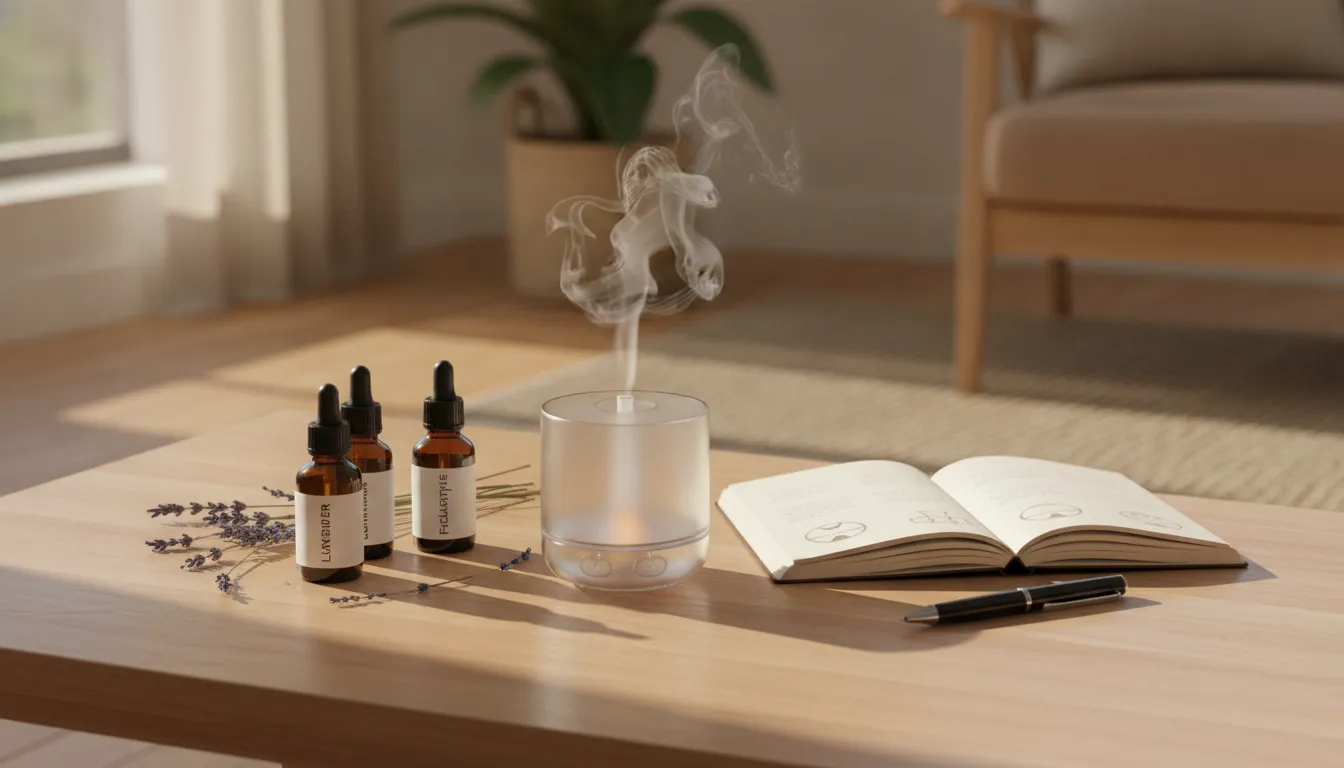
Aromatherapy is an ancient practice that, when viewed with scientific honesty, presents an interesting picture: there is suggestive evidence of modest benefits in areas like relaxation, stress, and sleep quality, but large-scale, high-quality studies are still lacking for many popular claims. It is not miraculous, but it is also not just fantasy — and it can have a legitimate place in your daily life as a self-care tool, as long as it is used safely and sensibly.
The most important thing is to maintain realistic expectations: aromas can make your environment more welcoming, support relaxation rituals, and be part of a broader wellness routine. But illnesses deserve proper diagnosis and treatment by qualified professionals. Use aromatherapy as a gentle complement — not as a standalone solution.
Take care with kindness and information.
This content is informative and educational, produced by health and wellness writers. It does not replace the evaluation, diagnosis, or treatment by a healthcare professional. Always consult a doctor, pharmacist, or other qualified professional before starting any practice related to your health.