
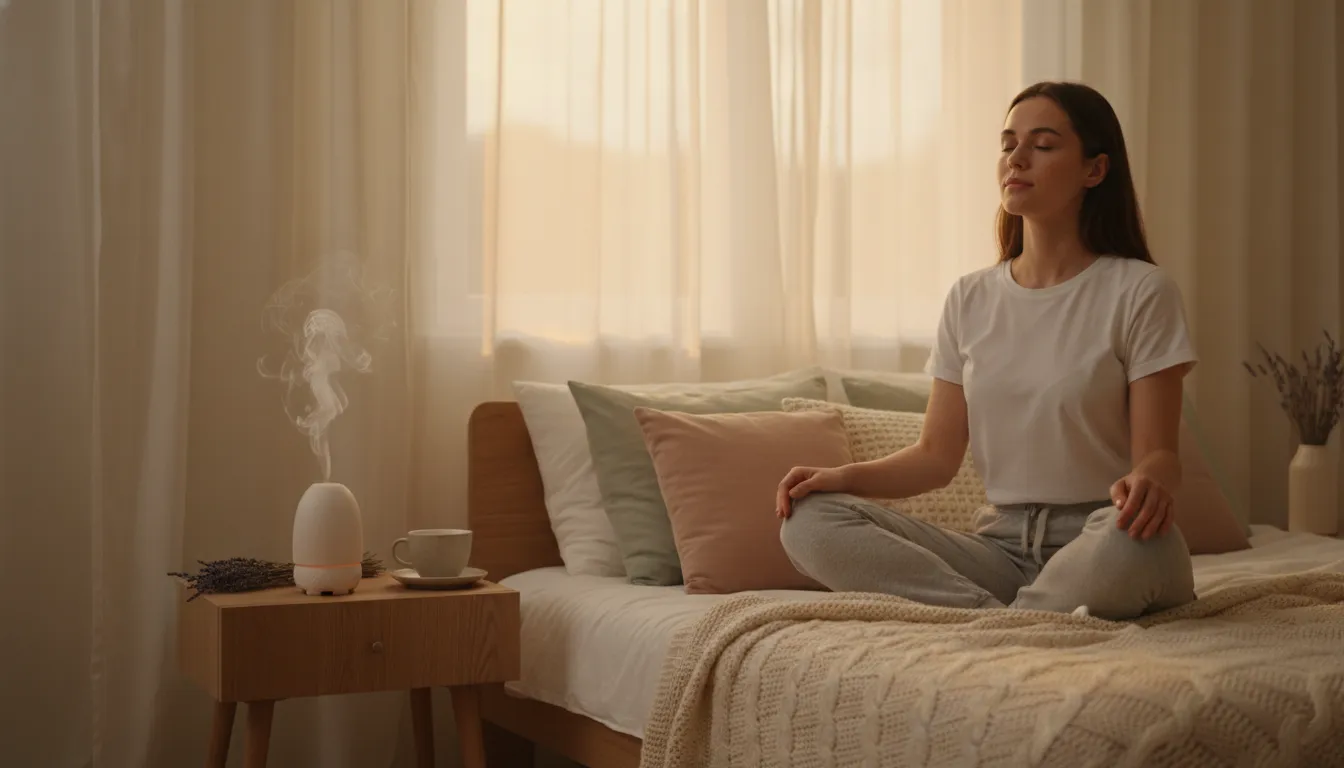
When the Day Won’t End: Why Relaxing Before Sleep Matters
Have you ever gone to bed exhausted, but with your mind racing with a thousand thoughts? Work meetings, to-do lists, family concerns, constant notifications — modern life seems to have a special ability to follow us to the pillow. In 2026, with increasingly connected routines and blurred boundaries between work and rest, preparing the body and mind for sleep has become a real challenge for many people.
The good news is that there are accessible and scientifically backed strategies that can help in this transition from the day’s alert state to nighttime rest. These are not magical rituals or miraculous solutions — but simple habits that, when practiced consistently, often contribute to a more peaceful night’s sleep. Quality sleep is directly related to physical and mental health, as widely recognized by organizations like the World Health Organization (WHO).
In this article, you will find evidence-based information on what can help you relax before sleeping. Remember: every body is unique, and if you face serious sleep difficulties, it’s best to talk to a healthcare professional to understand what’s happening in your specific case.
Why the Body Needs a Transition to Sleep
Sleep is not a switch we turn on and off. Our nervous system needs time to exit the activation mode — that state of readiness we use throughout the day — and enter a state of relaxation that allows us to fall asleep naturally.
This transition involves real physiological processes. The production of melatonin, the hormone that signals the brain it’s time to sleep, begins to increase when the environment gets darker and the body senses that night is approaching. The core body temperature tends to drop slightly. The heart rate slows down. All of this is part of a natural process — and it can be facilitated or hindered by our behaviors in the hours leading up to sleep.
When we maintain high stimulation — whether through bright screens, stressful discussions, caffeine, or very bright environments — we are essentially telling our nervous system that it’s not yet time to rest. Creating a wind-down routine is, in part, teaching the body that this moment is safe to relax.
The Environment Matters (A Lot)
Before discussing relaxation techniques, it’s worth paying attention to the context where sleep occurs. Studies in the field of sleep medicine indicate that the bedroom environment directly influences the quality of rest.
Some points that often make a difference:
- Temperature: Cooler environments tend to favor sleep, as the body needs to lower its internal temperature to fall asleep more easily.
- Darkness: Light — especially blue light emitted by screens — can interfere with melatonin production. Blackout curtains or sleep masks can help.
- Noise: For some people, silence is essential; for others, soft sounds like white noise or nature sounds often contribute to relaxation.
- Organization: A visually calm and organized environment tends to transmit fewer stimuli to the brain, favoring a sense of tranquility.
If you want to understand better how using your phone at night can affect your sleep, check out this article: Can Using Your Phone Before Bed Harm Your Sleep?
Relaxation Techniques That Can Help
Conscious Breathing
One of the most studied and accessible strategies is breath control. Slow and diaphragmatic breathing techniques can activate the parasympathetic nervous system — the one responsible for the “rest and digest” state — and signal to the body that it’s safe to relax.
A simple approach is to focus on prolonging the exhalation compared to the inhalation. For example, inhale counting to 4 and exhale counting to 6 or 8. There is no single formula, and the important thing is to find a rhythm that feels comfortable for you.
Progressive Muscle Relaxation
This technique, initially developed by Dr. Edmund Jacobson in the early 20th century and still used in clinical contexts, involves tensing and relaxing muscle groups sequentially, becoming aware of the difference between tension and relaxation. It is often used in anxiety and insomnia treatment contexts, although its application should be guided by professionals when health conditions are involved.
For those in good health and wanting to try it generally, the idea is to go through the body from the toes to the head, lightly contracting each muscle group for a few seconds and then releasing.
Meditation and Mindfulness
The practice of meditation, especially mindfulness-based approaches, has been studied in relation to sleep and stress management. Research published in peer-reviewed scientific journals suggests that these practices may contribute to reducing mental activation before sleep in some people, although results vary.
Guided meditation apps have become quite popular tools, and many offer specific programs for the period before sleep. It’s worth experimenting with curiosity and without pressure.
Tranquil Reading
Reading a physical book (or on a device with warm light and reduced brightness) can help redirect the mind from racing thoughts to a calmer flow. Content choice matters: light, narrative, or contemplative texts tend to work better than very stimulating or emotionally intense content.
Food and Drinks: What to Consider at Night
What we consume in the hours before bed can directly influence sleep quality. Some general evidence-based guidelines:
- Caffeine: Found in coffee, black tea, green tea, soft drinks, and chocolates, caffeine is a stimulant that can remain in the body for several hours. Many people find that avoiding it in the afternoon and early evening helps them fall asleep more easily.
- Alcohol: Although it may initially induce sleep, alcohol tends to fragment sleep in the following hours, reducing its overall quality. Sleep medicine specialists often recommend caution with its consumption close to bedtime.
- Heavy Meals: Very large or fatty dinners right before bed can cause digestive discomfort and make relaxation difficult.
- Hydration: Staying well-hydrated throughout the day is important, but drinking large amounts of liquid shortly before bed can increase nighttime interruptions for bathroom trips.
The Routine as an Ally: The Power of Consistency
One of the most cited factors by sleep experts is the importance of maintaining regular schedules — both for waking up and going to sleep. Our biological clock (circadian rhythm) responds to these patterns, and consistency helps the body anticipate sleep more naturally.
Creating a pre-sleep routine — a set of activities performed in the same sequence every night — can act as a signal to the brain that rest is approaching. This routine doesn’t have to be long or complex. It can include:
- Reducing the intensity of house lights about an hour before bed.
- Taking a warm bath (the drop in body temperature after the bath can facilitate sleep).
- Spending a few minutes on conscious breathing or light reading.
- Avoiding social media or news checks in this final period.
- Going to bed only when feeling truly sleepy, not just at the set time.
If you want to delve deeper into how to structure a healthy sleep routine, you can explore this content: How to Start a Healthy Sleep Routine
Complementary Therapies: What the Evidence Says
Some people turn to practices like aromatherapy (with oils like lavender), relaxing baths with herbs or salts, and even acupuncture as part of a nighttime relaxation routine.
It’s important to be honest about what science shows: some of these practices present promising results in smaller studies but still lack robust and consistent evidence for definitive claims. This doesn’t mean they are useless — for many people, they work as wind-down rituals that have value in themselves.
The critical point is: complementary therapies do not replace medical evaluation and treatment, especially when there is chronic insomnia, anxiety disorders, or other health issues involved. Use them as a complement, never as an alternative to professional care.
When to Seek a Health Professional
Occasional sleep difficulties are part of life for almost everyone. But some signs deserve attention and indicate that it’s worth seeking professional guidance:
- Difficulty falling asleep or staying asleep that persists for more than a few weeks
- Constant fatigue even after seemingly slept nights
- Intense snoring, pauses in breathing during sleep, or feeling of choking upon waking (which may indicate sleep apnea)
- Excessive daytime sleepiness that interferes with work or daily activities
- Intense anxiety or uncontrollable thoughts that regularly disturb sleep
- Any emotional distress affecting your well-being more broadly
Clinical doctors, neurologists specializing in sleep, psychologists, and psychiatrists can provide proper evaluation and individualized guidance. Don’t hesitate to seek help — sleep problems are treatable, and you don’t have to face this alone.
If you are going through a time of intense emotional distress, remember that support is available. In Brazil, the CVV (Centro de Valorização da Vida) can be reached at 188, free of charge, 24 hours a day. In emergencies, seek immediate medical attention.
Take Care of Your Rest with Kindness

Learning to relax before sleeping is often a gradual process. There is no perfect formula, and what works for one person may not work for another. The most important thing is to observe your own body with curiosity and without judgment — and gradually build habits that respect your rhythm.
Small, consistent changes often have more impact than large, short-term transformations. And remembering that sleep is a fundamental pillar of health — not a luxury — is already a good start.
Take care with kindness.
This content is informative and educational and does not replace evaluation, diagnosis, or treatment by a qualified healthcare professional. Always consult a doctor, psychologist, or other qualified professional for specific guidance on your case.