Why Relaxation Deserves a Place in Your Routine
Modern life, with its constant demands, endless notifications, and pressure for productivity, can keep the nervous system in a nearly permanent state of alert. This heightened level of tension, when maintained over long periods, often manifests in the body and mind in ways we may not even notice: tense shoulders, shallow breathing, difficulty sleeping, irritability, or feeling exhausted even after a night’s rest.
The good news is that the human body has natural recovery mechanisms, and there are accessible practices that can help activate them. Relaxation exercises are neither a luxury nor an “uncommon” alternative — for decades, researchers in fields such as neuroscience, psychology, and behavioral medicine have studied how simple techniques of breathing, movement, and mindfulness can contribute to overall well-being. The World Health Organization (WHO) recognizes stress management as an important part of comprehensive health, and institutions like the American Psychological Association regularly publish evidence on the positive impact of these practices.
This article brings together evidence-based techniques that you can try in the comfort of your home — without expensive equipment, without requiring much time, and without miraculous promises. The goal is to provide an informed starting point. Remember: each person is unique, and a healthcare professional is always the best guide for individual needs.
What Happens in the Body During Relaxation
To understand why these practices often help, it’s worth knowing a little about how the nervous system works. Our body operates in two main modes: the “fight or flight” state (activated by the sympathetic nervous system, useful in threatening situations) and the “rest and digest” state (regulated by the parasympathetic nervous system, responsible for recovery).
When we live under chronic stress, the alert mode can stay on for prolonged periods, which studies suggest is associated with negative impacts on sleep, the immune system, and emotional balance. Relaxation techniques, especially those involving slow breathing and mindful attention, can help stimulate the parasympathetic system — signaling to the brain that the danger has passed and it’s time to recover.
Conscious Breathing: The Most Accessible Tool
Breathing is the only autonomous function of the body that we can also voluntarily control — and this makes it a powerful gateway to relaxation.
Diaphragmatic Breathing Technique
- Sit or lie down in a comfortable position.
- Place one hand on your chest and the other on your abdomen.
- Inhale through your nose slowly counting to 4, feeling the abdomen expand (the chest hand should move little).
- Hold the air for 1 or 2 seconds.
- Exhale slowly through the mouth counting to 6, feeling the abdomen lower.
- Repeat for 5 to 10 minutes.
4-7-8 Technique
Popularized by Dr. Andrew Weil and studied in contexts of anxiety reduction, this technique follows a specific rhythm:
- Exhale completely through the mouth.
- Close your mouth and inhale through your nose counting to 4.
- Hold your breath counting to 7.
- Exhale through the mouth counting to 8.
- Repeat the cycle 3 to 4 times.
Important: if you feel dizzy or uncomfortable, stop and breathe normally. People with respiratory conditions should consult a professional before practicing any breath-holding technique.
Progressive Muscle Relaxation
Developed by Dr. Edmund Jacobson in the early 20th century and extensively studied since then, progressive muscle relaxation (PMR) involves tensing and then releasing muscle groups sequentially. Studies suggest this practice may contribute to reducing physical tension and improving sleep quality in some populations.
How to practice:
- Lie on your back in a quiet place.
- Close your eyes and take a few deep breaths.
- Start with your feet: tense the muscles tightly for about 5 seconds, then release completely for 20 to 30 seconds. Notice the difference between tension and relaxation.
- Progress upwards: calves, thighs, abdomen, hands, arms, shoulders, neck, and face.
- At the end, remain for a few minutes simply breathing and feeling the relaxed body.
Regular practice — even if brief — tends to bring more consistent results than sporadic long sessions.
Mindfulness Meditation: Being Present in the Moment
Mindfulness is a practice that trains the mind to observe thoughts and sensations without judgment, anchoring in the present moment. There is a considerable volume of research published in peer-reviewed journals — including studies from the MBSR (Mindfulness-Based Stress Reduction) program developed at the University of Massachusetts — suggesting benefits for stress management and emotional well-being.
A simple practice for beginners:
- Choose a quiet time — morning or before bedtime usually works well.
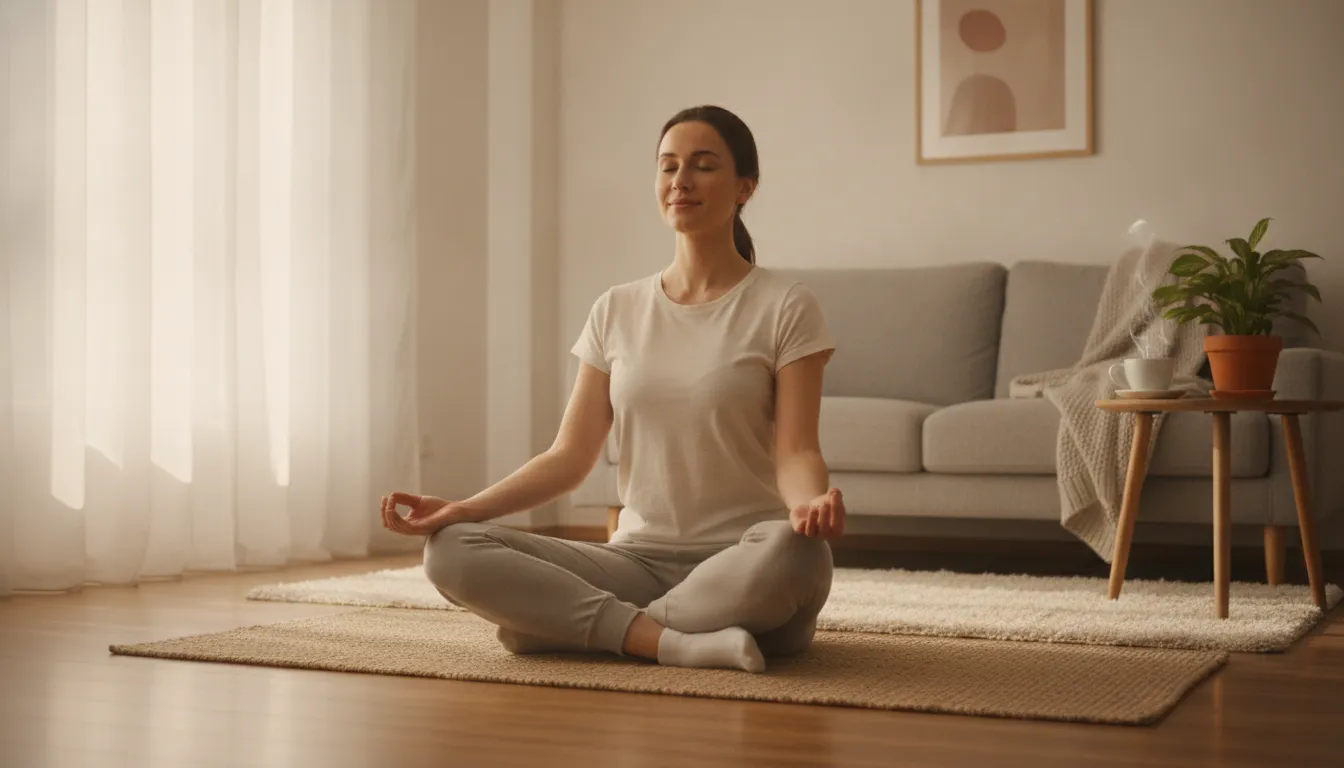
- Sit comfortably, with your spine straight but not rigid.
- Close your eyes and focus on your breathing: the air coming in, the air going out.
- When you notice your mind “wandering” to a thought (and it will, this is normal), just observe it without criticizing yourself and gently bring your attention back to your breathing.
- Start with 5 minutes and, if desired, gradually increase.
Guided meditation apps in English can be useful allies for beginners, but they do not replace professional support when there is significant distress.
Gentle Movement: Yoga, Stretching, and Tai Chi
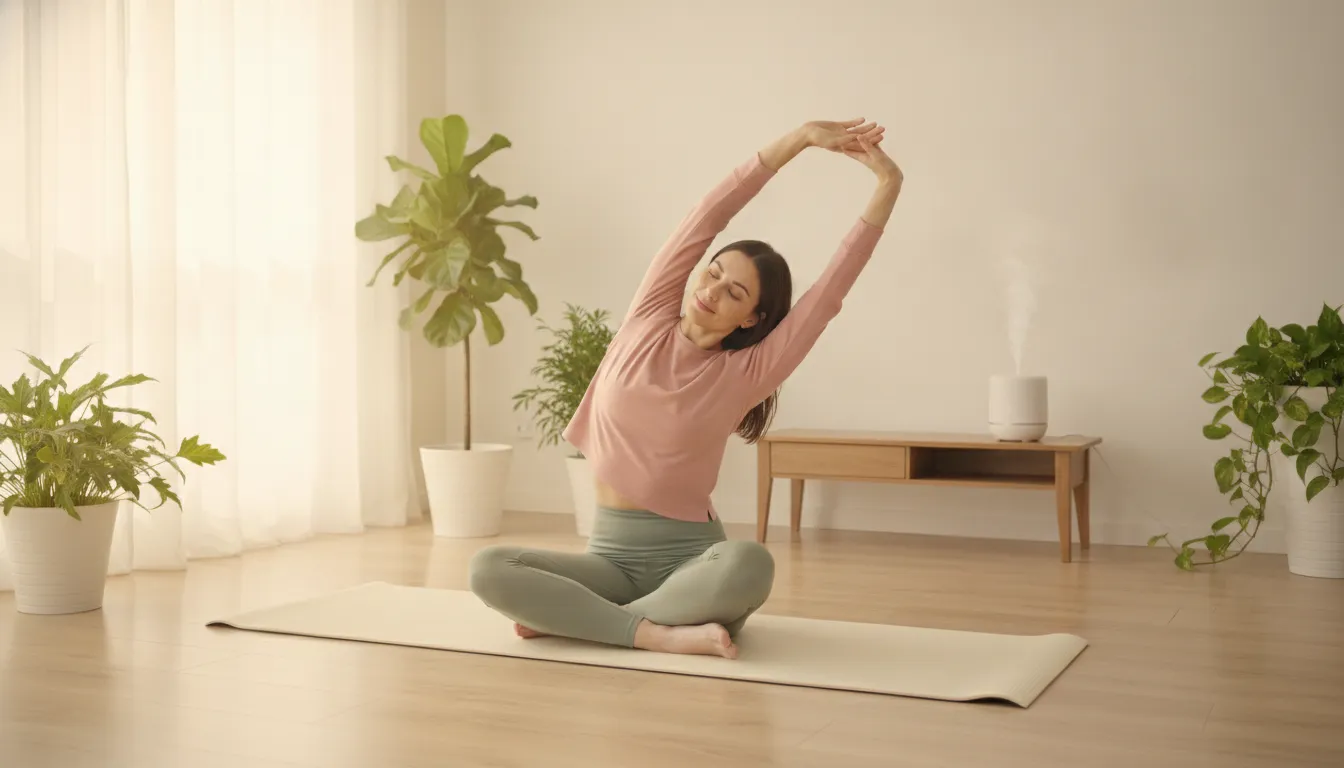
The body and mind are deeply connected. Practices of gentle and intentional movement, such as yoga, tai chi, and mindful stretching, often integrate breathing, attention, and mobility — a combination that research associates with reduced tension and improved mood in some practitioners.
Some important points:
- You don’t need to be flexible to start. These practices welcome all bodies and fitness levels.
- Free beginner yoga and stretching videos are widely available on online platforms.
- Avoid forcing postures that cause pain. The goal is gentle movement, not performance.
- People with injuries, chronic pain, or musculoskeletal conditions should consult a doctor or physiotherapist before starting any exercise routine, even light ones.
If you want tips on maintaining healthy habits throughout the year, this article on winter health: habits that make a difference in the cold may offer complementary perspectives.
The Environment Matters: Creating a Space to Relax
You don’t need a spa at home — but small adjustments in the environment can facilitate the practice:
- Reduce visual and auditory stimuli: closing the door, turning off notifications, or using headphones with calming music can help signal to the brain that it’s time to rest.
- Lighting: lower, warmer light at night favors melatonin production and prepares the body for sleep.
- Temperature: cool and well-ventilated environments tend to favor relaxation and sleep quality.
- Routine: practicing at the same time creates an internal signal that facilitates “entering” the relaxation state over time.
It’s worth remembering that screen use close to bedtime can impact sleep quality — if this is a point of attention for you, this article on how to have more energy during the day naturally offers useful reflections on the relationship between rest and energy.
When to Seek a Health Professional
Relaxation exercises are general well-being tools — and do not replace professional evaluation or follow-up. Some situations require specialized attention:
- Intense or persistent anxiety that significantly interferes with work, relationships, or sleep.
- Recurring physical symptoms such as frequent headaches, constant muscle tension, palpitations, or insomnia that do not improve over time.
- Deep sadness, lack of pleasure in activities or any sign that emotional well-being is compromised.
- History of trauma — in this case, some breathing and meditation techniques can be activating, making it important to have the guidance of a trained psychologist or psychotherapist.
- Any diagnosed health condition that may be affected by physical or breathing exercises.
If you are going through a moment of intense suffering or crisis, know that help is available. The CVV (Centro de Valorização da Vida) is available 24 hours a day, every day, at 188 (free call from any phone in Brazil). In emergencies, seek the nearest health service or SAMU (192).
Psychologists, psychiatrists, and family doctors are important allies — and seeking professional support is an act of self-care, not weakness.
Conclusion: Small Gestures, Real Impact
Taking a few minutes a day to breathe consciously, relax muscles, or simply be present may seem small in the face of life’s demands. But self-care is built exactly like this: in simple gestures, repeated with intention, without demanding perfection.
There is no single “right” technique — the best relaxation exercise is the one you can practice consistently and that resonates with your life moment. Experiment, observe how you feel, and adjust as needed.
Take care of yourself with kindness.
This content is informative and educational, produced by health and well-being writers based on recognized sources. It does not replace evaluation, diagnosis, or treatment by a qualified health professional. Always consult a doctor, psychologist, or other qualified professional for specific guidance for your case.