
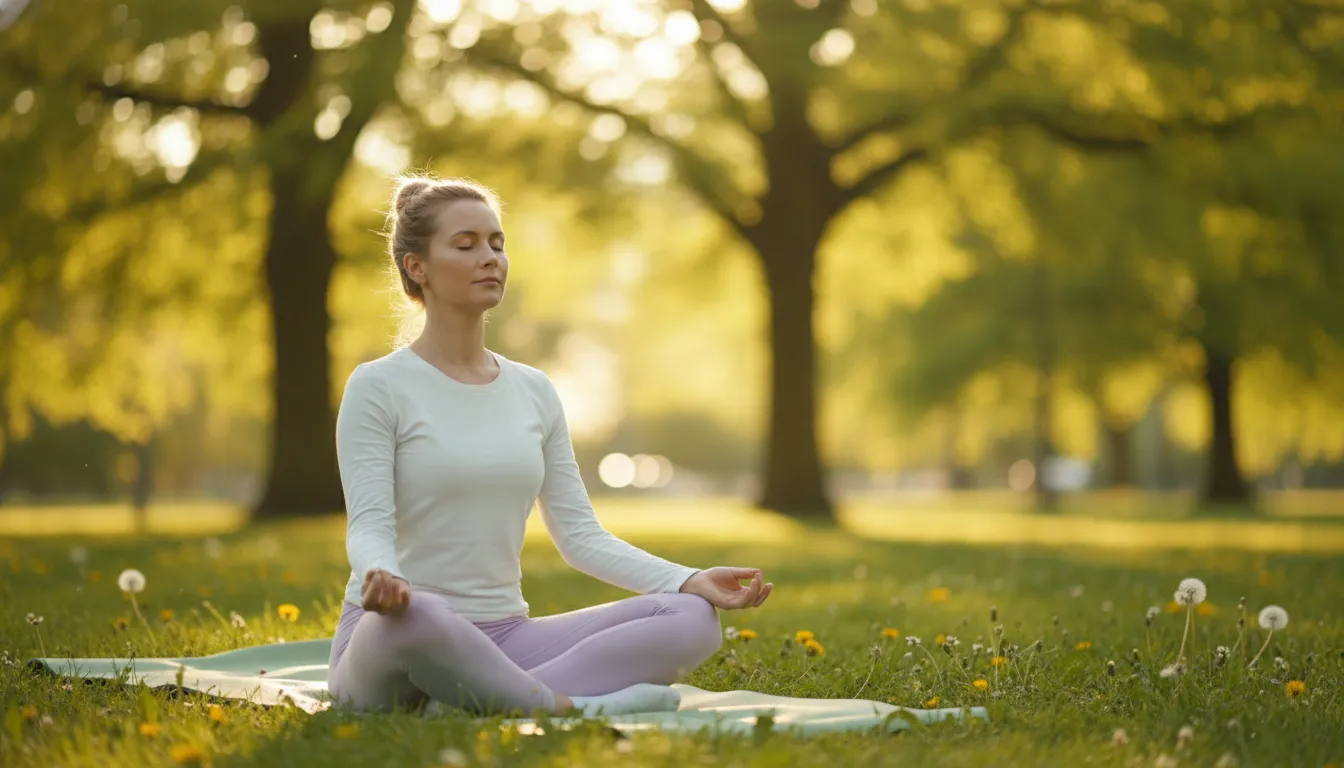
Introduction
In the hustle and bustle of daily life, with constant notifications, accumulated commitments, and a never-ending to-do list, it’s increasingly common to feel that tension settling in the body and mind. If you’ve noticed your shoulders stiffening by the end of the day, your breathing becoming shallow under pressure, or your mind unable to “switch off” at bedtime, know that this experience is shared by many — and there are accessible practices that can help.
Relaxation exercises are techniques aimed at reducing the nervous system activation associated with stress, promoting a state of greater physical and mental calm. These aren’t new: practices like mindful breathing and meditation have roots in ancient traditions and are now supported by a growing body of scientific research investigating their effects on well-being. The World Health Organization (WHO) recognizes mental health as a fundamental part of overall health and highlights the importance of stress management strategies in everyday life.
This article is not intended to replace any professional evaluation or follow-up — each person has a unique story, body, and needs. What you’ll find here is an educational and welcoming overview of what science has been investigating about relaxation and how these practices can be gently and realistically incorporated into your routine.
What Happens in the Body Under Stress
To understand how relaxation can help, it’s first worth understanding what stress does to the body. When we perceive a threat — whether real or imagined, physical or emotional — the autonomic nervous system triggers a response known as “fight or flight.” Hormones like cortisol and adrenaline are released, the heart rate speeds up, breathing becomes quicker, and muscles tense. This was crucial for human survival throughout evolution.
The problem is that in the contemporary world, these stress triggers rarely involve a physical predator. They are urgent emails, relational conflicts, financial uncertainties, and social pressures — situations that frequently recur and can keep the body in a prolonged state of alert. Over time, this state of chronic activation often contributes to symptoms like muscle tension, sleep disturbances, irritability, difficulty concentrating, and a sense of exhaustion.
Relaxation exercises work largely by stimulating the so-called parasympathetic nervous system — the one responsible for “rest and digest,” the opposite of the stress response. Studies suggest that regular practices can help balance this dynamic, although the degree of benefit varies from person to person.
Main Types of Relaxation Exercises
There is a variety of techniques with different degrees of scientific evidence. Knowing each one allows you to explore what makes the most sense for your reality.
Diaphragmatic (or abdominal) Breathing
Perhaps the most accessible technique of all. It involves directing the breath to the abdomen instead of the chest, making it slower and deeper. Research published in psychophysiology journals suggests that this type of breathing can reduce stress markers and promote a sense of calm. It’s a practice that can be done anywhere, without equipment.
Progressive Muscle Relaxation
Developed by physician Edmund Jacobson in the early 20th century, this technique involves tensing and then relaxing muscle groups sequentially. The idea is to increase body awareness and release accumulated tensions. Studies suggest it may be useful for people experiencing anxiety or insomnia, although it’s always advisable to seek professional guidance to adapt the practice to specific conditions.
Meditation and Mindfulness
Mindfulness has gained significant attention in health research over recent decades. It involves training attention to the present moment without judgment. Systematic reviews published in scientific journals indicate that regular mindfulness practices can be associated with reduced anxiety and stress symptoms, as well as potential improvements in sleep quality. It’s important to remember that results vary and that in cases of intense distress, mindfulness does not replace psychological or psychiatric support.
Yoga and Tai Chi
These practices combine movement, breathing, and attention, integrating body and mind. The WHO mentions yoga among traditional and complementary practices that have been investigated by science. Studies suggest associations with stress reduction and improved overall well-being, but the mechanisms are still being studied. If you have any physical health conditions, consult your doctor before starting a new movement practice.
Guided Visualization
This involves imagining calming scenes or situations in detail. It can be practiced with guided audio and is often used as a complementary resource in therapeutic contexts. The evidence is still developing, but personal accounts and some smaller studies suggest it may contribute to a sense of relaxation.
What Science Says: Investigated Benefits
Researchers worldwide have been investigating the effects of relaxation practices on various aspects of health. Some of the most studied associations include:
- Sleep Quality: Relaxation techniques, especially mindful breathing and progressive muscle relaxation, are often included in sleep hygiene programs. Studies suggest they can help reduce the time it takes to fall asleep and the frequency of nighttime awakenings.
- Anxiety: Literature reviews indicate that mind-body practices can contribute to reducing anxious symptoms in general populations. This doesn’t mean they are a treatment for anxiety disorders — in such cases, professional support is essential.
- Blood Pressure: Some research suggests that relaxation techniques may be associated with modest reductions in blood pressure in people with mild hypertension, but this is a field that requires caution and medical supervision.
- Perception of Chronic Pain: Programs that include mindfulness practices have been studied in chronic pain contexts, with results suggesting possible improvements in subjective pain perception and quality of life. These programs are generally part of multidisciplinary approaches.
- Choose a technique that seems inviting. Don’t start with the one that seems most difficult. If the idea of staying still doesn’t appeal to you, try yoga or a meditative walk.
- Set aside a small, realistic moment. Five to ten minutes a day is already a start. You don’t need to do an hour to feel some benefit.
- Create a favorable environment. A quiet space with good ventilation and without frequent interruptions can help, but it’s not mandatory — many people practice on the bus or during a work break.
- Try supportive resources. There are free apps, videos, and audio for guided breathing and meditation available in Portuguese. They can be a good starting point.
- Observe without judgment. It’s normal for the mind to “wander” during practice. This doesn’t mean you’re doing it wrong — noticing distraction and gently returning to focus is, in itself, the exercise.
- Keep a simple record. Noting how you felt before and after can help identify patterns over time.
- Be patient. The effects of relaxation practices tend to accumulate over time. A single session may bring immediate relief, but more enduring benefits tend to appear with regularity.
- Persistent physical symptoms like frequent palpitations, chronic muscle pain, difficulty breathing, or insomnia that doesn’t improve deserve medical evaluation.
- Stress or anxiety that compromises daily functioning — difficulty working, studying, maintaining relationships — are signs that psychological support can be very useful.
- Feeling that nothing improves despite self-care efforts may indicate the need for a more structured approach.
- Pre-existing health conditions like hypertension, cardiovascular diseases, fibromyalgia, or diagnosed disorders require that any new practice be discussed with the professional accompanying you.
Remember: seeking help is not a weakness. It’s an act of care and responsibility towards yourself.
Conclusion
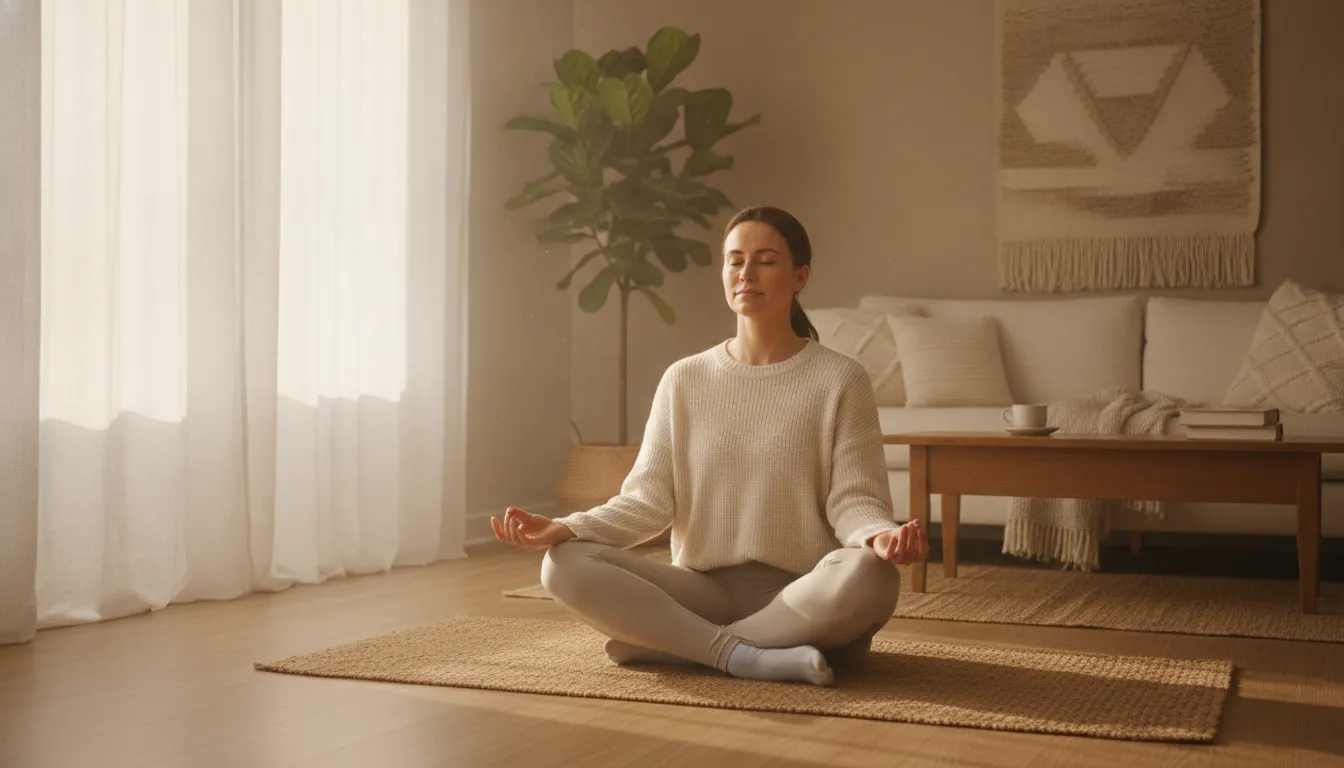
Relaxation exercises represent an accessible path with growing scientific support for those who want to better care for their well-being daily. They don’t promise to transform life overnight, but they can — when practiced regularly and within a broader self-care context — contribute to a kinder relationship with one’s own body and mind.
You don’t need to master all the techniques or practice for hours a day. It often starts with more conscious breathing in a moment of tension. And that, in itself, is already an act of care.
If you want to deepen your well-being journey, also explore what therapy can offer: What is Therapy and Why is it Important for You.
> Important Note: This content is for informational and educational purposes only. It does not replace the evaluation, diagnosis, or follow-up of a qualified health professional. Each person has individual needs, and only a qualified professional can guide what is most appropriate for your case.
If you want to explore specific practices that can be done at home, check out: Effective Relaxation Exercises to Practice at Home.
Relaxation and Mental Health: An Important Partnership
It’s crucial to make an important distinction: relaxation exercises are well-being resources, not treatments for mental health conditions. If you’re going through a period of intense distress — like anxiety that hinders your daily activities, deep and persistent sadness, a sense of helplessness, or thoughts that scare you — seeking support from a mental health professional is the safest and most effective path.
Psychologists and psychiatrists have specific training to assess and accompany each situation individually. Relaxation practices can be used as complementary tools within a care plan, but they rarely replace this professional support when needed.
If you’re in intense distress now, remember: help exists. In Brazil, the Centro de Valorização da Vida (CVV) offers free assistance at 188, 24 hours a day, 7 days a week. In emergencies, seek the nearest emergency room or SAMU (192).
When to Seek a Health Professional
Some situations indicate it’s time to go beyond self-care practices and seek specialized guidance:
It’s important to note that “studies suggest” is not the same as “proven for everyone.” Science in this area is advancing, but there are still methodological variations in research and results that need to be interpreted with caution. If you have a specific health condition, consult your doctor or therapist before adopting any practice.
To learn more about how physical movement also contributes to mood and well-being, you can explore this article: Can Physical Exercise Improve Mood? Understand How.
How to Start: A Gentle Step-by-Step
If you’ve never practiced relaxation exercises or tried and gave up, the good news is that there’s no “right” way to start. The most important thing is consistency and kindness to yourself.